Support our journalism.
MÉDIAS
 ICIJInternational Consortium of Investigative Journalists
Support our journalism.
21.04.2026 à 11:16
Isabella Cota
In a yearlong investigation led by the International Consortium of Investigative Journalists, reporters from more than 37 countries found the cancer drug’s high price impacts patients and health systems differently.
Texte intégral (796 mots)
The Cancer Calculus, the latest investigation from the International Consortium of Investigative Journalists, brought together 47 media partners in 37 countries, from Finland to Brazil, India, Malta, Mexico and beyond.
The reporting shed new light on the strategies pharmaceutical giant Merck & Co., known as MSD outside the U.S. and Canada, has used to widen the use of its blockbuster cancer drug, Keytruda, and protect its monopoly. Journalists found that the drug’s sky-high price has caused a ripple effect for health care systems around the world, exacerbating inequalities and driving patients to desperate measures.
The reporting team interviewed hundreds of people, including oncologists, cancer patients and their families, patent experts, regulators and pharmaceutical industry insiders, and gathered more than 1,000 public records requests in 27 countries. Here are some of the stories our partners told around the world.
Keytruda, known generically as pembrolizumab, is a type of immunotherapy that restores the body’s ability to fight cancer cells. Unlike chemotherapy, which targets rapidly dividing cancer cells, Keytruda disrupts a process that allows some cancers to circumvent the immune system. That process involves a protein called PD-1, which is found on the surface of some white blood cells. (White blood cells regulate the body’s immune response.) But some cancer cells express proteins called PD-L1 or PD-L2 that bind to PD-1 and block the body’s ability to recognize and kill cancer cells. Keytruda works by attaching to PD-1, preventing it from interacting with the cancerous cells’ proteins and allowing the immune system to detect and attack the cancer. Pembrolizumab was first invented in the early 2000s by Dutch scientists working for a company that was later acquired by Merck. The drug was approved for medical use in the U.S. in September 2014.
Higher dosing strains public health systems
If a toothpaste maker widens the tube opening, it empties faster.
That’s how oncologist Dr. Daniel Goldstein describes the likely reason behind Merck’s move to set a fixed 200 milligram dose of Keytruda for all patients, despite originally submitting studies to regulators that used a weight-based dosing system which could recommend lower doses for some patients.
In an interview with Paper Trail Media published in German outlets Der Spiegel and ZDF, the Israel-based cancer specialist laid out his potentially game-changing research finding: Keytruda can work at 25% lower doses with identical efficacy. This would mean significant savings for insurers and public budgets around the world.
Paper Trail’s work in Austria, as published in Der Standard, shows that Keytruda costs 6,800 euros (about $8,000) per dose without discounts, making it the country’s single largest medication expense. Consulted by reporters, research and advocacy organization Public Eye calculated a fair price for the drug to be 80 euros (about $94) per dose. Austria, the reporters found, is the sole country in the European Union with no price ceiling for hospital drugs.
ICIJ’s partners’ work in both countries exposed the health system’s deeper dysfunctions beyond the strain that Keytruda purchases have on their budgets.
KEYTRUDA Report: Merck’s blockbuster cancer drug topped $200,000 a year under Trump Apr 17, 2026
https://www.icij.org/investigations/cancer-calculus/keytruda-evergreening-patents-merck/
INTERACTIVE How Merck uses patents to help maintain Keytruda’s exorbitant price Apr 13, 2026
Recommended reading KEYTRUDA Report: Merck’s blockbuster cancer drug topped $200,000 a year under Trump Apr 17, 2026 INSURERS ‘They deny the medication that is keeping you alive’: Patients wage grueling legal battles for lifesaving cancer drug Apr 13, 2026 INTERACTIVE How Merck uses patents to help maintain Keytruda’s exorbitant price Apr 13, 2026
17.04.2026 à 22:41
Cartel boss Daniel Kinahan arrested in Dubai
David Kenner
Kinahan cartel wars with rivals have been linked to at least 20 murders across four European countries, according to Europol.
Texte intégral (500 mots)
International drug kingpin Daniel Kinahan has been arrested in the United Arab Emirates, the government of Dubai announced today.
Kinahan is a leader of the Kinahan cartel, which has been involved in cocaine and heroin trafficking and linked to at least 20 murders across Europe. His detention came after an Irish court issued an arrest warrant tied to his alleged role in an international organized crime network.
Kinahan was arrested on April 15 under the terms of an extradition agreement between Ireland and the United Arab Emirates. Irish police said in a statement that the arrest “is another extremely important demonstration of the need for international law enforcement co-operation in tackling transnational organised crime.”
Kinahan, who is in his 40s, moved to Dubai after he was the target of an infamous 2016 assassination attempt at Dublin’s Regency Hotel. His presence in Dubai had long allowed him to evade U.S. and European law enforcement. He and his wife, Caoimhe Robinson, built a multimillion-dollar property portfolio in the Gulf emirate, ICIJ reported in 2024. They maintained some of these properties, which included a sprawling villa, even after Kinahan was hit with U.S. sanctions in 2022 for drug smuggling and money laundering.
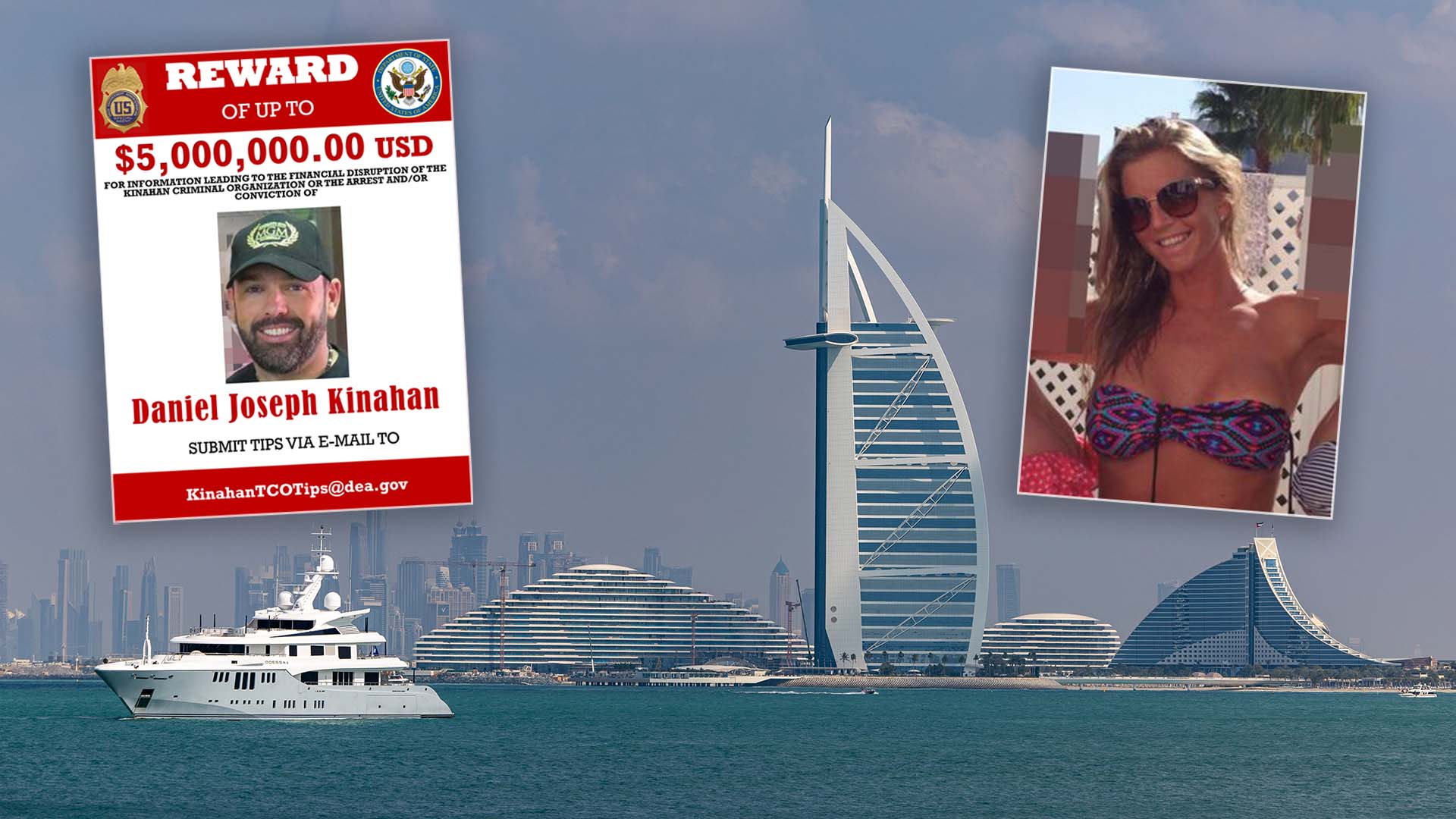
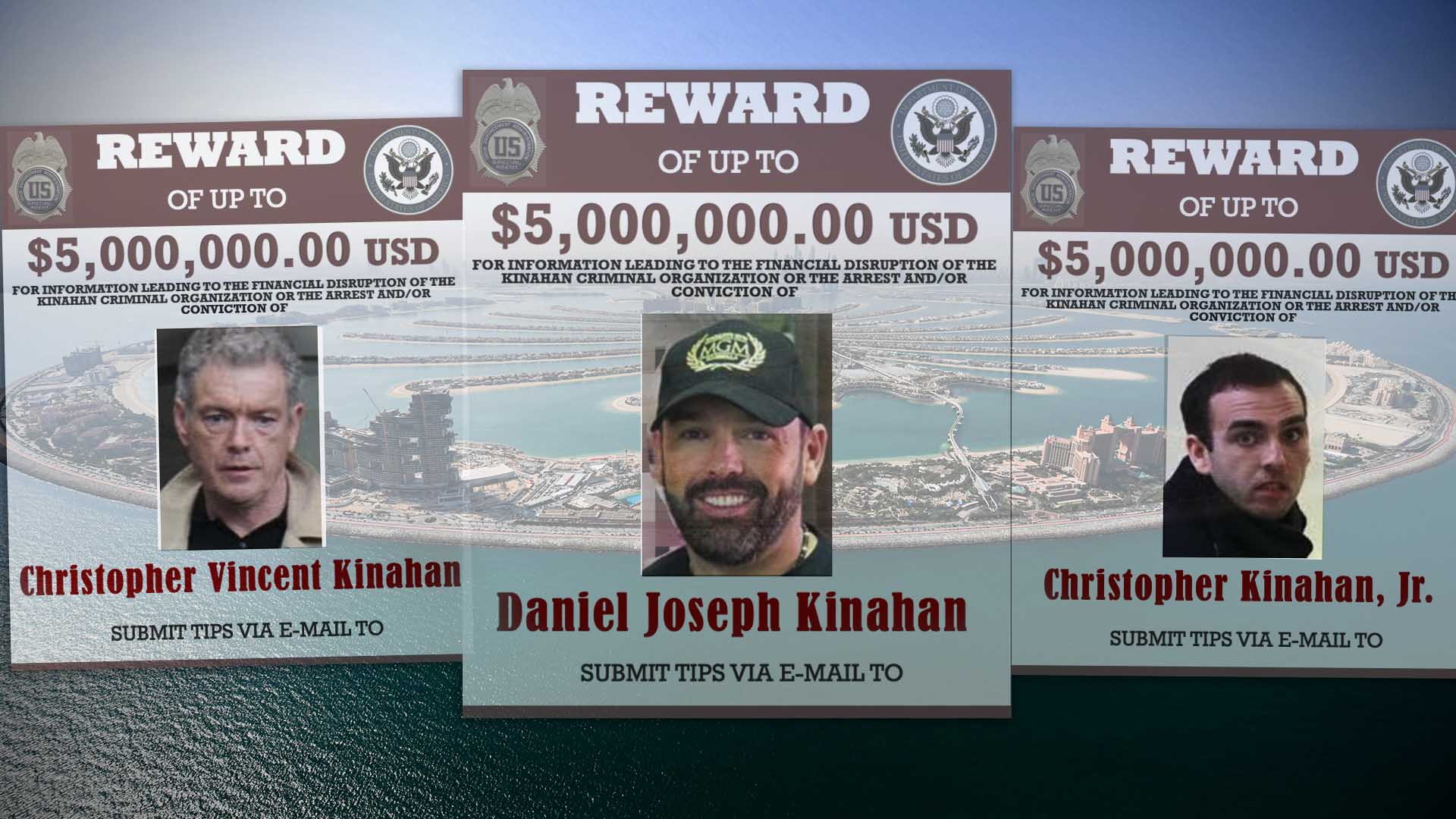
Recommended reading KINAHAN CARTEL Drug kingpin Daniel Kinahan was paid millions ‘under the table’ to be boxing promoter’s exclusive agent, court complaint alleges Mar 05, 2025 CRIME CARTEL Dubai property portfolio calls into question effectiveness of sanctions on Kinahan cartel leader, experts say May 14, 2024 Dubai How a ruthless Irish gang found a home away from home in Dubai and an enemy in the White House Apr 23, 2022
⬅️ 3 / 11 ➡️
- GÉNÉRALISTES
- Le Canard Enchaîné
- La Croix
- Le Figaro
- France 24
- France-Culture
- FTVI
- HuffPost
- L'Humanité
- LCP / Senat
- Le Media
- La Tribune
- Time France
- EUROPE ‧ RUSSIE
- Courrier Europe Ctrale
- Desk-Russie
- Euractiv
- Euronews
- Toute l'Europe
- Afrique ‧ Asie ‧ Proche-Orient
- Haaretz
- Info Asie
- Inkyfada
- Jeune Afrique
- Kurdistan au féminin
- L'Orient - Le Jour
- Orient XXI
- Rojava I.C
- INTERNATIONAL
- Courrier International
- Equaltimes
- Global Voices
- Infomigrants
- I.R.I.S
- The New-York Times
- OSINT ‧ INVESTIGATION
- OFF Investigation
- OpenFacto°
- Bellingcat
- Disclose
- G.I.J
- I.C.I.J
- OPINION
- Au Poste
- Cause Commune
- CrimethInc.
- Hors-Serie
- L'Insoumission
- Là-bas si j'y suis
- Les Jours
- LVSL
- Politis
- Quartier Général
- Rapports de force
- Reflets
- Reseau Bastille
- StreetPress
- OBSERVATOIRES
- Armements
- Acrimed
- Catastrophes naturelles
- Conspis
- Culture
- Curation IA
- Extrême-droite
- Human Rights Watch
- Inégalités
- Information
- Justice fiscale
- Liberté de création
- Multinationales
- Situationnisme
- Sondages
- Street-Médics
- Routes de la Soie