
26.05.2026 à 15:53
Is extracting oxygen from lunar soil the future of space exploration?
Jack Robinot, Doctorant en sciences de l'ingénieur, Centre national de la recherche scientifique (CNRS); Université de Perpignan Via Domitia
Alexis Paillet, Chargé de projet vaisseaux spatiaux, Centre national d’études spatiales (CNES)
Stéphane Abanades, Directeur de Recherche, Centre national de la recherche scientifique (CNRS)
Sylvain Rodat, Chargé de recherche, Centre national de la recherche scientifique (CNRS)
Texte intégral (3075 mots)
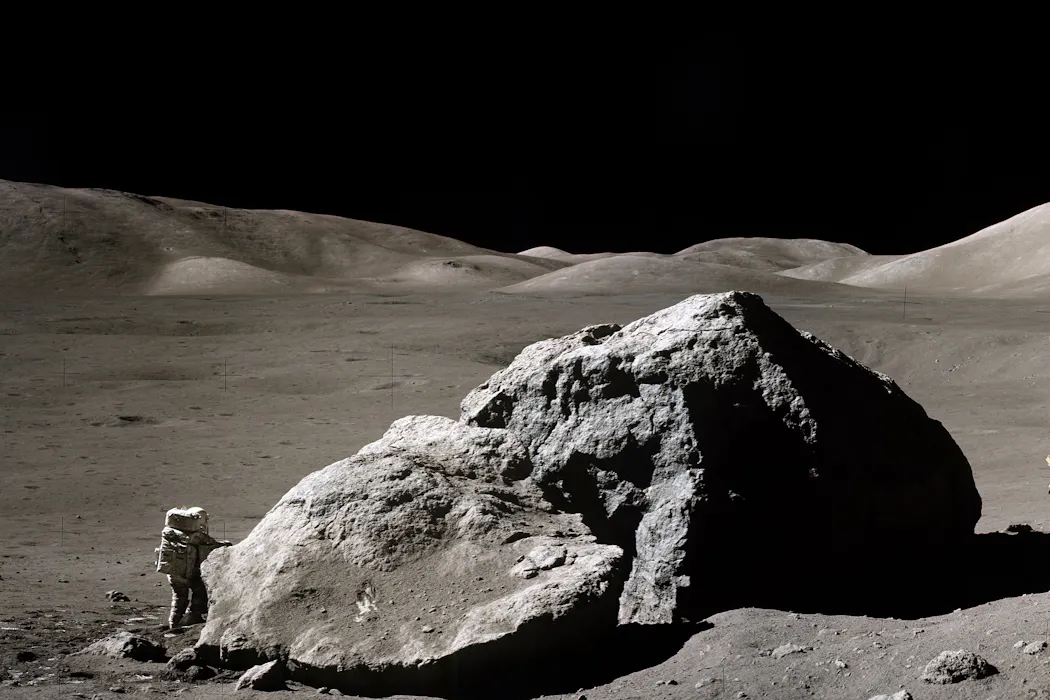

A new race to the Moon is emerging between the United States and China. Unlike fifty years ago, the goal is no longer just about landing and leaving, but establishing a base that allows for a sustainable presence and extended stays on the surface of our natural satellite. The objective is now to use the Moon as a testing ground for technologies that will enable us to travel further, particularly to Mars.
One of these key technologies is in-situ resource utilization (ISRU), which involves using available resources on-site to produce the consumables necessary for human activities: oxygen, water, rocket fuels, or construction materials. By producing these essentials directly on the Moon, it will be possible to significantly reduce the mass of cargo sent from Earth, thereby reducing the logistical and financial costs of space exploration. Instead of importing these resources from Earth, the goal is to learn how to live on the Moon.
Breaking down lunar dust to extract oxygen
At the dawn of humanity’s sustainable return to the Moon, ISRU is emerging as a strategic pivot. One of the major challenges is producing oxygen from regolith, the layer of soil covering the Moon, primarily composed of small rock fragments and dust. The composition of regolith is complex, mainly consisting of several minerals (plagioclase, pyroxene, olivine) themselves made up of a mixture of metal oxides – chemical compounds that combine oxygen with another element such as silicon, iron, or calcium.
Approximately 40 to 45% of the mass of regolith is composed of oxygen, making it the most abundant element on the lunar surface. Oxygen is ubiquitous, but it does not exist in gaseous form as it does in Earth’s atmosphere. To release the oxygen, the chemical bonds that attach it to other elements in the oxides of the lunar soil must be broken.
One of the methods considered is pyrolysis, a type of chemical reaction that decomposes materials using high temperatures to produce volatile compounds. When applied to regolith, it is possible to heat it until the metal oxides vaporise and decompose into oxygen and metals.
On the Moon, thermal energy would be provided through solar concentration, a process that uses mirrors or lenses to focus sunlight onto a small area. The rays then converge into a beam, focusing energy at a focal point where temperatures can reach several thousand degrees. This method also plans to take advantage of the lunar vacuum, an environment that favours gas-releasing reactions. This would reduce the amount of energy required for the reaction.
The solar furnace: an effective and low-cost method
The Moon has an environment particularly conducive to solar pyrolysis. Lacking atmosphere, the pressure on its surface is extremely low, on the order of 10-15 bar. The absence of atmosphere offers a second advantage: solar radiation cannot be absorbed by it or blocked by clouds. This allows for higher concentrated solar fluxes than those on Earth. Additionally, certain geographic areas at its South Pole are exposed to sunlight up to 90% of the time. Thus, by combining the lunar vacuum with solar concentration systems, a relatively simple, robust, and potentially effective process for extracting oxygen from regolith can be designed.


At the Laboratory of Processes, Materials, and Solar Energy (PROMES-CNRS), a leader in solar concentration technologies, researchers have successfully demonstrated the basic concept of pyrolysis [1], paving the way for its potential future deployment on the Moon. Located at the site of the world’s largest solar furnace in Odeillo in the French Pyrenees (Occitanie region), the laboratory has unique experimental facilities dedicated to the study of high-temperature processes. Among these facilities are parabolas two metres in diameter that can concentrate sunlight 10,000 times onto a spot about 2 cm in diameter, reaching temperatures of over 3,000°C.

This energy powers the pyrolysis reactor, a vacuum chamber designed to expose samples of materials simulating lunar regolith to concentrated solar flux. The simulant pellets are placed on a copper support, while a parabola focuses sunlight inside the reactor to heat them. A vacuum pump maintains a pressure of about 10 millibars. An electrochemical cell continuously measures the oxygen concentration in the reactor.
The sample is then gradually heated and begins to melt at around 1,200°C. The regolith subsequently reaches temperatures of about 2,000°C. Under these conditions, the oxides in the sample begin to vaporise and dissociate, releasing oxygen.

Other products besides oxygen
In the initial tests, 35mg of oxygen was extracted from a 3.38g pellet, representing about 1% of the total mass. This corresponds to 2.5% of the oxygen contained in the regolith simulant. Once the experiment is completed, a glass bead is obtained instead of the regolith pellet. The fraction of regolith that vaporised during the experiment condenses on the cold walls of the reactor in the form of mineral compounds. These species are collected to characterise them and determine their chemical composition.
After pyrolysis, the glass bead that is formed has a different chemical composition from the initial regolith simulant. The volatile oxides, which escaped during the process, are less concentrated, while non-volatile oxides are more concentrated. The most volatile species were found in the deposits collected on the reactor walls, where they condensed during pyrolysis.
This observation suggests that pyrolysis could also be used as a method to separate oxides in regolith through a distillation-like principle. These byproducts could be used to manufacture structures, tools, or construction materials directly on the Moon, thereby enhancing the autonomy of future lunar missions.
Moving from proof of concept to real conditions
These initial tests determined a yield, but it remains low. The next development steps will aim to reduce the pressure inside the reactor to approach lunar conditions. Reduced pressure should lower the temperatures required for pyrolysis, allowing the sample to vaporise completely and increase yield.
Subsequently, it will also be relevant to test different types of regolith, as well as the individual minerals and oxides that compose them, to better understand the chemistry of the reactions. The pyrolysis reactor will need to operate continuously during most of the lunar day. The process can still be optimised. More precise temperature control would allow better management of reactions and improve their yield. More efficient gas collection would aim to minimise oxygen loss. We also hope to reduce thermal losses by using a crucible and insulating it. Finally, better condensation of byproducts would help identify and utilise the materials formed during pyrolysis in addition to oxygen.
The entire system (reactor, mirrors, and solar concentration devices) must also be robust and reliable, capable of withstanding the extreme conditions of the lunar environment: abrasive dust, radiation, and significant thermal variations. Finally, the generated oxygen must be stored, purified to separate it from other elements that may be present in the gas, and used. Thought must also be given to the logistics of supplying the reactor with regolith, whether for its extraction, transport, or use after processing.

Solar vacuum pyrolysis is a method particularly well suited to lunar conditions. It takes advantage of the moon’s natural vacuum, requires few imported resources, and uses solar energy, which is abundant on the Moon without an atmosphere. Tests at Odeillo have already proven the feasibility of the concept, but yields still need to be improved, and technical challenges remain significant. By producing oxygen and materials locally, the process would support future lunar bases and reduce their dependence on Earth.
[1] Robinot, J., Rodat, S., Abanades, S., Bêche, E., Paillet, A., & Cowley, A. (2026). Quantification of Oxygen Production from Solar Pyrolysis of Lunar Regolith. Advances in Space Research.

A weekly e-mail in English featuring expertise from scholars and researchers. It provides an introduction to the diversity of research coming out of the continent and considers some of the key issues facing European countries. Get the newsletter!

Jack Robinot received funding from the CNES and France's Occitanie region.
Sylvain Rodat received funding from France's Occitanie region and equipment from the ESA (Agence spatial européenne) which provided the regolith simulant.
Alexis Paillet et Stéphane Abanades ne travaillent pas, ne conseillent pas, ne possèdent pas de parts, ne reçoivent pas de fonds d'une organisation qui pourrait tirer profit de cet article, et n'ont déclaré aucune autre affiliation que leur poste universitaire.
25.05.2026 à 18:21
Juju Fitcats, Maghla, Marcus : quand les influenceurs bousculent la hiérarchie des stars
Caroline Rouen-Mallet, Enseignant-chercheur en marketing, Université de Rouen Normandie
Pascale Ezan, professeur des universités - comportements de consommation - alimentation - réseaux sociaux, Université Le Havre Normandie
Stéphane Mallet, Enseignant-chercheur en marketing, IAE Rouen Normandie - Université de Rouen Normandie
Texte intégral (1296 mots)

La 15ᵉ saison de l’émission « Danse avec les stars » vient de s’achever, marquant un tournant symbolique pour le paysage audiovisuel français. Parmi les finalistes, on retrouvait en effet Juju Fitcats, influenceuse fitness aux millions d’abonnés, encouragée sur le plateau par son conjoint, le youtubeur français le plus suivi du pays, Tibo InShape. Dans cette édition, pas moins de trois figures issues des réseaux sociaux (Maghla, Marcus et Juju Fitcats) concouraient aux côtés de célébrités du show-business traditionnel.
Si l’on peut voir dans la « diversification » des candidats de l’émission « Danse avec les stars » une stratégie de TF1 pour capter un public jeune, ce mélange des genres est surtout le symptôme d’une mutation profonde : l’avènement de nouveaux modèles d’identification et une redéfinition radicale de la « star ».
L’intégration de créateurs de contenus au sein d’un programme institutionnel entérine un glissement sémantique majeur de la notion de « star ». Jusqu’ici, la légitimité d’une célébrité découlait d’une forme de consécration par les industries culturelles traditionnelles (cinéma, musique, télévision…). Aujourd’hui, la hiérarchie est bousculée.
Le passage de l’écran vertical du smartphone au parquet du prime time de l’émission « Danse avec les stars », diffusée en France depuis 2011 – dans laquelle des célébrités faisant ou ayant fait carrière dans un autre domaine que la danse (chanson, musique, cinéma, sports, télévision, mannequinat, humour, etc.) sont associées à des professionnel·les de la danse, formant ainsi des couples de danse – institutionnalise une nouvelle forme d’autorité. La notoriété ne se reçoit plus d’une chaîne de télévision ; elle s’apporte avec soi. En invitant ces personnalités du Web, la télévision reconnaît que la norme sociale et culturelle se co-construit désormais dans l’interactivité de l’espace numérique. Le créateur de contenus n’est plus une « sous-célébrité », mais le détenteur d’un capital social, porté par une communauté virtuelle, que les médias de masse cherchent à s’approprier.
Le cas de Juju Fitcats est, à cet égard, exemplaire. Son parcours récent témoigne d’un accroissement inédit de son périmètre d’influence : de créatrice de contenus sur YouTube, elle est devenue animatrice pour le groupe M6 avec l’émission « Living Santé ». Ce passage du statut de « personnalité du web » à celui de présentatrice d’une émission thématique sur une grande chaîne nationale marque une étape clé. Elle n’est plus seulement une invitée, mais une figure d’autorité médiatique dont la légitimité, née sur les réseaux sociaux, est désormais reconnue par les responsables des médias traditionnels et validée par le grand public.
Le « super-pair » : une proximité émotionnelle inédite
Ce basculement s’éclaire à la lumière de la théorie de l’apprentissage social d’Albert Bandura (1925-2021). Pour apprendre et créer son identité au sein d’un groupe, l’individu privilégie des modèles perçus comme similaires à lui-même, qu’il s’attache à imiter dans l’objectif de valoriser son image sociale.
Contrairement aux stars classiques dont la vie privée reste sanctuarisée, les influenceurs ont bâti leur empire sur l’exposition de leurs vulnérabilités. Juju Fitcats, en évoquant son parcours lié à l’anorexie, crée une puissante illusion de proximité, car elle met en scène sa fragilité et le parcours suivi pour dépasser les difficultés. Pour le jeune téléspectateur, voir Juju Fitcats ou Marcus accéder à une reconnaissance nationale offre alors un récit d’« empowerment » où chacun est invité à s’accomplir sous le regard des autres. La réussite sociale semble dès lors reproductible et le dépassement de soi accessible à tous, car incarnés par une personne « normale » issue de plateformes numériques, largement fréquentés par les jeunes.
Les zones d’ombre de la prescription : le poids des normes
Nos recherches financées par l’Agence nationale de la recherche (ANR) et menées dans le cadre des projets ALIMNUM et ALIMFIT soulignent la force de prescription massive de ces acteurs sur les comportements alimentaires et sportifs, dans la lignée des recommandations sanitaires diffusées par les professionnels de santé et les pouvoirs publics. Toutefois, cette consécration des influenceurs comme nouveaux leaders d’opinion n’est pas sans risques pour des publics vulnérables.
En confiant les clés d’une émission comme « Living Santé » à une influenceuse fitness, les médias traditionnels actent le fait que les jeunes s’informent désormais via des visages familiers plutôt que par des experts académiques distants. Si cela permet de diffuser des messages de prévention de manière moins moralisatrice, cela renforce aussi une comparaison sociale constante. L’exposition répétée à des corps performants, validés à la fois par les algorithmes et par le prime time, peut engendrer une autosurveillance accrue et une insatisfaction corporelle chez les populations les plus fragiles. La participation à une émission comme « Danse avec les stars » permet en effet, de rendre visible et de mettre en scène les conseils diffusés, en montrant comment le corps peut être contrôlé au service d’une compétition festive grand public.
Vers de nouveaux architectes du monde social
En définitive, la présence massive d’influenceurs sur le parquet de « Danse avec les stars » et leur installation durable sur les grilles de programmes montrent qu’ils sont les nouveaux architectes du monde social des jeunes. Même si passer des réseaux sociaux à une émission santé puis à un rendez-vous médiatique en prime time peut sembler incohérent, ce parcours de starification est le reflet de l’extension du pouvoir des influenceurs fitness, à l’heure où le corps constitue un passeport social pour une grande majorité des jeunes.
Comprendre ce glissement, ce n’est pas diaboliser ces créateurs, mais accepter que les leviers de l’influence ont changé de main. L’enjeu pour l’éducation aux médias est désormais d’analyser comment cette « proximité mise en scène », désormais institutionnalisée par la télévision, redéfinit durablement le rapport à l’identité, au succès et à la santé physique et mentale des jeunes.

Caroline Rouen-Mallet a reçu des financements de l'Agence Nationale de la Recherche (ANR) ) pour les projets ALIMNUM et ALIMFIT.
Pascale Ezan a reçu des financements de l'Agence Nationale de Recherche - projet ALIMNUM : Alimentation et Numérique
Stéphane Mallet a reçu des financements de l'ANR
- GÉNÉRALISTES
- Ballast
- Fakir
- Interstices
- Issues
- Korii
- Lava
- La revue des médias
- Time France
- Mouais
- Multitudes
- Positivr
- Regards
- Slate
- Smolny
- Socialter
- UPMagazine
- Le Zéphyr
- Idées ‧ Politique ‧ A à F
- Accattone
- À Contretemps
- Alter-éditions
- Contre-Attaque
- Contretemps
- CQFD
- Comptoir (Le)
- Déferlante (La)
- Esprit
- Frustration
- Idées ‧ Politique ‧ i à z
- L'Intimiste
- Jef Klak
- Lignes de Crêtes
- NonFiction
- Nouveaux Cahiers du Socialisme
- Période
- ARTS
- L'Autre Quotidien
- Villa Albertine
- THINK-TANKS
- Fondation Copernic
- Institut La Boétie
- Institut Rousseau
- TECH
- April - Libre à lire
- Dans les algorithmes
- Framablog
- Goodtech.info
- Quadrature du Net
- Revue Eur. Médias et Numérique
- INTERNATIONAL
- Alencontre
- Alterinfos
- Gauche.Media
- CETRI
- ESSF
- Inprecor
- Guitinews
- MULTILINGUES
- Kedistan
- Quatrième Internationale
- Viewpoint Magazine
- +972 mag
- PODCASTS
- Arrêt sur Images
- Le Diplo
- LSD
- Thinkerview