
Greenpeace Pictures of the Week
Greenpeace International
A trojan horse, a giant turtle, and a busy week at COP31, here are a few of our favourite images from Greenpeace work around the world over the past seven days. Greenpeace has been a pioneer of photo activism for more than 50 years, and remains committed to bearing witness and exposing environmental injustice through the images we capture. To see more Greenpeace photos and videos, please visit our Media Library. Texte intégral (3049 mots)
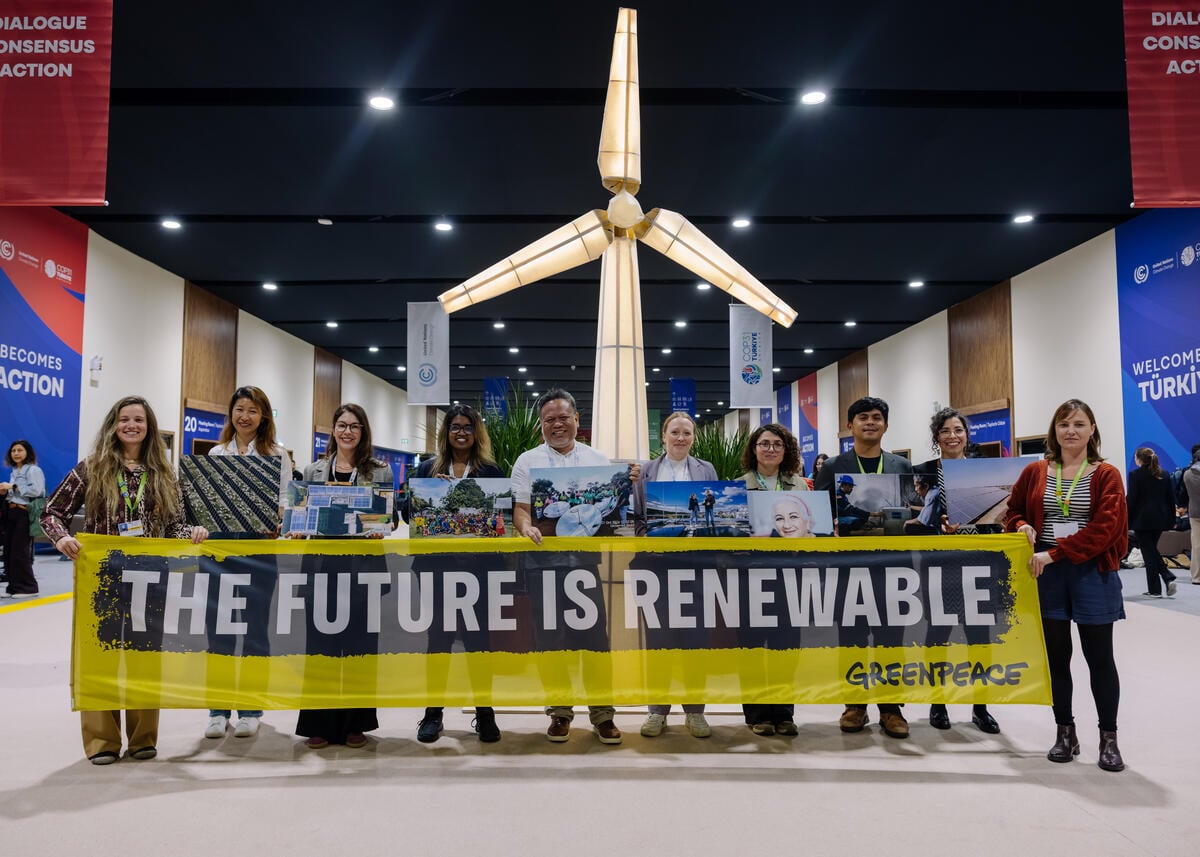
 Türkiye – COP31 in Antalya, Türkiye, Greenpeace installed a symbolic windmill in the UN ‘Blue Zone’. Standing beside it, members of Greenpeace’s COP31 delegation shared inspiring snapshots of the green energy transition from across the globe to send a clear message: ‘The Future is Renewable.’ Stories from Europe, Türkiye, the Pacific, MENA, Africa, Brazil, Southeast Asia, and East Asia passed on a message of hope and inspiration to guide negotiators to live up to their responsibility as COP31 nears its end.
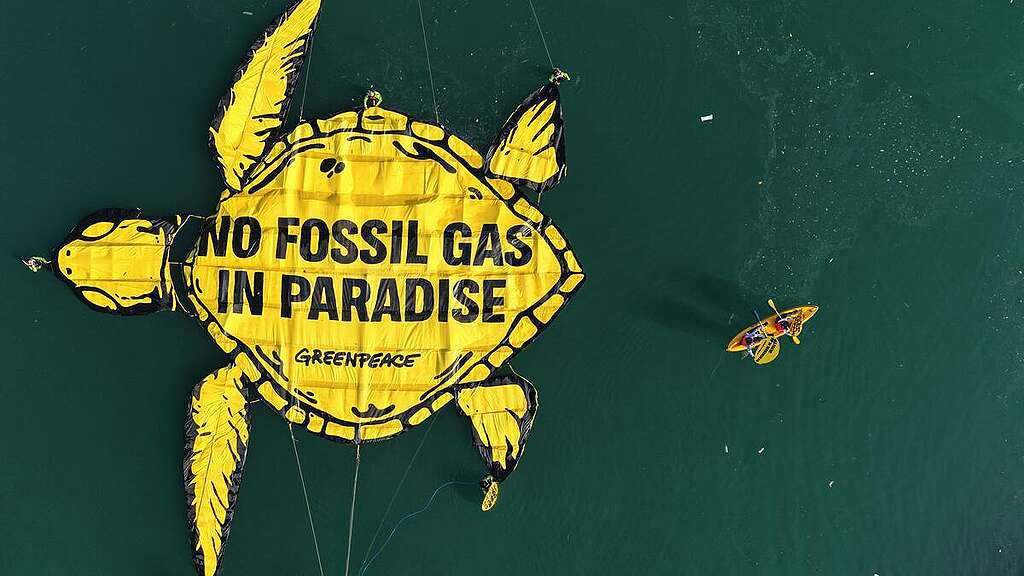
 Indonesia – Greenpeace Indonesia staged a creative, peaceful protest at the centre of climate crisis cause. A banner shaped like a sea turtle was unfurled over the water directly in front of a Floating Storage and Regasification Unit (FSRU) for liquefied natural gas (LNG) in Benoa, Bali. The banner said: “No Fossil Gas in Paradise.” The action aim is to demand Indonesian government to remain committed to energy transition and to exclude fossil fuels in its electricity planning.

 Norway – Greenpeace Norway Legal campaigner Klimentina Radkova hugs a colleague at the Supreme Court in Oslo on 13 November 2026 after the Grand Chamber invalidated government permits for three North Sea oil and gas fields—Breidablikk, Yggdrasil, and Tyrving – developed by Equinor and Aker BP. This result affirmed earlier rulings from the Oslo District Court and the Borgarting Court of Appeal, the Supreme Court established that environmental impact assessments must account for Scope 3 emissions—the global climate damage caused wherever the extracted fossil fuels are burned.
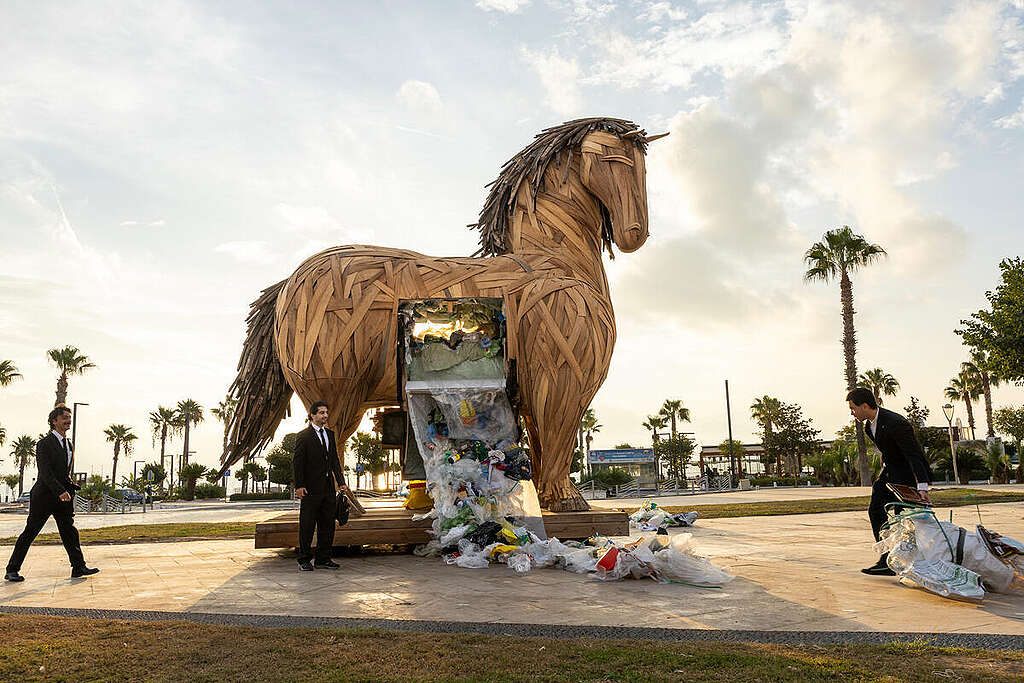 Türkiye – Greenpeace International launches a giant Trojan Horse in central Antalya during the UN climate conference COP31, exposing how the fossil fuel and petrochemical industries are using plastic production to prolong dependence on oil and gas and protect their profits.
Created in collaboration with Danish artist Thomas Dambo for Greenpeace’s plastics campaign, the installation stands six metres high and four metres wide and poured out plastic when the trapdoor in its belly opened. It carries a message to world leaders gathering for climate negotiations: plastic is the big oil’s Trojan Horse.

 Germany – Official opening of the Greenpeace exhibition “Flutwohnung” (Flooded Apartment) at the Biosphäre Potsdam, which uses a model of an apartment destroyed by flooding to illustrate the consequences of increasing weather extremes and climate change.
 Türkiye – COP31 Mascot Caretta at Greenpeace International 3D artwork. Laid across a high-traffic walkway at COP31, the large-format 3D graphic depicts a fossil fuel power plant inside a deep, cracked pit. The optical illusion challenges passers-by to instinctively step aside to avoid falling in, physically acting out the need to escape the fossil fuel trap. The action calls on delegates and ministers to stop locking economies into volatile fossil fuel dependence and accelerate a fast, fair and funded transition to homegrown renewables, funded largely through progressive polluter taxation.
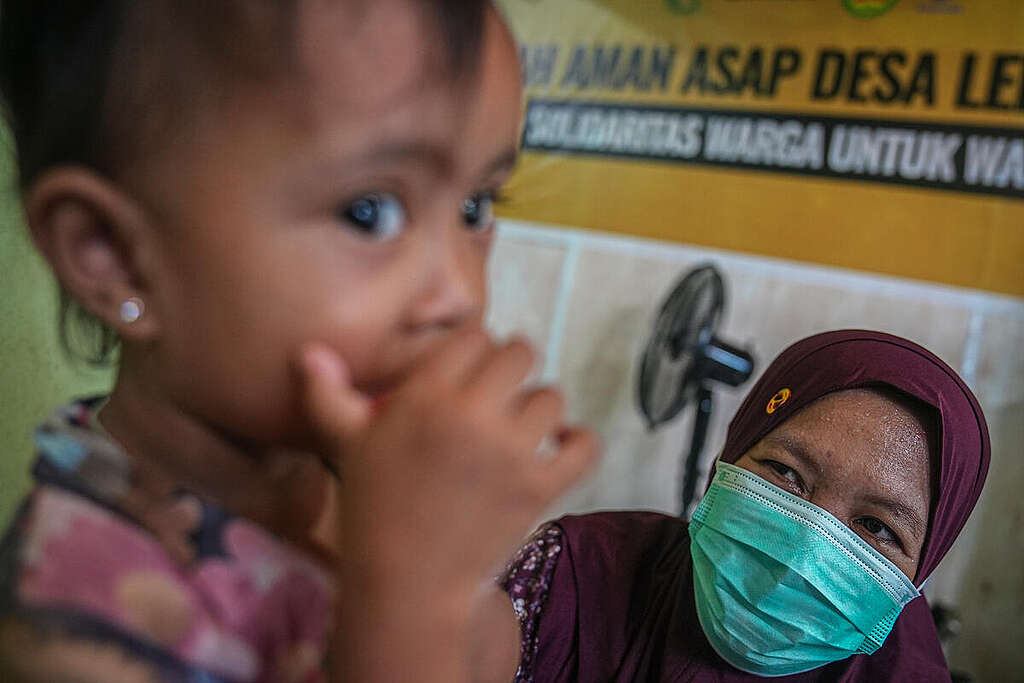 Indonesia – Resa Susanti, a volunteer, examines Sakina, 2.5, who is suffering from an acute respiratory infection (ARI) linked to wildfire haze, at a Haze Shelter in Lebung Itam village, Ogan Komering Ilir regency, South Sumatra. Greenpeace, local civil society organization Rawang and residents established the shelter under the theme “Community Solidarity for the Community” because the village is located near wildfire hotspots. Cases of ARI have increased as air quality deteriorates due to wildfires in South Sumatra.
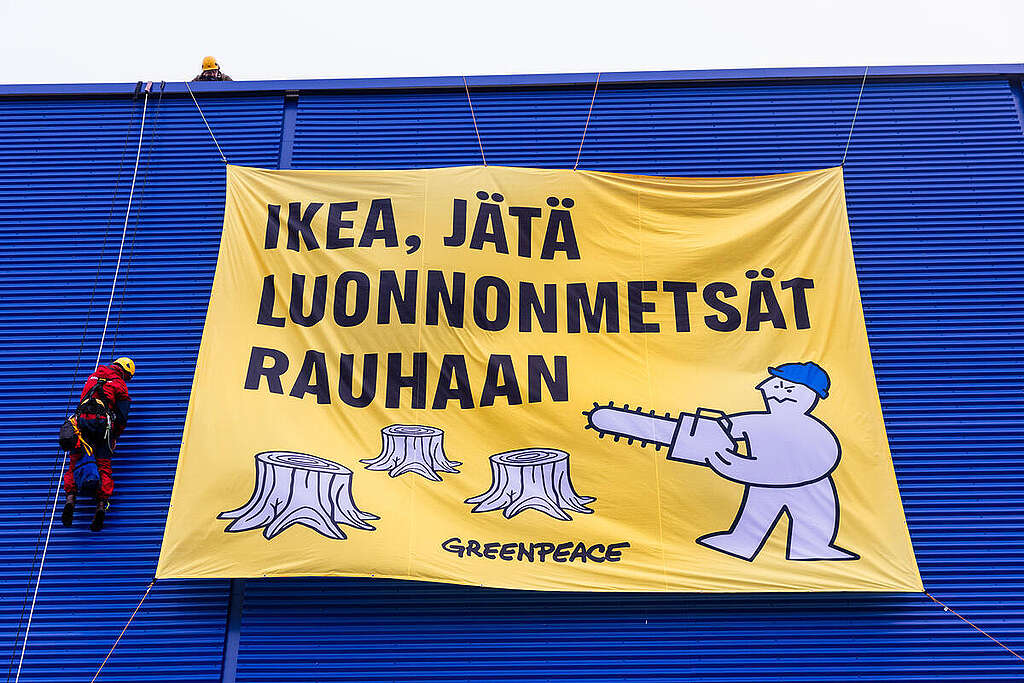
 Finland – Activists from Greenpeace Nordic protest at the Ikea superstore in Vantaa, Finland, with a banner demanding the company to stop using wood from old growth forests. They are challenging the world’s largest furniture manufacturer to protect Europe’s most valuable forests, and stop sourcing wood from forests that should be protected.
 Türkiye – In Antalya, Greenpeace Türkiye activists held banners under the arches of the 1900 years old Hadrian Gate, one of the city’s most iconic historical sites: ‘History is Watching’. Future generations and historians will look back at the decisions made in COP31: It could be a lasting legacy, or a cautionary tale.
Greenpeace responds to IEA new report, calls for urgent clean energy investment to protect the planet and people’s economic and energy security
Greenpeace International
Amsterdam, The Netherlands – The International Energy Agency released its flagship World Energy Outlook 2026 report, which examines multiple scenarios for governments to confront the historic energy supply shock provoked by the war on Iran.[1] The report shows how diversification and investment in alternative sources of supply could reduce the need for oil flows and countries’ exposure to energy shocks. John Noël, Senior Strategist, Greenpeace International said: “After more than eight months of war on Iran, supply shocks, price increases, on top of escalating fossil fueled climate disasters, the World Energy Outlook shows oil and gas dependence running through all of it. “The war on Iran and attacks in the Strait of Hormuz have disrupted the lives and livelihoods of billions of people relying on a never-ending free flow of fossil fuels. How countries continue to respond to these ongoing crises will set the energy trajectory for the future. Notably, IEA confirms that domestically produced clean energy is not only good for the planet, but leads to more stable and predictable energy bills. “The structural change in clean energy underway right now may not reach its full potential without focused attention and bold investments. The report also considers a scenario where societies learn very few lessons from this largest energy crisis in history, and new export routes for oil and gas emerge, a low price cycle starts and fossil fuel demand rises. Governments must act now to avoid this. “We are in a narrow window inside the global energy and inflation crisis to demand governments take emergency level measures that will make countries less vulnerable to geopolitical crises, price shocks and disruptions at oil chokepoints. Acting now means expedited clean electrification of transport, heat, and power, protecting households hit hardest from price shocks, refusing to bankroll all new fossil fuel projects, and taxing the record profits that fossil fuel companies are making amid the war. If not, the next fossil fueled crisis is already scheduled.” ENDS Notes: [1] World Energy Outlook 2026 report Contact: Greenpeace International Press Desk, +31 (0)20 718 2470 (available 24 hours), pressdesk.int@greenpeace.org (404 mots)
Indigenous Peoples have a message to miners: Our Territories are not for sale
Camila Garcez
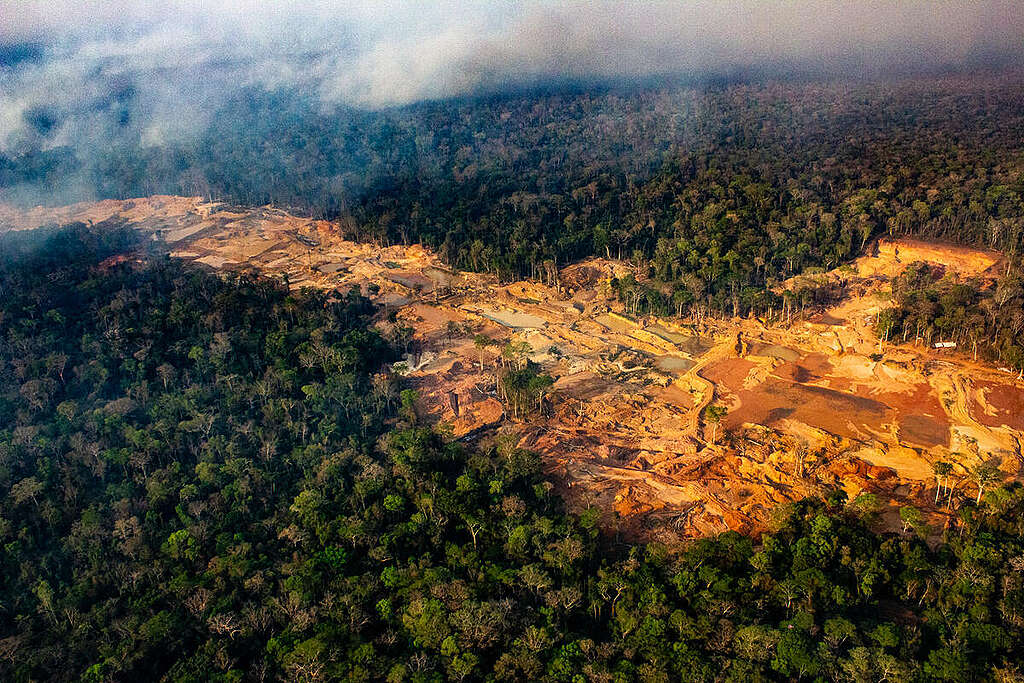
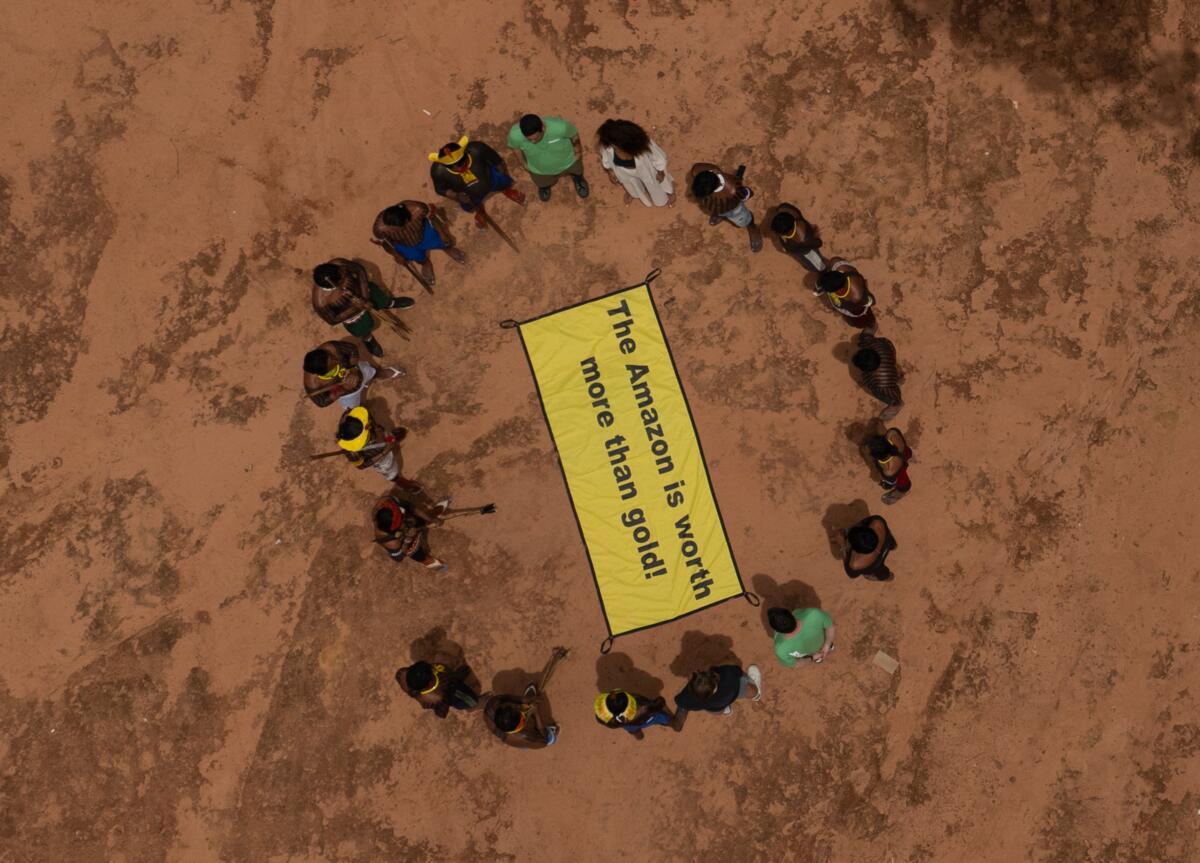
Indigenous territories have long been treated as frontiers open for exploitation, while its Peoples, who have protected the lands for generations, face fresh threats to their physical, cultural, spiritual, and territorial integrity. Earlier this month, the Articulation of Indigenous Peoples of Brazil (APIB) held a seminar “This Land Has an Owner: Indigenous Territories Free from Mining”, with the aim to discuss the threats posed by industrial and illegal mining to Indigenous territories, ways of life, and autonomy Following the gathering, Indigenous Peoples launched a statement that represents their stance against a movement that is gaining momentum with the global race for critical minerals and rare earth elements, weaponising the argument that these resources are necessary for the energy transition. Here’s what they had to say. When the energy transition relies on opening up new frontiers for exploitation, violating rights, and destroying ecosystems, it reproduces the colonial logic that has historically turned territories into sources of raw materials while leaving local populations to bear the socio-environmental costs of that exploitation. While governments and corporations present mining as an inevitable path towards sustainability, Indigenous Peoples warn this must not be used as a justification to deepen the violence, contamination, and appropriation of their territories. Illegal and industrial mining have been posing threats to Indigenous Lands, such as heavy metal contamination from mercury and lead, as well as the destruction of their sacred sites, provoking a series of negative impacts among the peoples and communities who have historically protected the forest and its ecosystems. Indigenous Peoples refuse to be treated as obstacles to economic development. Self-determination is a fundamental right: it is up to the Peoples themselves to decide on their life projects, their forms of organisation, and what may or may not take place on their Territories. For this reason, Indigenous Leaders reject consultations carried out merely to legitimise decisions already made by the state or by corporations. Consultation cannot be reduced to a box-ticking exercise to push projects through, but must serve as an instrument to uphold the right to decide. Free, prior, and informed consent must respect the autonomous protocols of each person and guarantee a genuine right of refusal. Greenpeace Brazil calls for confronting an extractivist model that disregards the social, environmental, cultural, and spiritual dimensions of Indigenous Territories. Projects that shape the future of their lands cannot move forward based on the logic of cobbled-together political majorities, continuing to inflict pain and suffering on Brazil’s more than 300 Indigenous nations. As Indigenous leaders state in their final letter at the end of the seminar: Our sovereignty stems from our peoples and our territories: it cannot be divided between the surface and the subsoil, because the land, the waters, the minerals, and the ways of life sustained there form a single territory of life A truly just energy transition must confront historical inequalities, reduce pressure to open new extractive frontiers, and respect the rights of those who protect the ecosystems vital to climate balance. There is no climate justice when the response to the environmental crisis reproduces the very forms of violence that helped create it. Read the full final letter (in Portuguese) here. Camila Garcez is a Campaign Engagement Analyst at Greenpeace Brazil. Texte intégral (1610 mots)

Spain and Portugal roadmaps help build momentum to end fossil fuels at COP31
Greenpeace International
Antalya, Türkiye – The announced roadmaps away from fossil fuels from Spain and Portugal at COP31 are a welcome development, but must now lead to an ambitious outcome at the UN climate conference to accelerate the phase-out of fossil fuels. At a press conference of the Beyond Oil and Gas Alliance (BOGA) at COP31, Spain, Portugal and Denmark announced they would launch roadmaps for the transition away from fossil fuels, while Luxembourg said it would launch its roadmap before the joint Ireland-Tuvalu conference for the transition away from fossil fuels next year. The BOGA alliance called on greater action to end fossil fuels to limit the extent and duration of the looming 1.5°C overshoot. Jasper Inventor, Head of COP31 of Greenpeace Delegation said: “This is a welcome push by the countries that have announced their roadmaps. We encourage other countries who are yet to do so to step forward and help secure a COP31 outcome that accelerates the phase-out of fossil fuels. These announcements send a clear signal that the era of fossil fuels will end. But the devil is in the detail: if we’re to keep 1.5°C alive we need to go harder and faster. Our collective future is on the line here at COP31.” Greenpeace Spain-Portugal also welcomed the announcement from Spain to not only present its roadmap for phasing out fossil fuels in Antalya, but also advocate for an electrification target linked to renewable energy and the phase-out of fossil fuels in the COP31 outcome. Sara Pizzinato, Climate and Energy Campaigner, Greenpeace Spain-Portugal said: “We hope that the roadmaps will include 2040 as the deadline for the decarbonisation of the economy, along with guidelines to harness the potential of sufficiency, efficiency and electrification with renewables to accelerate the transition. “Greenpeace Spain – Portugal has demonstrated that Spain and Portugal can phase out fossil fuels as early as 2040 by reducing its energy demand by 39 % and meeting the entirety of that demand with renewable energy. What Spain and Portugal must not do is resubmit the same weak targets as those in the current Integrated National Energy and Climate Plans for 2030. It must include dates for phasing out the use of coal, gas and oil (no later than 2040), and measures to end subsidies for fossil fuels.” Simon Bradshaw, COP31 Lead, Greenpeace Australia Pacific said: “The only path to returning warming to 1.5°C is through leaving fossil fuels in the ground. To inject the momentum these talks critically need, Australia must lead by example through developing its own national roadmap away from fossil fuels, including exports. We have just heard Denmark, another fossil fuel producer, say it is putting end dates on oil and gas production. Australia must be willing to do the same. “Australia’s Presidency of Negotiations will be judged on whether it builds further momentum and practical pathways for the global transition away from fossil fuels. This must include an electrification pledge that is powered by clean, renewable sources that actually displace fossil fuels and align with the science of 1.5°C, not a hollow pledge that risks driving up fossil gas production.” ENDS Notes: Greenpeace Spain report: Energy for a Better Life Contacts: Aaron Gray-Block, Greenpeace International, Climate Politics Communications Manager, aaron.gray-block@greenpeace.org Greenpeace International Press Desk, +31 (0)20 718 2470 (available 24 hours), pressdesk.int@greenpeace.org Texte intégral (643 mots)
Ocean heat: What is the ocean temperature’s role in extreme weather events?
Angelo Louw
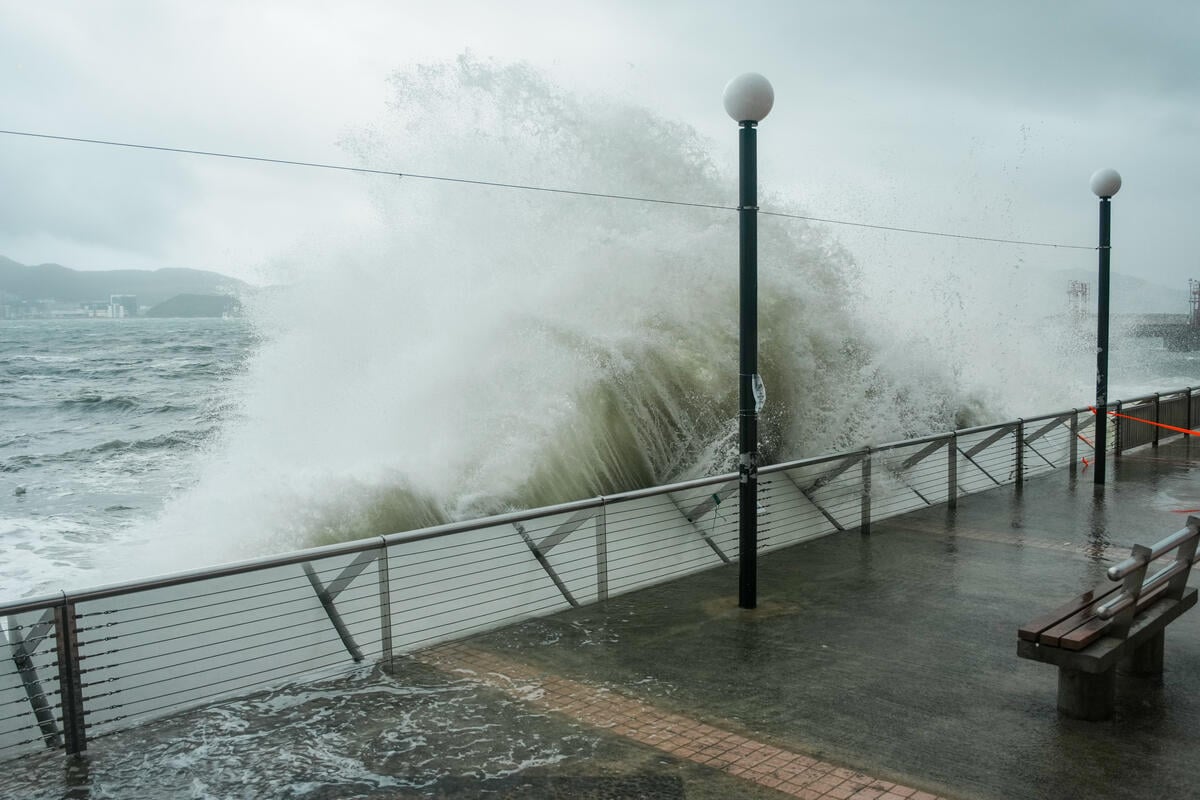
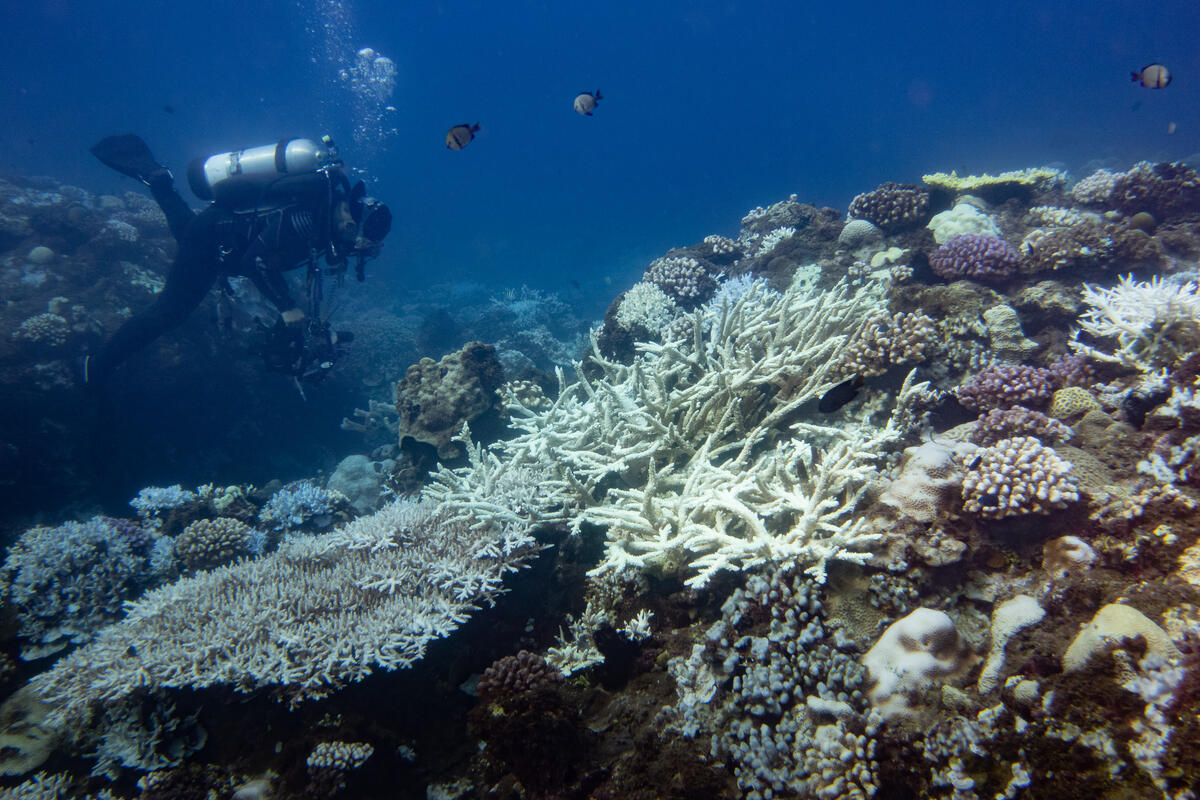
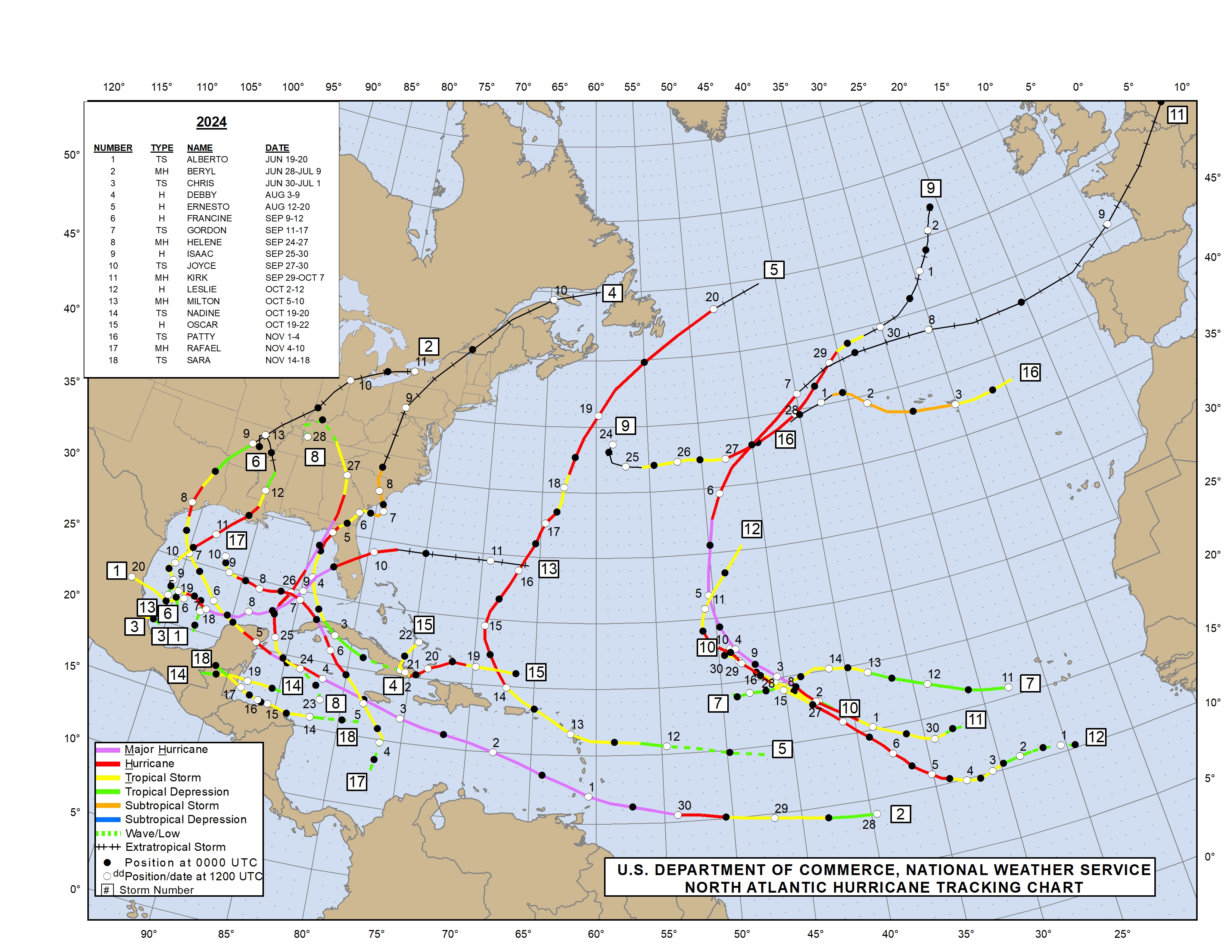
Ocean temperatures and extreme weather events are intrinsically linked – increased heat in the upper ocean surface means violent storms like cyclones, hurricanes and typhoons can pick up more energy and become more intense. Coupled with El Niño, we have seen weather patterns around the world change, with extreme weather events, like tropical storms and wildfires, happening more frequently and causing far more damage than ever before. The fossil fuel-driven climate crisis is not only supercharging ocean heating and climate impacts, but it is further destroying ocean life along with one of our best defenses against climate change. The daily global average ocean surface temperature hit a record-breaking high in August this year, reaching 21.1ºC. The ocean is hotter now than at any time ever recorded. The ocean temperature records cover the last 150 years, but based on proxy observations, we can say oceans are hotter than well before the rise of human civilisation. Recently, the European Union’s (EU) Copernicus Climate Change Service warned of unprecedented strain on the world’s oceans as El Niño and the climate crisis drive up sea surface temperatures. They also noted this new temperature high was especially strange, since global ocean temperatures usually peak in March and April, when summer in the Southern Hemisphere (which is mostly ocean, and therefore has more surface to heat) ends. With El Niño’s impact strengthening in the months that have followed, we’ve already begun to see what Copernicus has been warning about in relation to the climate phenomenon reaching “levels not seen for several decades”. Scientists noticed ocean temperatures reached uncharted territory as far back as April 2023, when it was reported that the average global sea surface temperature had hit a new record high. At the time, it was reported that the ocean had never warmed this much, this quickly since record keeping began. While not fully understanding why this had happened, they were concerned that, combined with other weather events, the world’s temperature could reach concerning new extremes by the end of 2024. In June 2023, scientists noted that heat was now rising to the ocean surface, and NOAA issued an El Niño advisory, warning of extreme weather conditions and worsening global heat records. In short, the ocean temperature is increasing because of fossil-fuel-driven global heating. Samantha Burgess, the strategic lead for climate at the European Centre for Medium-Range Weather Forecasts (ECMWF), clarified that while many assume that heat from El Niño is to blame for the devastating increase in ocean temperatures, this comes as long-term fossil-fuel-driven heating has already raised ocean surface temperatures by 0.8ºC. Over 90% of the heat associated with global heating has gone into the oceans. This rapid increase in the ocean’s temperature correlates directly with the unprecedented rising temperatures caused by climate-wrecking greenhouse gases and other pollutants. The alarming spike in ocean surface temperatures was not as sudden as it may seem. Just like global heating, we’ve known for decades – fossil fuel companies just chose to ignore the science in their relentless pursuit of profit. El Niño and its partner, La Niña, are opposite ends of a natural oscillation, the El Niño Southern Oscillation, which plays out in the tropical Pacific Ocean. During El Niño, weaker trade winds reduce the amount of cold water rising from the ocean depths, allowing surface waters in the eastern Pacific to become warmer than usual. During La Niña, stronger trade winds push warm water further west and bring more cold water to the surface, making the eastern Pacific cooler than usual. Ordinarily, El Niño raises ocean surface temperatures by 1-2ºC, but forecasts for 2026 initially predicted more than 3ºC in the coming months. More recently, the World Meteorological Organisation (WMO) seasonal outlook predicted the El Niño event would drive temperatures in the central Pacific 3.8ºC above normal ocean surface temperatures. This, too, is record-breaking. Rising ocean temperatures, firstly, have a direct impact on coastal communities and their way of fishing and living. Rising temperatures also kill off marine life, lead to more extreme weather and raise sea levels. Additionally, they are also less efficient at absorbing planet-heating greenhouse gases. Yes. Increased heat in the upper ocean surface means cyclones, hurricanes and typhoons can pick up more energy, and this means they become more intense, claiming lives, harming communities and exacerbating health risks. Warm water is jet fuel for these extreme weather events. When these juiced-up storm surges coincide with high tides, sea levels spike violently. The recent devastation caused by Typhoon Dolphin on China’s coastal mega-cities was an example of this – and served as a harsh climate reality check. Fuelled by abnormally warm waters in the East China Sea, the super typhoon rapidly intensified before making landfall in Zhejiang Province in early August 2026. Shanghai and several major cities are historically clustered in the Yangtze River Delta. Streets flooded across Shanghai, Hangzhou, and Wuxi, driven by a dangerous mix of relentless rain, river water backflow, and storm surges driving up the tide. Multiple cities issued heavy rain alerts and adjusted public facilities and transit services. Instances of extreme storm surges of two metres or more along China’s coast have doubled since the 1980s. Some places, particularly island nations like Barbados, Grenada, Fiji and Vanuatu, are particularly vulnerable to climate impacts – and are already paying the price. Unusually warm sea surface temperatures in the North Atlantic have also impacted the Atlantic hurricane season. Sky-high ocean temperatures created the conditions for Hurricane Beryl to develop in 2024, as the earliest-forming Category 5 hurricane on record in the Caribbean. As the ocean heats up, this rapid intensification is becoming more common. A dire consequence of rising ocean temperatures is more frequent and intense marine heatwaves that can lead to mass mortality of sea life. This is particularly damaging for coral reefs. In recent years, we’ve witnessed widespread coral bleaching around the world. Bleaching has been seen on reefs in the Caribbean, Florida, Egypt, and the Great Barrier Reef. Coral is Earth’s longest-living animal; as long as environmental conditions are good enough, some can live up to 5,000 years. Therefore, coral colonies usually die due to a poor living environment, extreme changes in their surroundings or their destruction by other creatures. When their living environment is not optimal, zooxanthellae that live in symbiosis with coral gradually leave or are expelled by the coral, causing coral to lose colour and gradually bleach. The optimal water temperature range for growth of most reef-building corals is 20-28°C. Unusually high ocean temperatures cause them to bleach and die. Taiwan used to be known as the coral kingdom. It has one of the widest varieties of coral in the world. Of the 700 species of stony corals on the globe, 250 species can be found along the coast of Taiwan. The country began seeing widespread coral bleaching in its waters around 2020. The Coral Reef Observation System of the National Oceanic and Atmospheric Administration (NOAA) raised Taiwan’s bleaching warning to the highest stress level during summer that year, predicting severe coral bleaching and significant mortality due to global heating. The destruction and death of coral reefs has dealt a major blow to marine ecosystems. A warming ocean has also created the perfect conditions for aquatic diseases to thrive. Scientists investigating recent mass die-offs of sardines in Southern Africa suspect that an outbreak of a fish-specific herpes virus may be responsible. The South African government stated that changes in water quality or temperature make fish more vulnerable to disease. Pilchard herpes virus poses no risk for humans; however, these mass die-offs not only disrupt food supply for coastal communities, but they can have far worse consequences for other marine life depending on the few fish left after industrial fishers loot Africa’s waters. For example, the already endangered African Penguin also experienced a mass die-off earlier this year, with 60,000 birds found dead on the Southern African coastline. As mentioned, rising ocean temperatures could radically alter the food chain and, therefore, access to food for the people who rely on fish. Much like other animal species that rely on seafood for survival, the impact of global heating on marine ecosystems poses another challenge to coastal communities’ livelihoods on top of those they already face, such as harmful industrial fishing. The climate crisis has drastically reduced seasonal catch for some fishing communities, denying them their livelihoods, safety and security. In Kerala, India, where 68% of fisherfolk fall below the poverty line, the change in rising ocean temperatures has also led to a drop in the population of vulnerable fish species, affecting the income of fishing communities and permanently altering marine life. Further, tropical storms supercharged by rising ocean temperatures can also impact coastal communities’ access to fish. In 2017, for example, Cyclone Ockhi led to a 46% fall in annual fishing days in Kerala. Not only is global heating contributing to rising ocean surface temperatures and the destruction of marine ecosystems, but rising ocean surface temperatures weaken the ocean’s ability to absorb climate-warming greenhouse gases. This destructive cycle that further adds to the harm our planet already faces Most of the heat caused by carbon dioxide from fossil fuel burning and forest destruction is absorbed by our oceans. However, a warmer ocean is less efficient at absorbing carbon dioxide. Ocean heating is potentially weakening one of the planet’s most important allies against the climate crisis and biodiversity collapse. Aquatic plant species like kelp play a similar role to trees and plants on land by trapping carbon dioxide, while providing shelter for underwater life. Healthy kelp forests indicate marine health and that life can survive and repopulate. But microscopic marine plant species called phytoplankton play an even bigger role in absorbing carbon and drawing it down into deeper water. These organisms make a major contribution to keeping the planet’s oxygen cycle in balance, absorb billions of tonnes of carbon dioxide annually, and are the foundation of the marine food web. Rising ocean temperatures are noticeably impacting these climate-buffering species. We need urgent action from governments to stop rising ocean temperatures and their knock-on impacts. We need to urgently activate the Global Oceans Treaty, which came into force this year after decades of public outcry. The creation of fully and highly protected ocean sanctuaries will help marine ecosystems recover. We also need to take action against the fossil fuel companies and meat and dairy industry that are driving up global temperatures which heat the ocean, demand a fast, fair, funded transition away from fossil fuels and defend ecosystem defenders. Healthy coastal ecosystems can be a powerful ally in addressing climate, biodiversity and inequality crises on a global scale. Coastal ecosystems, such as mangroves, seagrass meadows and salt marshes, provide critical services to people who live near them, from sustaining local diets and fishing industries to protecting homes and infrastructure from erosion and storm damage. But their climate and nature benefits spread far beyond coastal communities. By protecting the ocean’s natural ‘blue carbon’ stores, governments can increase marine life’s resilience to climate change and help to mitigate its effect. The best way for governments to protect the ocean is to activate the Global Oceans Treaty to create fully and highly protected global ocean sanctuaries. For years, harmful industrial activities, like overfishing, and climate change have been killing marine life and destroying ecosystems. This has left the ocean out of balance and is affecting all life in the ocean. When you destroy one ocean ecosystem, all parts suffer. The ‘biggest conservation victory’ and ‘most important accomplishment for international cooperation’ in decades: the historic Global Ocean Treaty came into force in 2026, thanks to millions of people who understood how important it was to stand together. Soon, governments will gather at the world’s first UN Ocean COP1 to make decisions that will shape our blue planet’s future for generations to come. The decision-makers must activate the Treaty to create fully and highly protected global ocean sanctuaries – safe places where marine life can recover and thrive, and stand firm and put the ocean before the short-term profits of destructive fishing industries. We need safe spaces for marine life and areas where the ocean can replenish and rebalance. When you destroy one ocean ecosystem, all parts suffer. Call on your government to start implementing protected ocean sanctuaries. The only way big polluters will stop their climate-wrecking quest for profits at the expense of our planet and ocean is if they are made to pay. Despite contributing most to global heating, the fossil fuel industry pays hardly nothing toward the destruction they’ve fueled. If you spill someone’s drink, you buy them another; if you break someone’s window, you pay to fix it. However, every time a wildfire rips through a town, every time water floods a home, every time heatwaves drive up energy bills and hospital visits – we pay the price. The oil, coal and gas corporations that fueled the extreme weather? They pay nothing. For decades, oil, coal and gas corporations have raked in trillions while making the world more dangerous – supercharging wildfires, floods, and deadly heatwaves. Instead of taking responsibility, they have covered it up and lied to us – as far back as the 1950s. There is nothing natural about disasters like these. This isn’t just unfair – it’s outrageous. It’s time to make them pay. Sign the pact, record your story. Join the global movement to make polluters pay. Ocean temperatures and extreme weather events are intrinsically linked – increased heat in the upper ocean surface means violent storms like cyclones, hurricanes and typhoons can pick up more energy and become more intense, causing more damage. The ocean surface temperature hit a record-breaking high, reaching 21.1ºC in August this year. Our ocean temperature records cover the last 150 years, but based on proxy observations, we can say they are hotter than well before the rise of human civilisation. Rising ocean temperatures have a direct impact on coastal communities and their way of fishing and living, kill off marine life, lead to more extreme weather and raise sea levels. They are also less efficient at absorbing planet-heating greenhouse gases. Not only does global heating contribute to rising ocean surface temperatures and the destruction of marine ecosystems, but rising ocean surface temperatures weaken the ocean’s ability to absorb climate-wrecking greenhouse gases. Texte intégral (4923 mots)
What is the ocean temperature?

When did scientists find out about rising ocean temperatures?
What is causing the ocean temperature to increase?
What does El Niño have to do with rising ocean temperatures?
What are the consequences of unusually high ocean surface temperatures?
Can rising ocean temperatures increase extreme weather events, like floods?
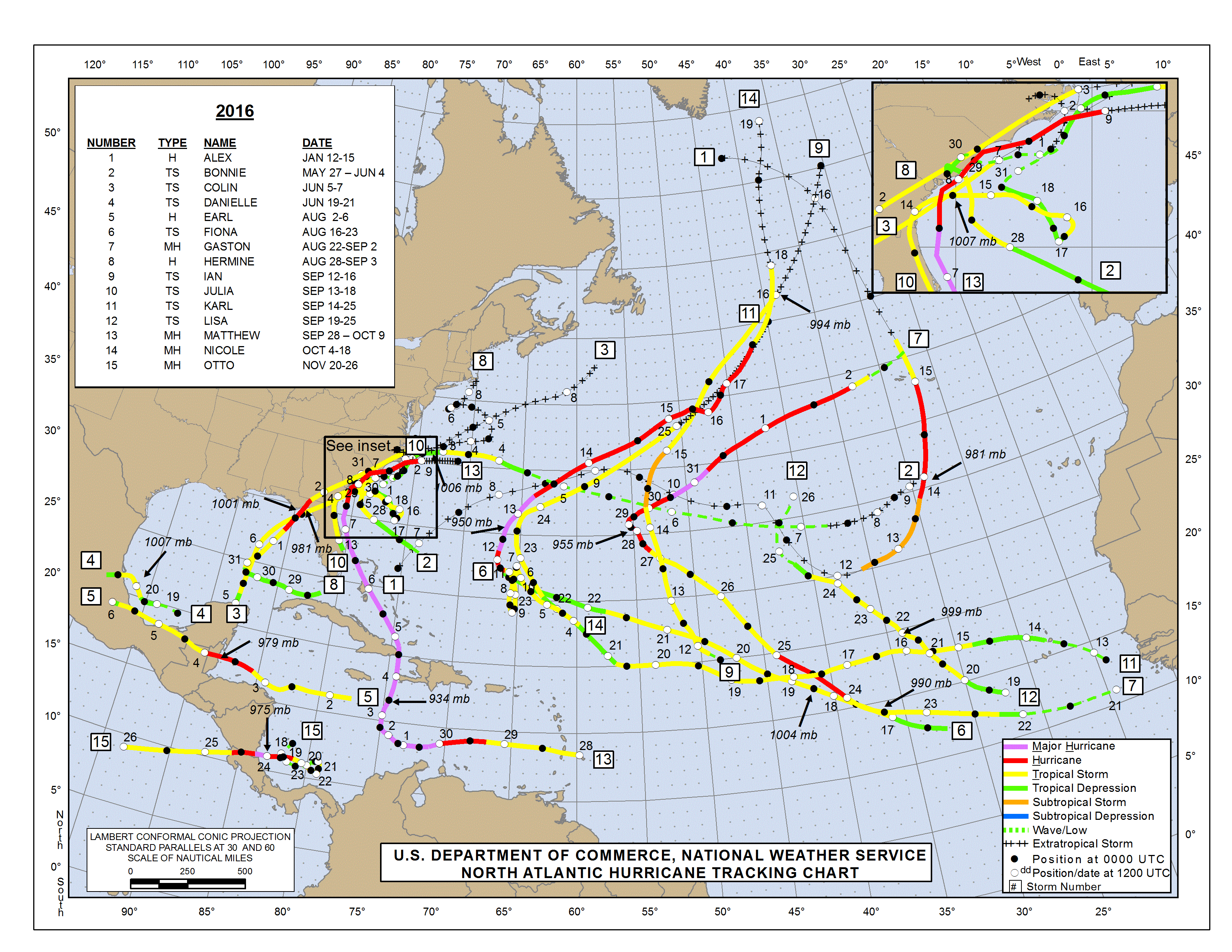
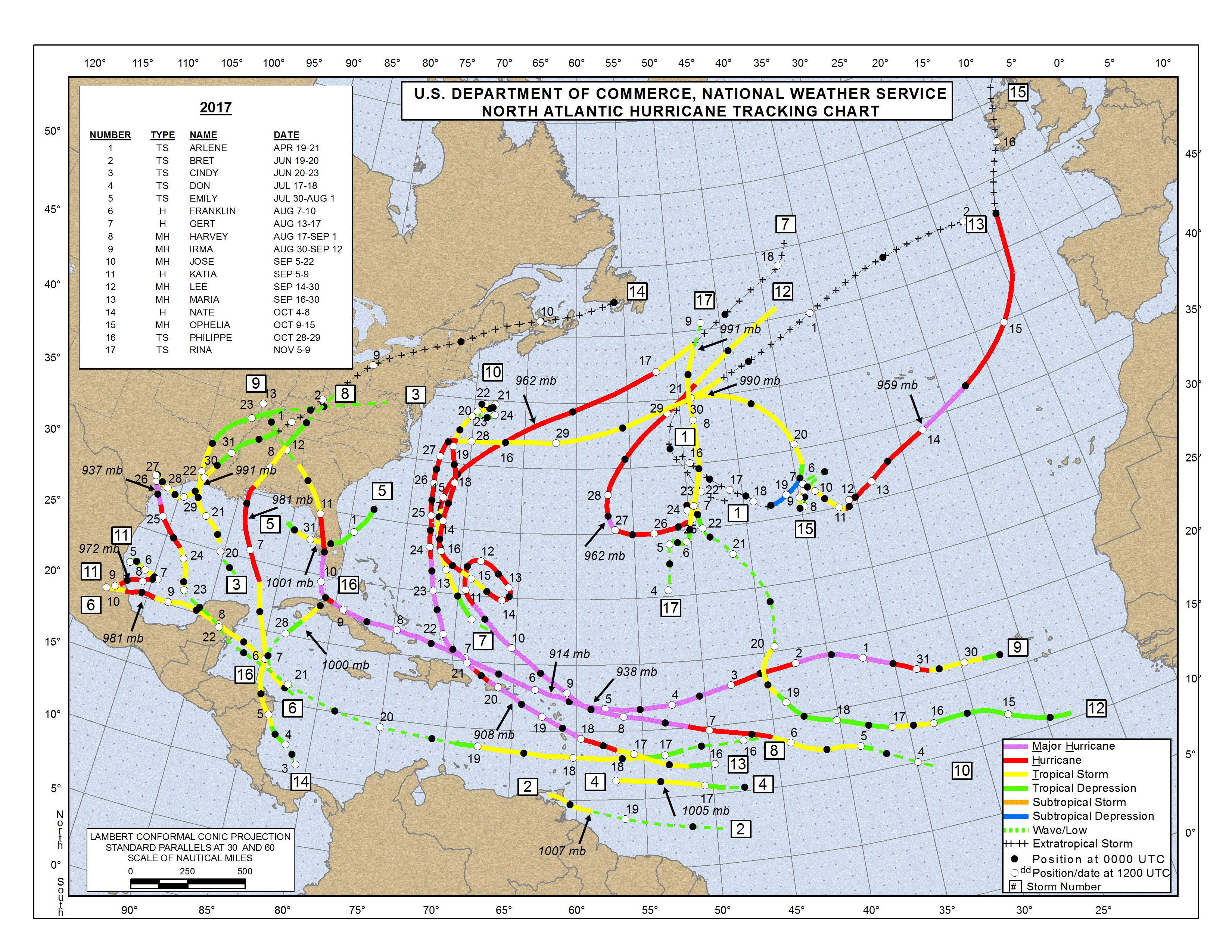
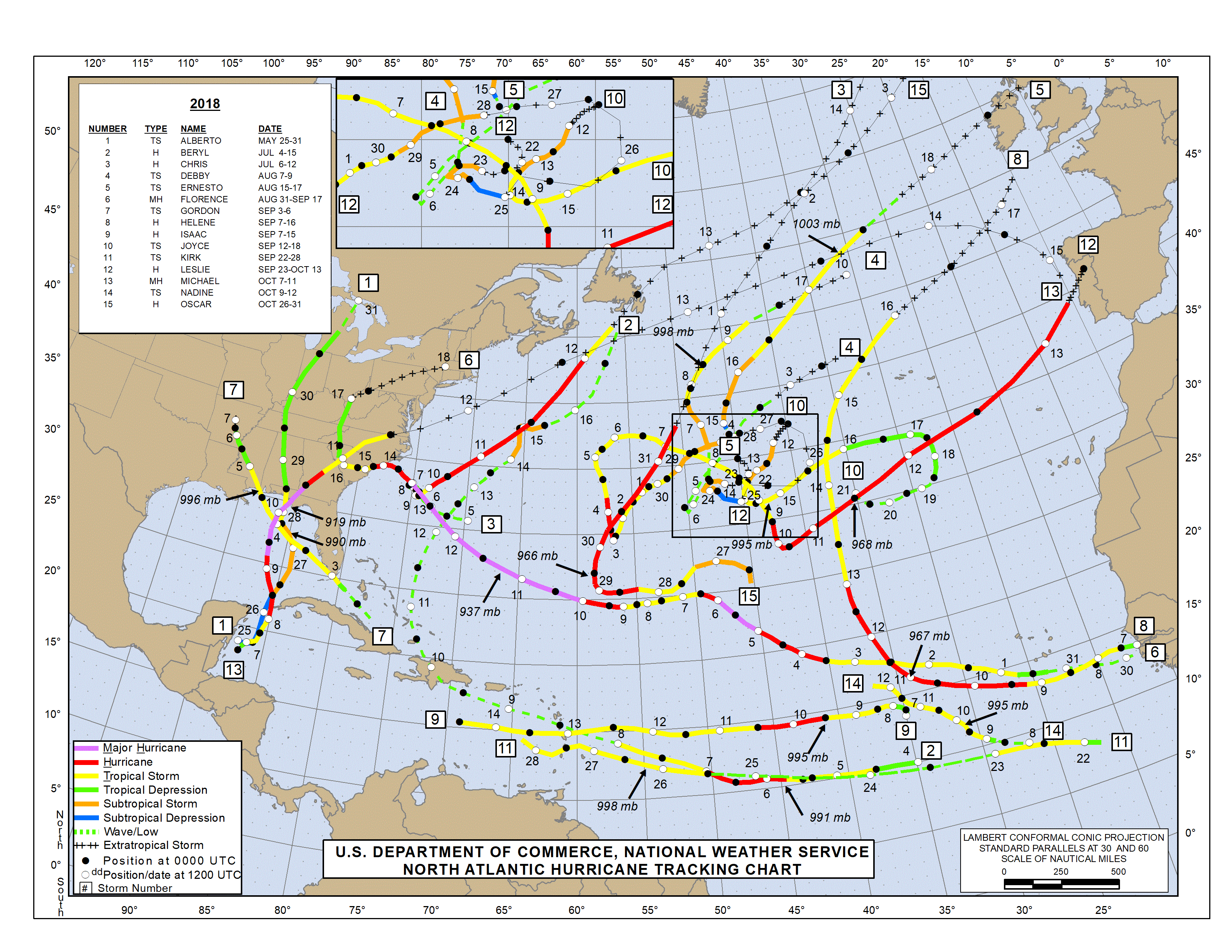
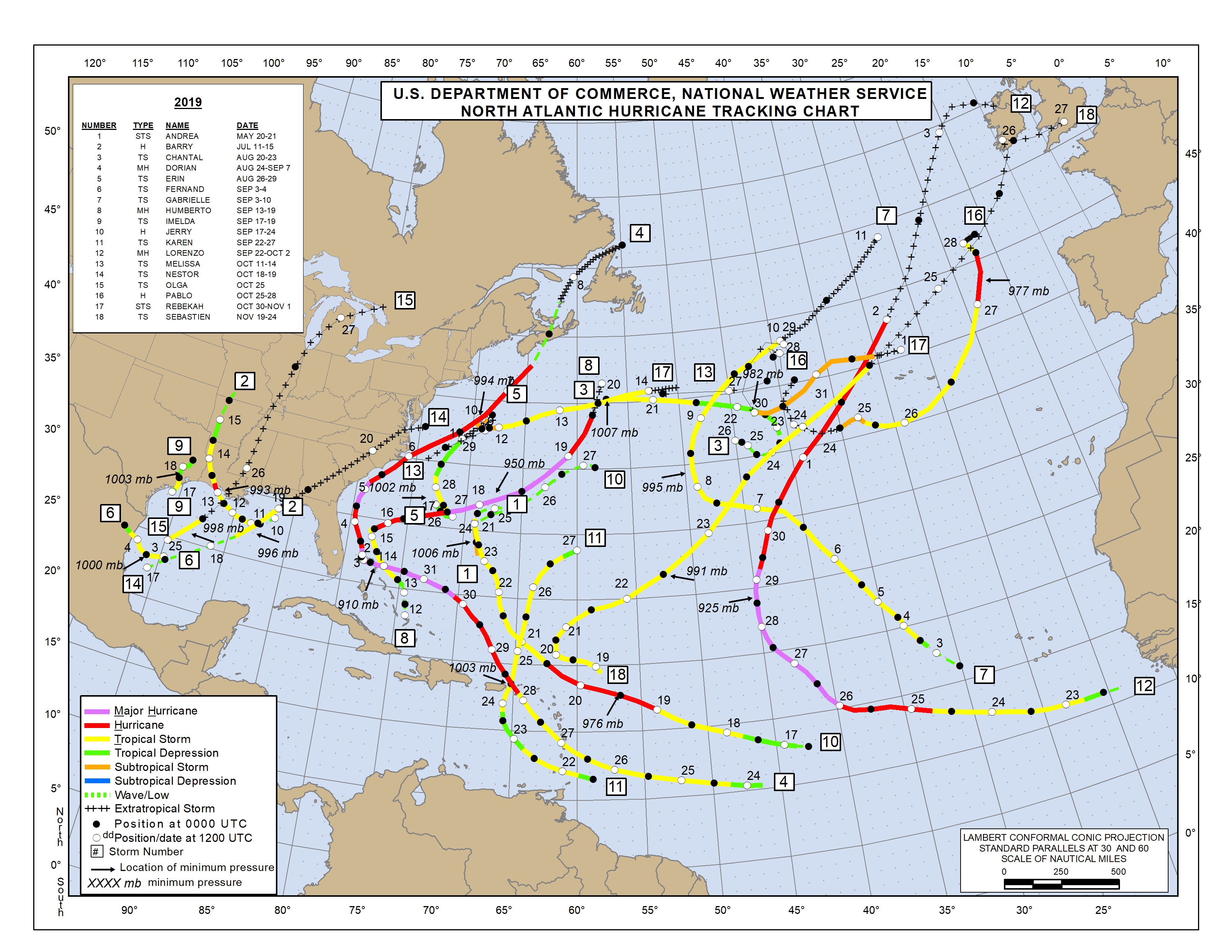
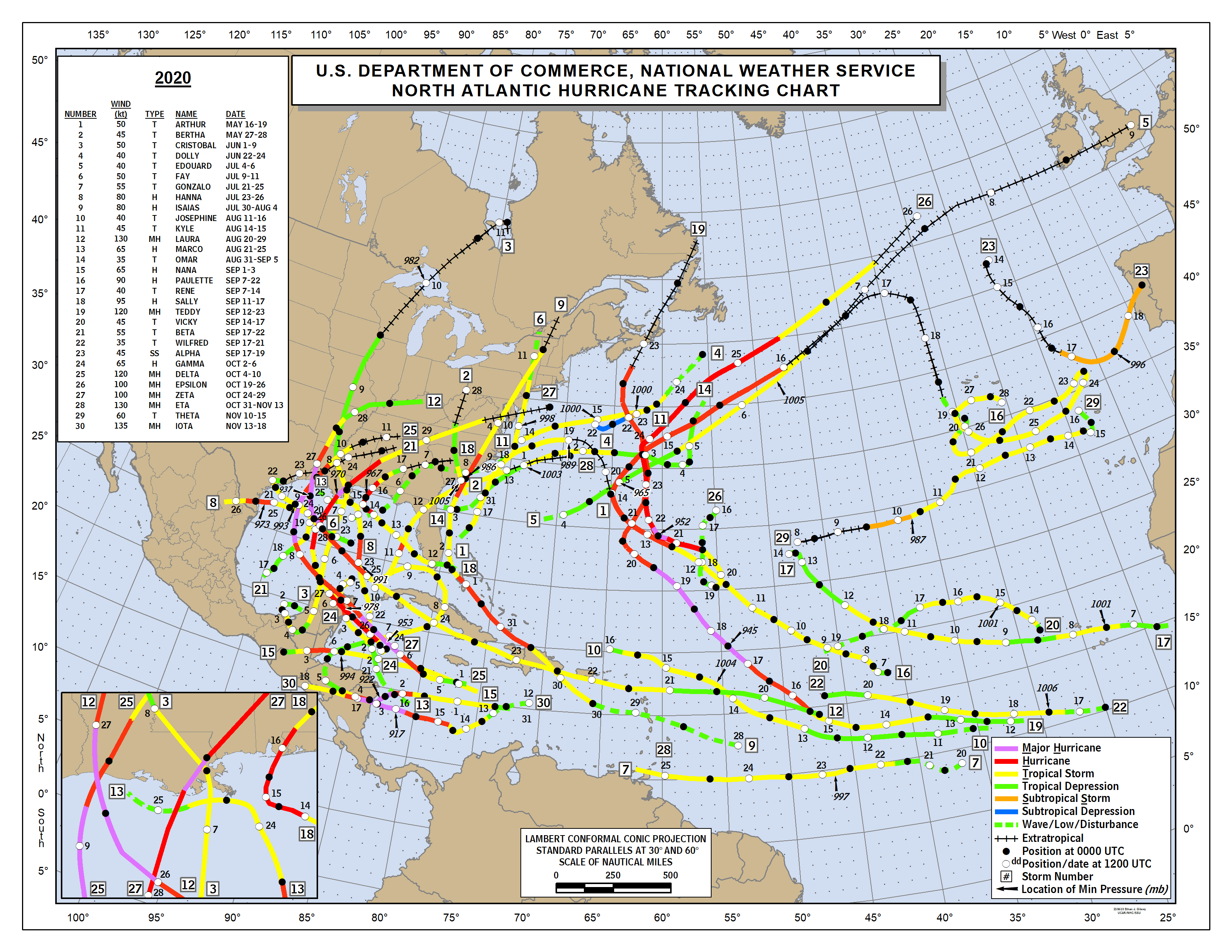
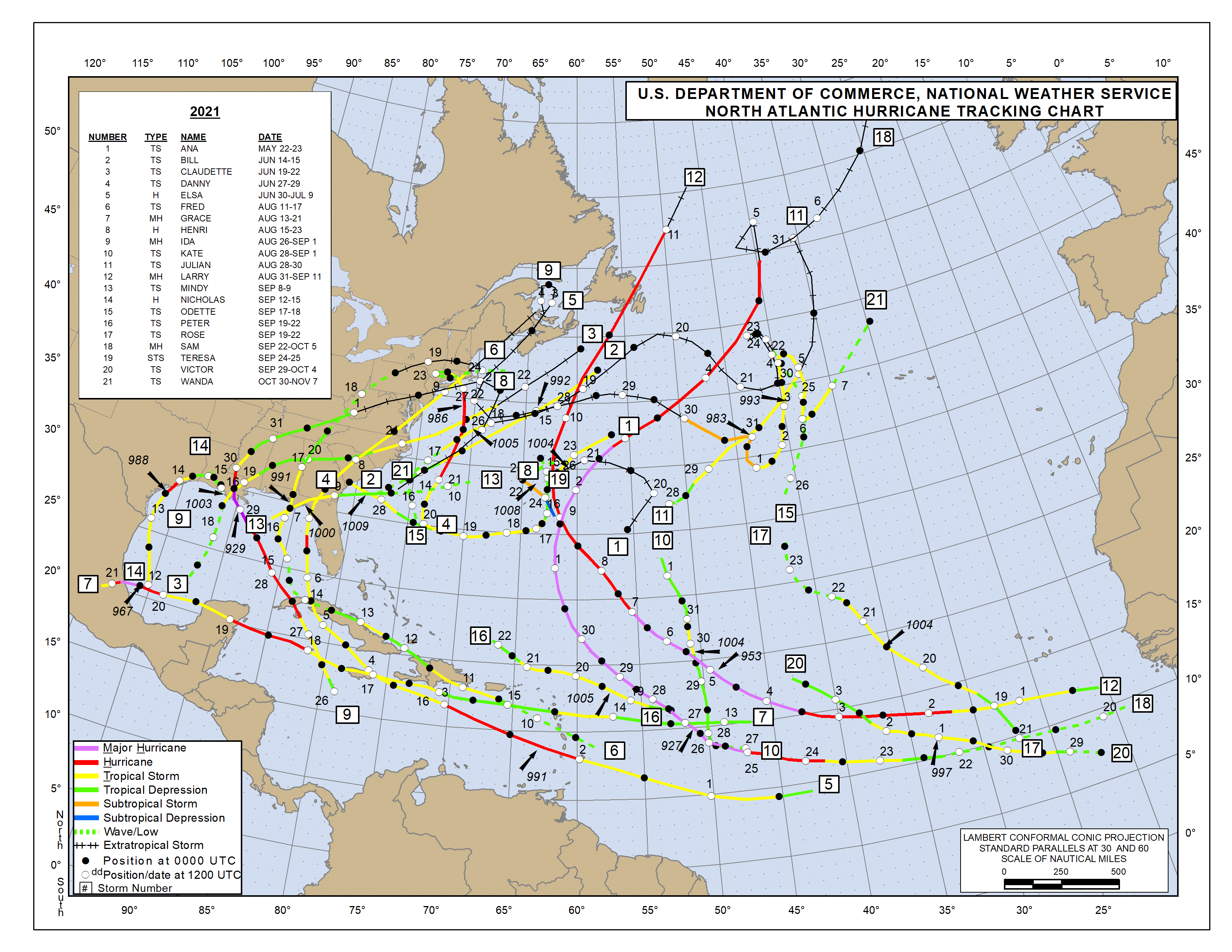
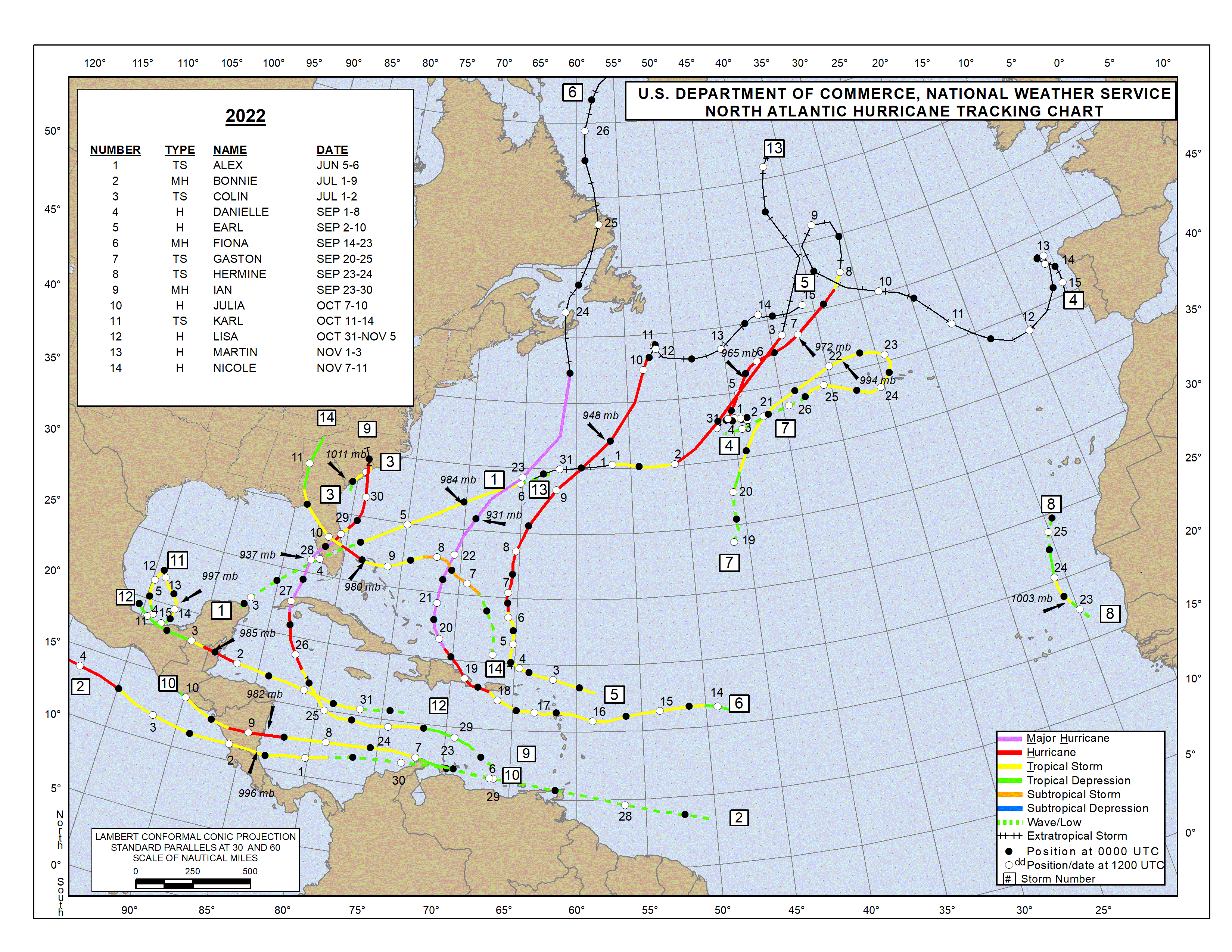
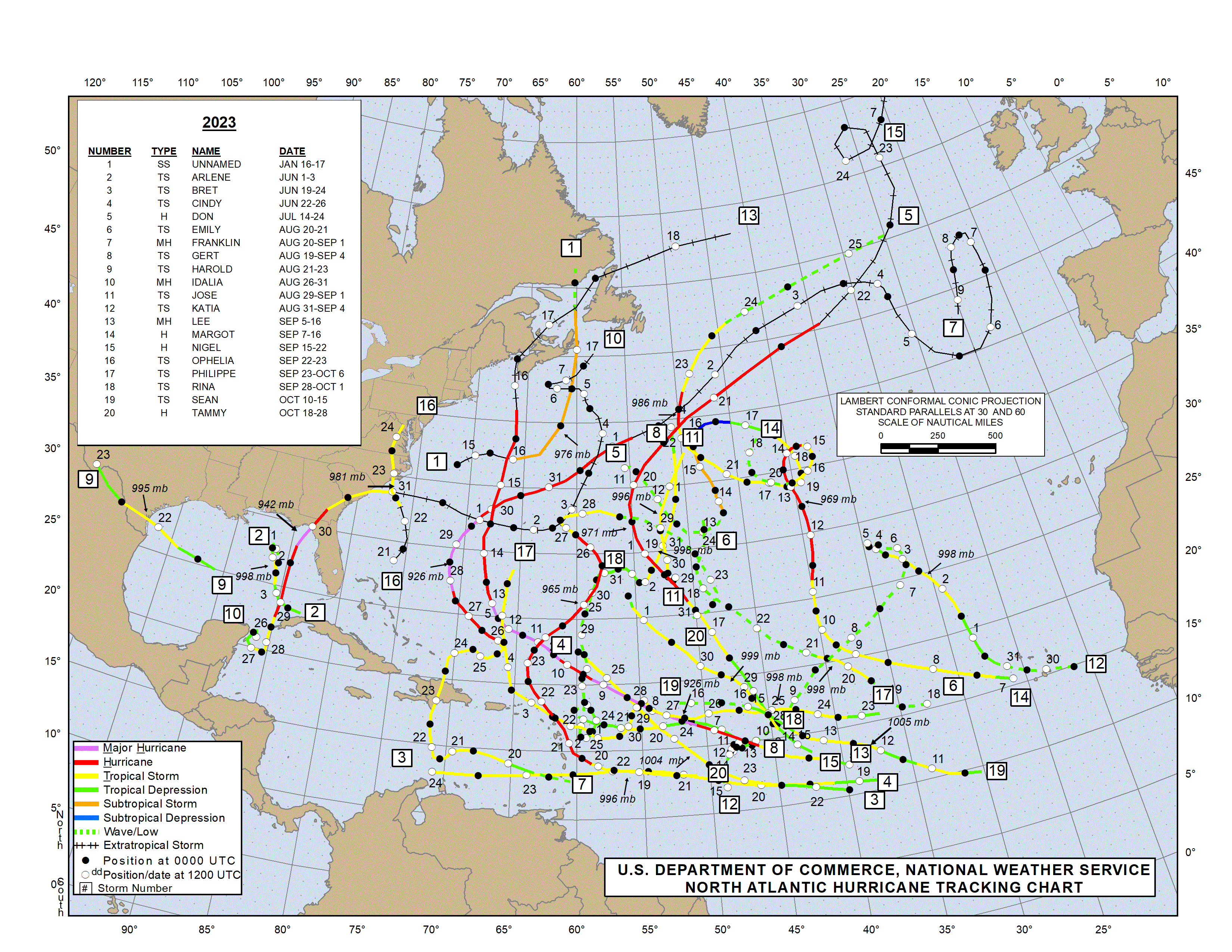
Global Historical Tropical Cyclone Statistics Year Named Storms Hurricanes Category 3+ Hurricanes 2016 83 47 26 2017 84 43 20 2018 104 60 33 2019 98 55 35 2020 104 47 24 2021 97 38 16 2022 91 42 17 2023 76 46 30 2024 87 42 23 2025 102 52 24 Source: Colorado State University Department of Atmospheric Science | Tropical Meteorology Project What happens to marine life when ocean temperatures are very high?
How do rising ocean temperatures affect ordinary people?
Do rising ocean surface temperatures make global heating worse?
What can we do to stop rising ocean temperatures?
How are governments supposed to protect the ocean?
What can we do about oil and gas companies that cause global heating that raises ocean temperatures?
Frequently Asked Questions
What is the ocean temperature’s role in extreme weather events?
What is the ocean temperature?
What problems can high ocean surface temperatures cause?
Does rising ocean surface temperatures make global heating worse?

COP31: bluster and rhetoric, but still short of ambition to end fossil fuels
Greenpeace International
Antalya, Türkiye – As thousands marched through Antalya to demand greater climate action, the first week of the UN summit COP31 has again exposed the lack of urgency among leaders to accelerate the end of fossil fuels despite the escalating climate crisis. At the mid-point of the conference, the COP31 Presidency released a summary of reflections on the proposed cover decision, providing a smorgasbord of options for the COP31 outcome, including proposals to advance the transition away from fossil fuels, recognition of the critical role of forests and oceans and a response to the urgency of the 1.5°C overshoot. Jasper Inventor, Head of COP31 Greenpeace Delegation, said: “It’s still far from enough. The first week of COP31 was heavy on rhetoric but painfully short on ambition. World leaders admit we are heading beyond 1.5°C, but their negotiators remain divided over how to accelerate the transition away from fossil fuels, protect ecosystems and deliver the climate finance needed to make it happen and support communities to adapt. “We are seeing familiar dynamics play out. Governments are largely repeating entrenched positions rather than finding ways to bridge their differences. Discussions are getting bogged down in procedural disputes and disagreements over what should even be on the negotiating table, instead of focusing on the urgent decisions needed to confront the climate crisis. “The contradiction is striking. Governments recognise the scale of the crisis but remain unwilling to take the decisions necessary to confront it. The gap between what leaders say on stage and what their negotiators are prepared to deliver remains deeply concerning.” To close out the first week of the conference, more than 100 civil society organisations, political parties and workers associations marched through Antalya in support of urgent climate action. Greenpeace joined the demonstration. The march will be followed by a Peoples’ Climate Summit that will start on Sunday. Berkan Özyer, Director of Greenpeace Türkiye, said: “Across Türkiye and around the world, people are standing up for their future against the destructive impacts of fossil fuels. As world leaders gather at COP31, we are marching alongside civil society representatives and climate activists from across the world to make sure people’s voices cannot be ignored. “Climate action must be shaped by the people most affected by the crisis, not dictated by the interests of those who profit from it. We need real commitments to move away from fossil fuels and deliver a just transition to a clean, renewable energy future. The people are ready for change, now governments must show they are too. “The second week of this COP must be about listening to the people. That means breaking the political deadlock, not negotiating the weakest agreement everyone can live with. The measure of success at COP31 must not be whether governments reach an agreement, but whether that agreement is strong enough to make a difference in the real world.” ENDS Photos and video are available in the Greenpeace media library Notes: [1] Greenpeace’s COP31 midpoint media briefing Contacts: Aaron Gray-Block, Greenpeace International, Climate Politics Communications Manager, aaron.gray-block@greenpeace.org Beyza Kural, Senior Communication Expert, Greenpeace Türkiye, +90 5336 417 123, beyza.kural@greenpeace.org Greenpeace International Press Desk, +31 (0)20 718 2470 (available 24 hours), pressdesk.int@greenpeace.org Texte intégral (661 mots)
Norway Supreme Court rules North Sea oil and gas approvals invalid in historic climate case
Greenpeace International
Oslo, Norway – The Grand Chamber of Norway’s Supreme Court has invalidated permits for three North Sea oil and gas fields, ruling that the government failed to account for the climate impact of burning the fossil fuels extracted. The decision deals a severe blow to the Norwegian state and energy giants Equinor and Aker BP, which developed the Breidablikk, Yggdrasil, and Tyrving fields. Haldis Tjeldflaat Helle, Norway lead in Greenpeace Nordic, said: “This historic ruling changes Norwegian oil policy forever, and sets a precedent the world cannot ignore. Norway can no longer ignore the global damage caused when its oil and gas are burned abroad. Norwegian authorities are now obligated to take into account the enormous climate damage caused by Norwegian oil and gas. This is a momentous victory for global climate justice.” By affirming lower court rulings, the Supreme Court established that environmental assessments must evaluate Scope 3 emissions, the carbon released wherever combustion takes place. The victory is the culmination of a years-long battle for Greenpeace Nordic and Young Friends of the Earth Norway (Natur og Ungdom). The case was initiated by Greenpeace Nordic and Young Friends of the Earth Norway, who successfully challenged the licenses of the North Sea fields Yggdrasil, Breidablikk and Tyrving in 2024. The decision was appealed by the Norwegian Government in the Borgarting Court of Appeal and later the Norwegian Supreme Court. A central issue in the case is that the climate impacts of burning the oil and gas produced by new projects were not assessed before the projects were approved. Courts, including the European Free Trade Association (EFTA) Court, have confirmed that such assessments are required. As the EFTA Court interprets EU law, this requirement applies across the European Economic Area, not just in Norway. In October 2025, the European Court of Human Rights confirmed that Article 8 of the European Convention on Human Rights requires states to assess the climate impacts of emissions from the burning of fossil fuels, including emissions generated outside their borders, before approving projects. This obligation applies to all Council of Europe members, giving the judgment far-reaching implications for fossil fuel approvals across Europe. Sigrid Hoddevik Losnegård, Head of Natur og Ungdom, said: “This is a huge victory for today’s children who are growing up in a world fundamentally altered by climate change. Young people took the state to court, and we won. It proves that our struggle for climate justice has real force. Now, it is up to the politicians to act.” Attorney Jenny Sandvig of the law firm Simonsen Vogt Wiig, who delivered her third child this week and who represents the environmental organisations, said: “The environmental organisations have won a big victory today, it’s their victory and it’s a privilege to represent them. It’s a huge Grand Chamber win today for the organisations, which will have immense existential repercussions for future generations. Today marks a victory for democracy.” ENDS Photos are available in the Greenpeace Media Library. Contacts: Haldis Tjeldflaat Helle, Norway lead in Greenpeace Nordic: +47 93473213, haldis.helle@greenpeace.org Sigrid Hoddevik Losnegård, Head of Natur og Ungdom (Young Friends of the Earth Norway): +47 405 29 471, sigridl@nu.no Greenpeace International Press Desk: +31 (0) 20 718 2470 (available 24 hours), pressdesk.int@greenpeace.org Texte intégral (649 mots)
Greenpeace unveils giant Trojan Horse at COP31 to expose fossil fuel industry’s plastic expansion
Greenpeace International
Antalya, Türkiye — Greenpeace International today launched a giant Trojan Horse in Konyaalti Municipality in central Antalya during the UN climate conference COP31, exposing how the fossil fuel and petrochemical industries are using plastic production to prolong dependence on oil and gas and protect their profits. Created in collaboration with Danish artist Thomas Dambo for Greenpeace’s plastics campaign, the installation stands six metres high and four metres wide and poured out plastic when the trapdoor in its belly opened. It carried a message to world leaders gathering for climate negotiations: plastic is the big oil’s Trojan Horse. Berk Butan, Social and Economic Systems Campaigner at GP Türkiye, said: “The legend of Troy is a striking story deeply rooted in the ancient history of these lands. Just like in the myth, this horse – appearing as a gift from the outside – hides something within that threatens our lives. The fossil fuel industry is using plastic as an escape hatch. “Türkiye is promoting its Zero Waste initiative to the world at COP31. However, a comprehensive Zero Waste policy requires placing limits on plastic production and closing borders to other countries’ plastic waste. Türkiye is hosting an historic moment. Now is the time to take a decisive stance and fight for true Zero Waste.” Behind familiar packaging and everyday products lies an industry that pushes for more plastic production to sustain its profits, threatening to lock in demand for oil and gas and undermine essential climate action. Plastic contributes to the climate crisis throughout its entire life cycle, from fossil fuel extraction and manufacturing to disposal. Thomas Dambo, the creator of the Trojan Horse installation, said: “I build sculptures exclusively from recycled materials and trash to make people think of how we overproduce. Here at COP31, this Trojan Horse reveals what everyday plastic conceals: its connection to oil and gas. As leaders negotiate our climate future, the fossil fuel industry is expanding through plastics. Working with Greenpeace, I hope this horse sparks curiosity and sends a clear message: a healthier climate means cutting plastic production.” Jacob Kean-Hammerson, Global Plastics Policy Lead at Greenpeace USA, said: “Plastic is Big Oil’s Trojan Horse – a way to keep profiting from fossil fuels and continued climate emissions and pollution. Governments cannot tackle the climate crisis while allowing unchecked plastic production to threaten our communities, our health and our future. At COP31 and the next Global Plastics Treaty negotiations, leaders must stand up to fossil fuel interests and commit to a just transition away from fossil fuels and cutting plastic production.” Greenpeace is calling on governments to deliver a strong Global Plastics Treaty that will cut plastic production at its source, accelerate a just transition away from fossil fuels and support reuse and refill systems. Ahead of the Global Plastics Treaty negotiations in March 2027, Greenpeace challenged leaders at COP31 to confront the fossil fuel interests behind plastic through the Trojan Horse installation. A healthy climate and a truly Zero Waste future depend on cutting plastic production and putting people and the planet before polluters’ profits. ENDS Photos and videos of the action can be accessed in the Greenpeace Media Library. Contacts: Angelica Carballo Pago, Global Plastics Campaign Media Lead, Greenpeace USA, +63 917 1124492 angelica.pago@greenpeace.org Greenpeace International Press Desk, +31 (0)20 718 2470 (available 24 hours), pressdesk.int@greenpeace.org Texte intégral (644 mots)
Nvidia: Following Jensen Huang’s exit, Greenpeace presses new CEO to put climate and ethics first
Greenpeace International
November 12, 2026 – In the wake of the resignation of Nvidia’s CEO, Jensen Huang, Greenpeace International reiterates the need to regulate AI and Big Tech. Avex Li, Greenpeace East Asia’s project lead for AI supply chain campaign, said: “As a dominant giant and a frontrunner in the AI race, Nvidia, alongside other Big Tech players, bears primary responsibility for tech’s environmental, climate, and human toll. Jensen Huang has failed to put climate responsibility at the heart of the company’s growth strategy, to slow down the unchecked expansion of data centres or to prevent its chips from being deployed in unethical applications like automated warfare. Interim CEO Colette Kress and whoever leads Nvidia in the long term must make a clear commitment to genuine decarbonisation and renewable energy investment, and ensure its technology respects human rights.” Greenpeace East Asia have spent the past two years seeking dialogue with Nvidia, especially after Jensen Huang publicly promised to meet with Greenpeace. To date, Nvidia has not fulfilled that promise. Greenpeace remains committed to engaging directly with any Nvidia CEO regarding emissions and ethical concerns. Greenpeace International demands that Nvidia serves the public interest by investing substantially in additional renewable energy capacity. The organisation also calls on the company to extend its 100% renewable energy target beyond its own corporate operations to cover its entire manufacturing supply chain by 2030, including suppliers in key production regions in East Asia. ENDS Contacts: Guillaumine Lickel, Deputy Communications Lead , Greenpeace International, +33 6-73-89-48-90 (EMEA), glickel@greenpeace.org Greenpeace International Press Desk, +31 (0)20 718 2470 (available 24 hours), pressdesk.int@greenpeace.org (335 mots)
Russian diesel tanker idling off US east coast after heading towards New York harbour, Greenpeace calls on NY governor to act before arrival
Greenpeace International
New York, United States — According to Greenpeace Ukraine public Diesel Tanker Tracker, the Agioi Fanendes, a tanker carrying about 40,000 metric tons of Russian diesel, has stopped on its course towards New York and New Jersey. In response, John Noël, Senior Strategist, Greenpeace International said: “Since its departure from Russia, this diesel carrying tanker has been on a steady course towards New York/New Jersey, its originally signalled destination. Two days ago, it suddenly stopped and is now holding position some 430 nautical miles off the coast, apparently unsure where to discharge its cargo. Every shipment of Russian diesel helps fuel Russia’s war machine and threatens to undermine international sanctions. No country should accept Russian diesel tankers as part of a corrupt deal with the White House. The diesel deal with Russia must be terminated and instead more effective and comprehensive sanctions must be applied along with measures to limit fossil fuel dependence and achieve true clean energy security.” After New Jersey Governor Sherrill drew a hard line and warned ports and businesses about accepting Russian fuel[1], Greenpeace USA sent a letter to New York Governor Kathy Hochul[2] this week urging her to take the same action as New Jersey Governor Sherrill: declare that the diesel shipments are not welcome, and warn port and terminal operators of the legal risks of accepting it. With the tanker now potentially just days away from the harbour, Greenpeace USA is urging the Governor to act. As of early morning EST on 11 November, the ship was at N39.96 / W64.88, some 430 nautical miles straight east from New Jersey. At its normal speed of 12 knots, it can approach New York Harbour within 36 hours. ENDS Notes: [1] Governor Mikie Sherrill letter to Port and Terminal Operators of New Jersey [2] Greenpeace USA letter to New York Governor Kathy Hochul Background: The cargo is the first shipment under a controversial deal struck in October by President Trump and President Putin. On 9 October, the US Treasury Department issued a temporary licence allowing otherwise sanctioned Russian diesel to be sold in the United States. The licence conflicts with the Ending Importation of Russian Oil Act, which the US Congress passed with overwhelming bipartisan support in April 2022 to ban imports of Russian petroleum products, including diesel. The recent diesel agreement between Trump and Putin has been widely condemned as rewarding Russia for its illegal war against Ukraine with the objective of destroying the international sanctions regime against Russia. The Agioi Fanendes loaded ultra-low-sulfur diesel at Russia’s Baltic port of Primorsk in late October and initially broadcasted the New York area as its destination, with arrival expected in early November. In response, New Jersey Governor Sherrill warned port and terminal operators that handling the fuel could expose them to civil and criminal penalties. No US buyer or receiving terminal has been publicly identified since her warning. Contacts: Greenpeace International Press Desk, +31 (0)20 718 2470 (available 24 hours), pressdesk.int@greenpeace.org Texte intégral (604 mots)
🌱 Bon Pote
Actu-Environnement
Amis de la Terre
Aspas
Biodiversité-sous-nos-pieds
🌱 Bloom
Canopée
Décroissance (la)
Deep Green Resistance
Déroute des routes
Faîte et Racines
F.N.E (AURA)
Greenpeace Fr
Journalistes d'Investigation Ecologie Climat
Journalistes & Ecrivains Nature Ecologie
La Relève et la Peste
La Terre
Le Lierre
Le Sauvage
Low-Tech Mag.
Motus & Langue pendue
Mountain Wilderness
Negawatt
Observatoire des médias sur l Écologie
🌱 Observatoire de l'Anthropocène