
Action needed as UNEP adaptation report exposes climate finance injustice
Greenpeace International
Amsterdam, Netherlands – Greenpeace has called on countries to step up adaptation finance at the UN climate talks COP31 as the United Nations Environment Programme exposed the widening gap in critical finance for developing countries. The UNEP’s Adaptation Gap Report 2026 showed international public adaptation finance flattened at USD28.2 – 31.7 billion in 2024, representing just a USD1 billion year-on-year increase. In contrast, developing countries face annual adaptation needs of USD305 billion, which is expected to rise to USD420 billion by 2035 with inflation. It means that even tripling flows by 2035 will only cover 20 to 29% of what vulnerable nations require.[1] Koaile Monaheng, Climate Finance Expert, Greenpeace International said: “The math of climate injustice is here in plain sight, with adaptation needs woefully underfunded. This leaves frontline communities, who have contributed the least to global emissions, facing escalating climate extremes with a fraction of the support. This is morally indefensible. Adaptation is not a luxury, but critical for human survival, dignity and justice. “Every delay in adaptation funding turns climate impacts into catastrophic losses and damages. At COP31, governments must confront this reality and the widening adaptation finance deficit by immediately scaling up grant-based funding to meet the goal to at least triple adaptation finance by 2035.” At COP31, Greenpeace is calling for developed country governments to announce ambitious multi-year post-2025 climate finance commitments that reflect their country’s fair share in delivering the USD300 billion New Collective Quantified Goal agreed at COP29 in Baku.[2][3] Under the Global Goal on Adaptation (GGA) agreed at COP30, developed nations must clarify how they will triple adaptation finance to reach at least USD120 billion annually by 2035, alongside recognising the need for a robust, needs-based adaptation finance commitment. [4] This has to be delivered through grant-based and non-debt-creating mechanisms rather than loans that trap vulnerable countries in spiralling debt. Monaheng added: “To unlock these funds, governments must make polluters pay. Taxing the massive profits of oil and gas corporations through progressive environmental taxation is one of the clearest ways to generate new public finance. This money must be channeled directly into public adaptation and multilateral funds, including the Fund for Responding to Loss and Damage, where initial funding requests of USD2.8 billion vastly outstripped the available USD342 million envelope.” ENDS Notes: [1] UNEP’s 2026 Adaptation Gap Report: Ready? Not [2] Greenpeace: COP31 Priorities and Expectations [3] New Collective Quantified Goal Contacts: Aaron Gray-Block, Greenpeace International, Climate Politics Communications Manager, aaron.gray-block@greenpeace.org Greenpeace International Press Desk, +31 (0)20 718 2470 (available 24 hours), pressdesk.int@greenpeace.org Texte intégral (556 mots)
COP30 roadmaps are a critical step, but urgent 1.5°C action needed at COP31
Greenpeace International
Brasília, Brazil – Greenpeace has urged countries to use the Brazil COP30 Presidency’s roadmaps on ending deforestation and transitioning away from fossil fuels as a driving force for next week’s UN climate summit COP31 to help deliver a 1.5°C future. After committing to developing the roadmaps at COP30, the Brazil presidency unveiled the roadmaps in Brasília, today. The Roadmap for Transitioning Away from Fossil Fuels (TAFF) outlined different scenarios and measures to facilitate the transition, while taking into account different national circumstances and reinforcing the importance of climate justice.[1] The 2030 Forests Roadmap highlights existing efforts to combat forest loss, the international architecture for forest action and for financing it, and provides concrete proposals for the road ahead as part of international efforts to end forest destruction by 2030, as agreed at COP28. Carolina Pasquali, Executive Director, Greenpeace Brazil said: “This is a major effort by the COP30 Presidency and a crucial step towards ensuring the COP28 decision to transition away from fossil fuels is fully implemented. As our climate races towards a 1.5°C overshoot, the roadmap encourages important measures but stops short of setting clear fossil fuel phase-out targets or calling for an immediate halt to the expansion of fossil fuels. “The Forests Roadmap also represents a major effort from the COP30 presidency and was launched with the credibility of a Brazilian government that has achieved the lowest deforestation rate in its history. The presidency has helped bring together, through multiple contributions and dialogues, a wide range of existing initiatives and views.” Tracy Carty, Climate Politics Expert, Greenpeace International said: “Brazil’s TAFF roadmap makes clear that the pace of the transition is falling well short of achieving 1.5°C. While it misses the mark by failing to include explicit phase-out timelines, it recognises the need for accelerated action in line with justice and equity and backed by finance. “The fossil fuels roadmap must now serve as a catalyst to raise ambition and drive urgent action at COP31 and beyond. COP31 can and must deliver concrete action to end fossil fuels: including agreeing a global 35 percent by 2035 electrification goal to propel renewable power and displace fossil fuels, establishing a Just Transition Mechanism to co-ordinate, guide and enable support for workers and communities and securing scaled-up international climate finance for implementation.” An Lambrechts, Biodiversity Politics Expert, Greenpeace International said: “To return global warming to 1.5°C, build climate resilience and prevent irreversible ecosystem collapse, it’s imperative that we implement the 2030 target to halt and reverse forest destruction. After the global community’s failure to take strong decisions on forests at COP30, Brazil’s forest roadmap initiative has kept the ball rolling and its publication is the catalyst to translate commitments into action. “Other countries now need to step forward and join Brazil in charting a course for transparent, equitable and inclusive implementation of the 2030 forest and biodiversity targets. They represent a hard planetary boundary. The Earth can no longer afford a disjointed approach to forest governance.” ENDS Notes: [1] COP30 Presidency launches international roadmaps Greenpeace COP31 Priorities and Expectations Contact: Aaron Gray-Block, Greenpeace International, Climate Politics Communications Manager, aaron.gray-block@greenpeace.org Greenpeace International Press Desk, +31 (0)20 718 2470 (available 24 hours), pressdesk.int@greenpeace.org Texte intégral (652 mots)
Why oil and gas corporations are making so much money – and we’re all paying the bill
Martin Zavan
The world’s biggest oil and gas corporations have just reported another quarter of staggering profits – significantly higher than the previous quarter, when earnings were already supercharged by the war on Iran. Meanwhile, filling up your car costs more, so does buying food at the supermarket, heating your home and paying for the things you need every day. A war thousands of kilometres away can end up hitting your household budget, even if you have not changed how much fuel or energy you use. The oil and gas corporations cashing in on this volatility are not the ones struggling to make ends meet. It doesn’t have to be this way. Governments can make oil and gas corporations pay their fair share through permanently higher taxes on their profits, using the revenue to reduce dependence on fossil fuels, protect households from price shocks and help communities recover from climate disasters. BP, Shell, TotalEnergies, ExxonMobil, Chevron, Eni and Equinor reported combined third-quarter profits of US$38 billion, up 140% on the same period last year. Their combined profits for the first nine months of 2026 reached US$150 billion. These extraordinary earnings expose the injustice at the heart of fossilflation: we all pay more when global energy markets are disrupted, while the oil and gas corporations profiting from this dependence collect billions. Permanent, comprehensive taxes on their profits could help turn that imbalance around, funding a fair transition to renewable energy and helping communities recover from extreme weather. These are not just big numbers on a balance sheet. They tell part of the story of how a crisis overseas can put money into the pockets of oil and gas corporations while taking it out of yours. Greenpeace International’s new Fossilflation report shows how energy price shocks feed into the wider cost of living. A separate Greenpeace Germany-commissioned study has found that the oil industry generated an estimated €36 billion in additional gross margins across the EU petrol and diesel supply chain between 1 March and 19 October 2026. That’s more than €154 million a day. Fossilflation is what happens when dependence on fossil fuels allows a crisis to drive up the cost of living. The war on Iran has disrupted global fuel supplies and sent oil and gas prices soaring. Because oil and gas are traded on international markets, a conflict can push up the prices people pay far beyond the countries directly involved. Households and businesses have little control over those markets, but they still end up paying the bill. The effects extend well beyond the petrol station. Diesel powers much of the world’s transport, agriculture and freight, while gas is a key input for fertiliser production. When the cost of fuel rises, it costs more to grow, process and transport food. Those extra costs can eventually show up in the price you pay at the supermarket. While governments cannot control every international price shock, they can reduce how exposed people are to the next one. The effects can be seen in corporate earnings, too. When oil prices rise, producers can earn more from selling their output. Refiners and fuel distributors can also benefit when the margins between crude oil prices and the prices charged for petrol and diesel widen. Greenpeace Germany’s recent analysis of the EU fuel market found that petrol and diesel prices had risen faster than crude oil prices since the war began, creating additional margins for the industry. Families cannot simply stop buying food or getting to work when prices rise. And while governments cannot control every international price shock, they can reduce how exposed people are to the next one. Expanding access to rooftop solar, community energy, battery storage and electrified transport can help households rely less on volatile fossil fuel markets. Permanent taxes on oil and gas profits can help pay for that transition, while ensuring that corporations benefiting from the system contribute more to the solutions. After Russia’s 2022 invasion of Ukraine, soaring energy prices delivered a windfall to fossil fuel corporations. Governments introduced temporary taxes on some exceptional earnings, but these measures did not deliver all the revenue expected. Profit shifting and loopholes helped multinational corporations avoid the tax. The problem with a temporary windfall tax is that it treats extraordinary profits as an exception, even though fossil fuel price shocks keep returning. Greenpeace is calling for permanently higher taxes on oil and gas profits, applying a higher rate comprehensively rather than waiting for a crisis to justify a temporary levy. That would mean the industry contributes more in every quarter, not just when prices spike and public anger grows. These taxes must be backed by binding international rules to stop corporations shifting profits into tax havens. Research by the International Tax Observatory has found that extractive multinationals declare a disproportionate share of additional profits in low-tax jurisdictions during commodity booms. Without effective rules, governments risk losing revenue that could fund the transition and help communities deal with the damage caused by fossil fuel dependence. The Global Tax Treaty negotiations offer an opportunity to establish a global polluter profits tax alongside stronger rules against profit shifting. Governments should pursue that agreement while increasing taxes at the national level. They should not wait for an international deal before making polluters pay. Revenue from permanent taxes on oil and gas profits should go towards solutions that make everyday life more affordable and help communities recover from climate disasters. That means investing in clean energy, reducing household exposure to price shocks and helping people rebuild after floods, fires and heatwaves. Decentralised renewable energy, including rooftop solar, community energy and battery storage, can give households and communities greater control over their energy supply. Combined with electrification and resilient energy systems, it can reduce exposure to global fossil fuel price shocks. No war can stop the wind from blowing or the sun from shining. Once renewable energy systems are built, they can help households and communities rely less on fuels traded on volatile international markets. No war can stop the wind from blowing or the sun from shining. The revenue should also support communities recovering from floods, fires, heatwaves and other extreme weather made more dangerous by climate change. It should help ease cost-of-living pressures and increase international climate finance for countries in the Global South, which have contributed least to climate change but face some of its most severe impacts. The need is urgent. The UN warns that global warming is expected to exceed the 1.5°C threshold in the coming years, increasing risks to people and nature. Communities should not be left to shoulder the costs of climate disasters while the corporations driving the crisis continue to profit. Making war profiteers pay means putting that money to work where it can make the greatest difference: reducing household energy costs, helping communities recover from climate disasters and ensuring countries with fewer resources can build a cleaner, safer energy future. The war on Iran has exposed how easily a crisis can send costs rippling through an energy system built around volatile oil and gas markets. The latest quarterly results show the enormous sums the world’s biggest oil and gas corporations continue to make, while households face higher bills. This is not an unavoidable price of modern life. Governments have practical choices available now. They can permanently increase taxes on oil and gas profits, close loopholes that allow corporations to shift profits to tax havens, and use the revenue to expand renewable energy and support communities facing climate impacts. At COP31, leaders must turn commitments into action: end new fossil fuel expansion, establish science-based timelines to phase out coal, oil and gas, and fund a fair transition. We do not have to wait for the next war or price shock to act. Taxing fossil fuel profits fairly and investing in renewable energy can help protect household budgets, strengthen energy security and make communities more resilient. The solutions are within reach. Governments must choose to deliver them. Martin Zavan is a freelance communications strategist at Greenpeace International, based in Sydney. Texte intégral (2654 mots)

How does a war thousands of kilometres away make your bills go up?
Why aren’t temporary windfall taxes enough?
Put the money where the damage is
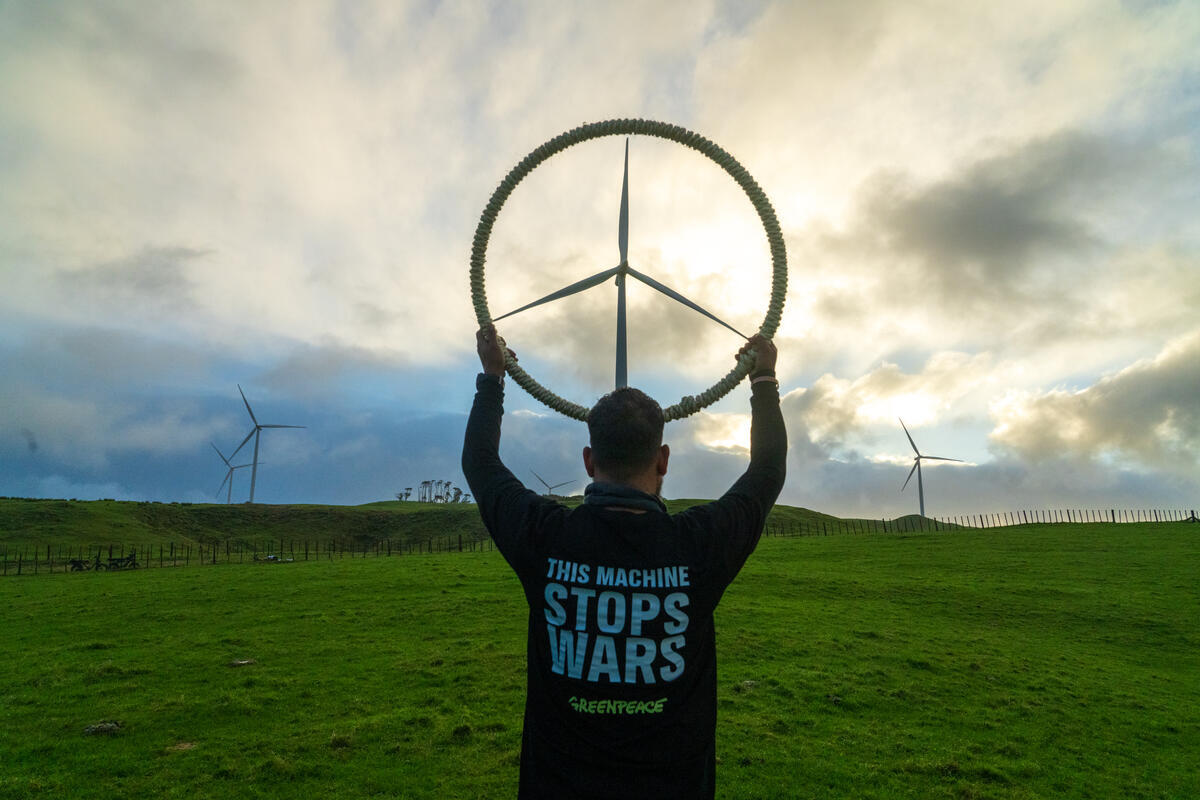
How can we break the cycle of fossilflation
Greenpeace tracks Swedish forest destruction to popular Ikea products
Greenpeace International
Stockholm, Sweden – Timber from irreplaceable Swedish forests is ending up in sawmills supplying wood for Ikea furniture production, reveals a new investigation from Greenpeace Nordic. Using tracking devices, investigators followed logs from eight logged forest areas in northern Sweden and documented links to manufacturers of Ikea’s popular IVAR and HEJNE shelving. Greenpeace is calling on Ikea, one of the world’s largest consumers of wood, to stop sourcing from forests that need protection, including in the company’s home country. Frida Bengtsson, head of Greenpeace in Sweden said: “Ikea prides itself on high sustainability standards, and has a stated ambition to use its size to be a positive force for forests and halt biodiversity loss. It should go without saying that wood from forests that need protection has no place in Ikea’s products. No shelf or chair in the world is more important than saving irreplaceable forests. Ikea could make that decision today. All it takes is a clear instruction to its suppliers to stay away from these unique ecosystems.” The new investigation from Greenpeace Nordic tracked logs to two sawmills operated by forestry company SCA. The logged areas are mapped as continuity forests – forests that have remained tree covered over a long period without ever being clear-cut. Wood from one of the sawmills, Munksund, was documented at Hedlunda, a manufacturer of Ikea’s IVAR shelving. The report also maps a supply chain from the other sawmill, Bollstabruk, through SCA to TräTeam, which manufactures HEJNE shelving. Tracking devices followed the logs from the forest areas to the sawmills. The onward links to furniture manufacturers and Ikea were established through company information, customs records, product labelling and field visits. Karolina Carlsson, forest campaigner at Greenpeace Nordic and co-author of the investigation, said: “Our investigation reveals a clear pattern and maps how wood from some of Sweden’s last remaining continuity forests that need protection can end up in Ikea furniture that many of us have in our homes. I do not think this is something Ikea’s customers want, and it should be unacceptable to a company that puts so much effort into sustainability.” Unlike the majority of the Swedish forest landscape which have been clear-cut and transformed for industrial production, continuity forests contain habitats that have developed over long periods of time, creating the best conditions for biodiversity, which cannot be replaced by planting new trees. The Swedish Forest Agency has concluded that logging of continuity forests needs to cease immediately if Sweden is to meet its national and international environmental objectives.[2] Greenpeace Nordic is calling on Ikea to immediately stop sourcing wood from forests that need protection in Europe, including all of Sweden’s remaining continuity forests, and to verify that this requirement is met throughout its supply chain. The Swedish investigation follows two reports published on 13 October 2026. The Missing Manual examines gaps in Ikea’s sourcing rules, including their failure to exclude wood from forests that need protection.[3] A field investigation in Romania documented the logging of an approximately 170-year-old natural forest before proposed strict protection could take effect, and traced timber to a depot supplying an Ikea manufacturer.[4] ENDS Photos and Videos available from the Greenpeace Media Library Vanishing forests (part 2) – How Ikea drives destruction in the boreal forest Notes: About the Swedish investigation: Tracking devices followed logs during spring 2026 from six logged forest areas in Norrbotten to SCA’s Munksund sawmill in Piteå, and from two areas in Västernorrland to SCA’s Bollstabruk sawmill. Onward links were documented to Hedlunda in Lycksele and TräTeam in Kramfors. Based on the combined evidence, Greenpeace Nordic assesses that wood from Swedish continuity forests that need protection is highly likely to regularly enter Ikea’s furniture production. Previous Romanian investigation: Timber was traced to a depot supplying Masifpanel, which manufactures Ikea’s BEKVÄM step stool and SNIGLAR cot. [1] Nestlé, Zalando and L’Oréal announce plans to phase out wood fibre from SCA in their packaging supply chains [2] Swedish Forest Agency: Biologisk mångfald i skogen, report 2026/07, revised edition (in Swedish) [3] The Missing Manual – new investigation from Greenpeace Nordic [4] Europe’s Vanishing Forests (Part 1) – Romanian case study by Greenpeace CEE Contact: Ludvig Tillman, Communications Lead, Greenpeace in Sweden, +46 70 271 64 37, ludvig.tillman@greenpeace.org Greenpeace International Press Desk, +31 (0)20 718 2470 (available 24 hours), pressdesk.int@greenpeace.org Texte intégral (1031 mots)
Several major international companies have already taken action over Swedish forestry practices. Between autumn 2025 and spring 2026, Nestlé, Zalando and L’Oréal announced plans to phase out wood fibre from SCA in their packaging supply chains.[1] The announcements followed criticism of the Swedish forestry company’s logging practices and their impacts on nature and the rights of the Indigenous Sámi people.
🌱 Bon Pote
Actu-Environnement
Amis de la Terre
Aspas
Biodiversité-sous-nos-pieds
🌱 Bloom
Canopée
Décroissance (la)
Deep Green Resistance
Déroute des routes
Faîte et Racines
F.N.E (AURA)
Greenpeace Fr
Journalistes d'Investigation Ecologie Climat
Journalistes & Ecrivains Nature Ecologie
La Relève et la Peste
La Terre
Le Lierre
Le Sauvage
Low-Tech Mag.
Motus & Langue pendue
Mountain Wilderness
Negawatt
Observatoire des médias sur l Écologie
🌱 Observatoire de l'Anthropocène