
UN Biodiversity COP17: What future do leaders want?
Greenpeace International
Yerevan, Armenia – At the UN Biodiversity COP17, negotiations have hit a plateau. Greenpeace calls on governments to get their act together and focus on the actions needed to achieve the targets of the globally agreed framework to protect biodiversity (KM-GBF) and prevent corporate lobbyists from capturing the negotiations. The ministerial High-Level Segment, taking place during the second week, must provide the political leadership needed to deliver a strong, action-oriented response to the Convention’s first Global Review, with just four years left to meet those targets. An Lambrechts, Biodiversity Politics Expert, Greenpeace International said: “COP17 has taken stock of the gaps that must be closed to keep the 2030 targets within reach. Countries agree there is a problem. They now need to own the moment and move from recognition to action, match ambition with sufficient funding flowing in the right direction and address the drivers of biodiversity loss. Governments must send a strong signal that they are ready to walk the talk. That includes reforming subsidies and fiscal and financial policies to align with nature and human rights protection.” Language on human rights-based approaches and the rights and roles of Indigenous Peoples and local communities also remains under pressure across several agenda items. Discussions on the governance of the new subsidiary body on Article 8(j) raise concerns about respect for self-determination, as governments debate how Indigenous Peoples and local communities should be represented rather than allowing them to decide for themselves. Solomon “Uncle Sol” Kaho’ohalahala, Indigenous Native Hawaiian Elder, said: “It is unacceptable that governments are still trying to decide who is going to represent Indigenous Peoples and local communities in the negotiations, given our critical role as nature protectors. Indigenous Peoples and local communities are not just terms to be discussed in negotiation rooms, and added or deleted from text agreements. We are the ones standing on the frontlines of nature protection, fighting for our survival and for the future of the planet. We can make our own decisions, our rights must be respected and our voices must be heard.” On Saturday evening, Greenpeace lit up Yerevan’s iconic Opera Theatre with a question for world leaders: “What future do you want?” The projection brought the biodiversity crisis into the heart of the city, highlighting the risk of missing 30×30 and money flowing to destructive industries. Ahead of COP17’s final week and ministerial High-Level Segment, its message was clear: “Delay is destruction.” Camila Jardim, International Political Expert, Greenpeace Brazil said: “The decisions governments make in Yerevan will matter beyond this conference. COP17 must send a strong signal to the UN climate conference, COP31, that climate and biodiversity action must reinforce each other, with the protection and restoration of high-integrity ecosystems and respect for rights guiding both decisions and implementation. Governments must use this final week to agree on concrete actions and return home ready to deliver them. There is no time for further delay.” ENDS Photo and Video are available in the Greenpeace Media Library. Contacts: Diego Gonzaga, Communications Lead at CBD COP17, Greenpeace International, +1 415 527 9440, dgonzaga@greenpeace.org Jaqueline Sordi, Media Lead at COP17, Greenpeace International, +55 51 99678 9048, jsordi@greenpeace.org Greenpeace International Press Desk, +31 (0)20 718 2470 (available 24 hours), pressdesk.int@greenpeace.org. Texte intégral (620 mots)
Greenpeace Pictures of the Week
Greenpeace International
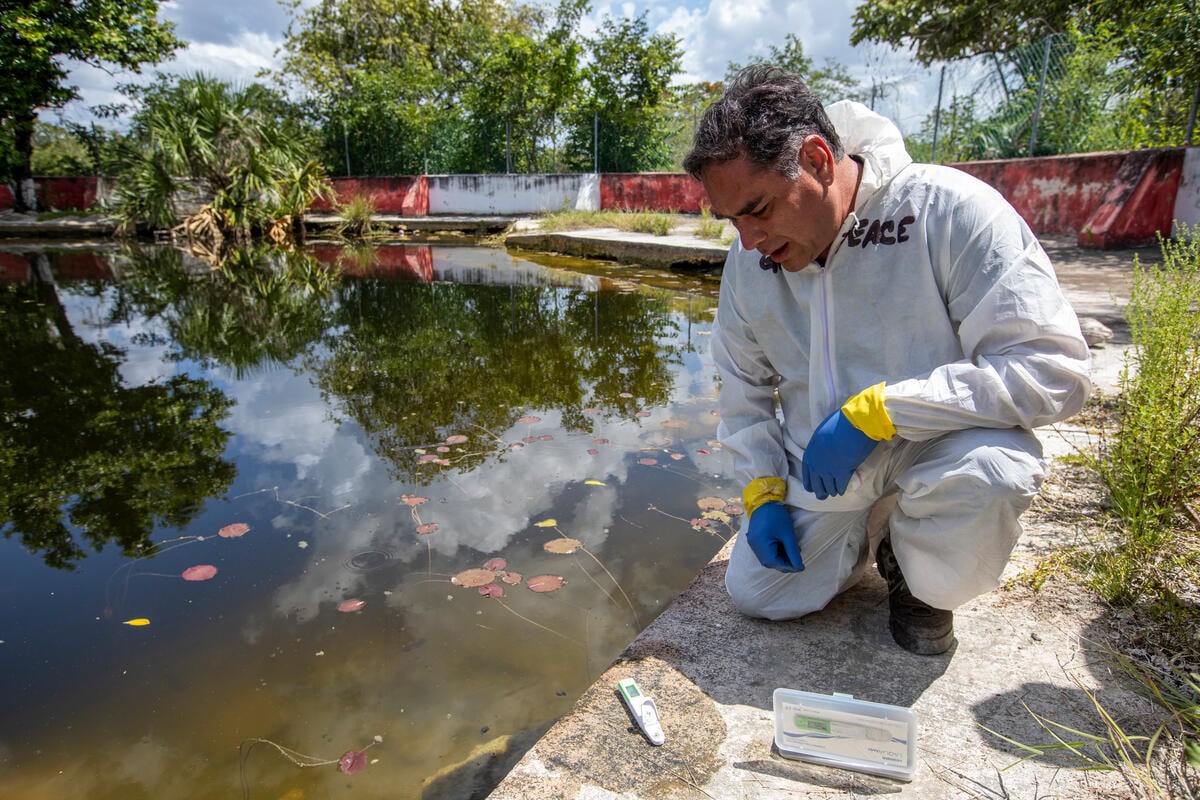
Demanding action from world leaders at CBD COP17 in Armenia, protesting a gas project in Australia, and calls for Big Tech regulations in Brazil, here are a few of our favourite images from Greenpeace work around the world this week. In response to these findings, the organisation carried out a symbolic intervention at one of the *cenotes* sampled last August. Through this action, they issued a firm call to the relevant environmental authorities to implement a moratorium, enforce strict regulations, or shut down this type of industry, while also demanding comprehensive protection for the Mayan Forest (both its surface and its subterranean environment). Greenpeace has been a pioneer of photo activism for more than 50 years, and remains committed to bearing witness and exposing environmental injustice through the images we capture. To see more Greenpeace photos and videos, please visit our Media Library. Texte intégral (2429 mots)
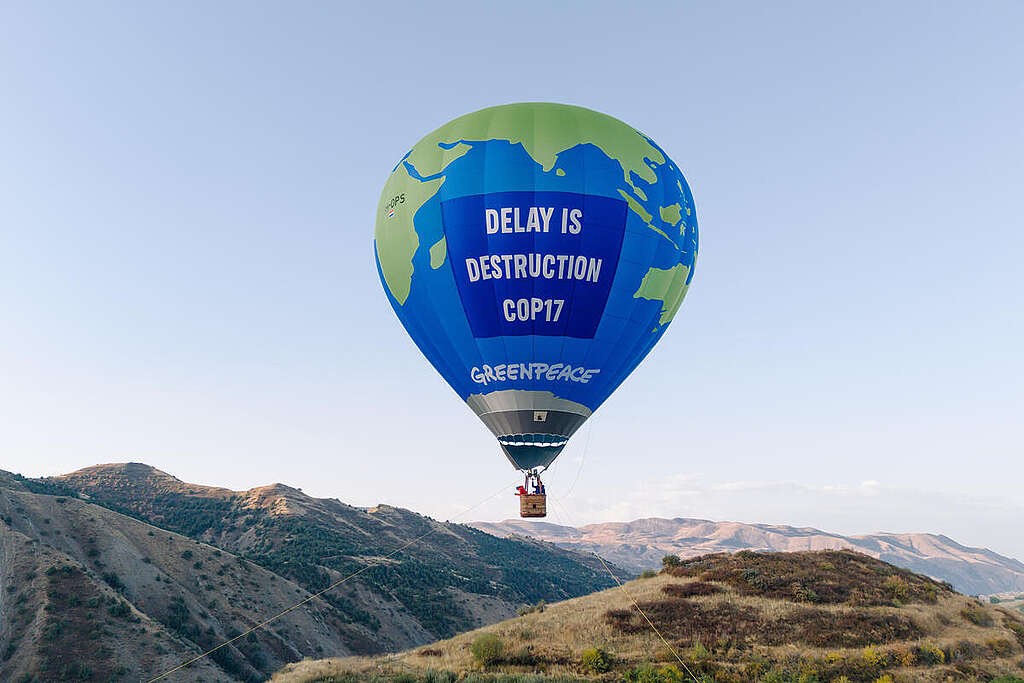
 Armenia – Activists send a message to world leaders at the Conference of the Parties (COP17) to the UN Convention on Biological Diversity (CBD). The 17th UN Biodiversity Conference, CBD COP17, takes place in Yerevan, Armenia, from 19-30 October, 2026. Greenpeace is at the CBD to demand governments address gaps in the implementation of the Kunming-Montreal Global Biodiversity Framework (KM-GBF) with concrete action, close the biodiversity finance gap, ensure quality of 30×30, from forests to the high seas, by safeguarding ecosystem integrity and respecting rights, and maximise synergies between climate and biodiversity action.
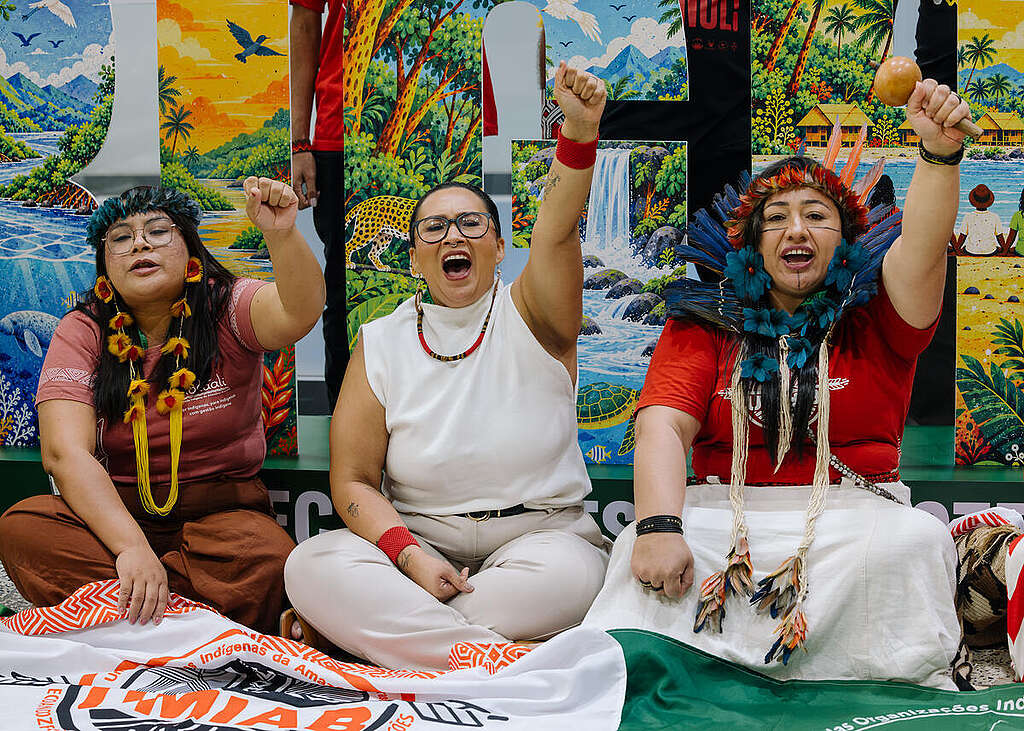 Armenia – Greenpeace International and Indigenous Peoples and local communities from around the world deployed an artistic installation to the centre of the UN Biodiversity Conference to demand delegates at CBD COP17 to recognise and respect the rights and roles of Indigenous Peoples and local communities as the foundation for achieving global biodiversity targets.
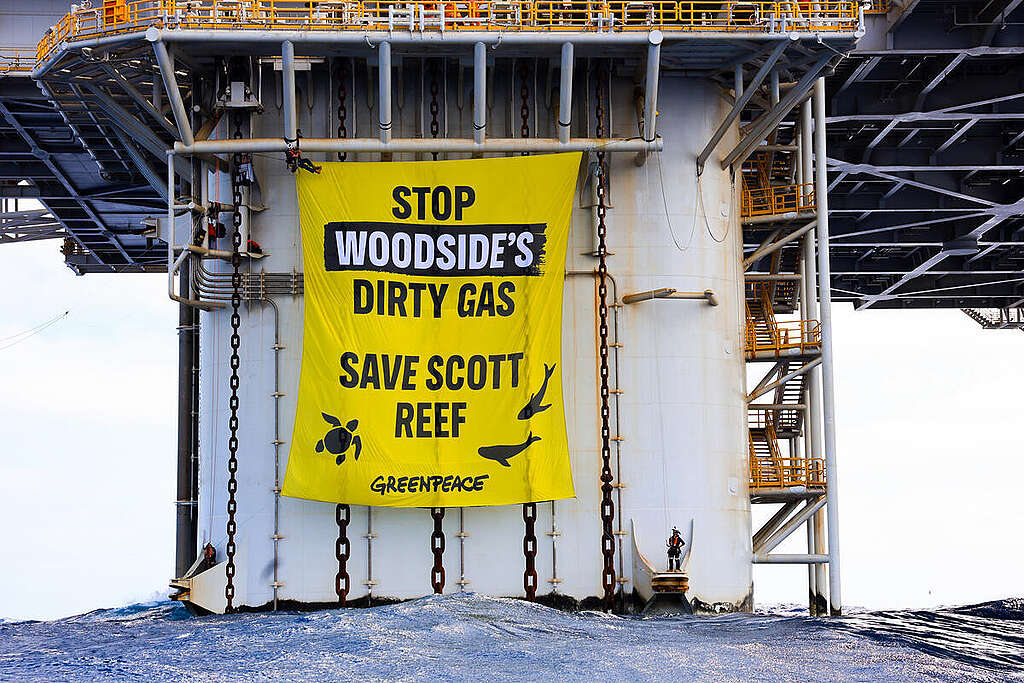
 Australia – Greenpeace activists deploy massive 14m x 12m banner that reads ‘Stop Woodside’s Dirty Gas. Save Scott Reef.’ upon a Floating Production Unit at Woodside’s Scarborough gas project over 200km off the coast of Exmouth in peaceful protest of Woodside’s reckless plans to drill for oil and gas at Scott Reef.

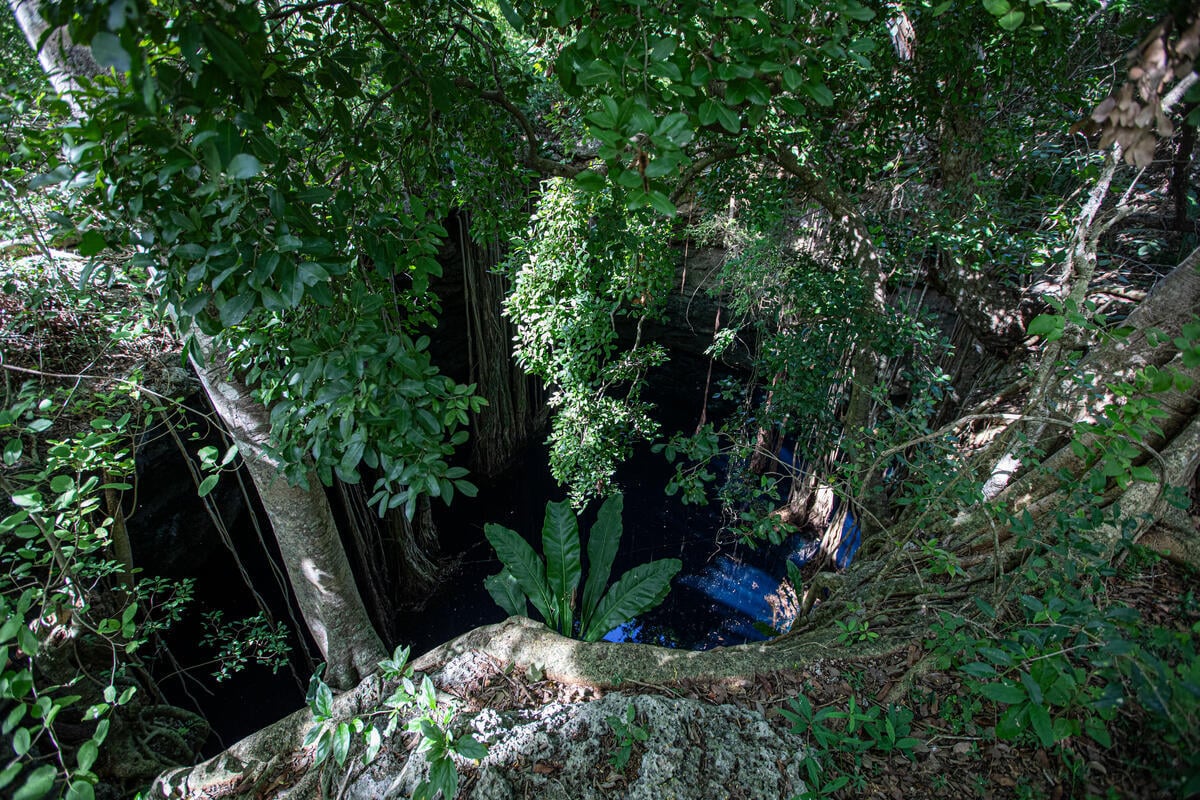
 Mexico – The results of a water quality study conducted by Greenpeace Mexico in August 2026—involving community-based monitoring and laboratory analysis at 17 sampling sites, including wells and *cenotes* (sinkholes) across 6 locations in the state of Yucatán—confirmed contamination by organic matter, harmful bacteria, excess nutrients, and indicators of porcine fecal matter. Two additional studies, carried out in 2024 and 2026 by the *Red en Defensa del Agua y el Territorio Maya To’one Ja’o’on* (“We Are Water” Network) across five overlapping sites in 5 municipalities, confirmed—using the “Pig2Bac” method—that the source of the contamination is large-scale pig fecal matter. These analyses were performed at the laboratories of Johns Hopkins University (United States) and the National Autonomous University of Mexico (UNAM).
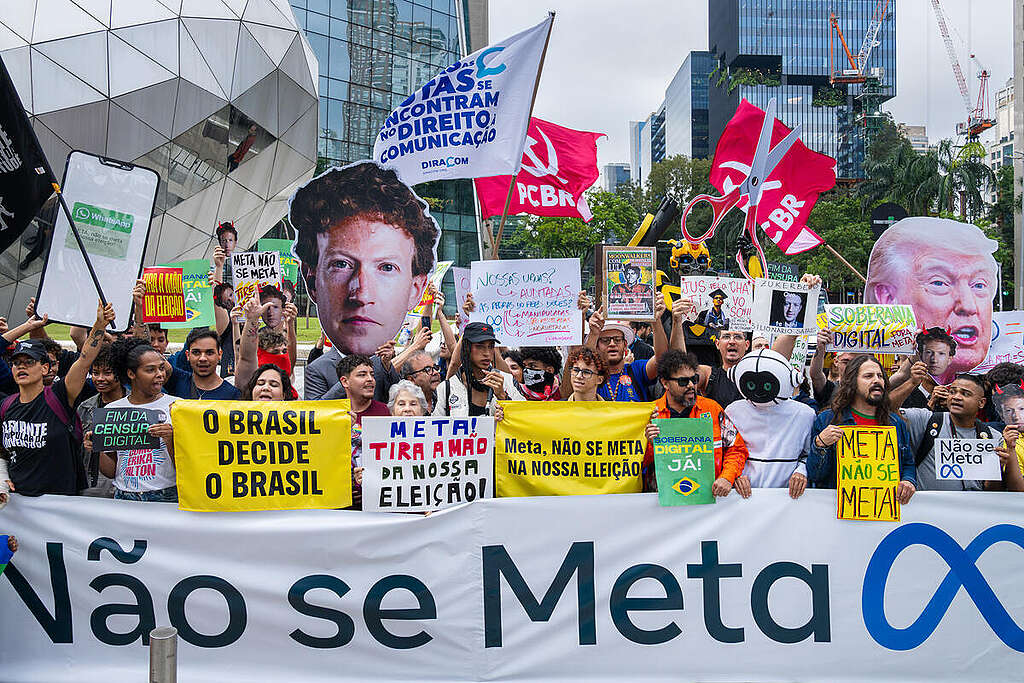
 Brazil – Less than a week before the elections, Greenpeace Brazil joined hundreds of activists and civil society organizations at Meta’s headquarters in São Paulo (Meta Platforms is an American multinational technology company) in a peaceful protest to send a clear message: Meta, keep your hands off our election! Thousands of complaints compiled by the CTRL+Z organization exposed serious failures on Meta’s platforms that are interfering with Brazil’s elections, manipulating social media, and threatening our democracy. We don’t need anyone meddling in our choices. We urgently need regulation of Big Tech! Brazil decides Brazil’s future.
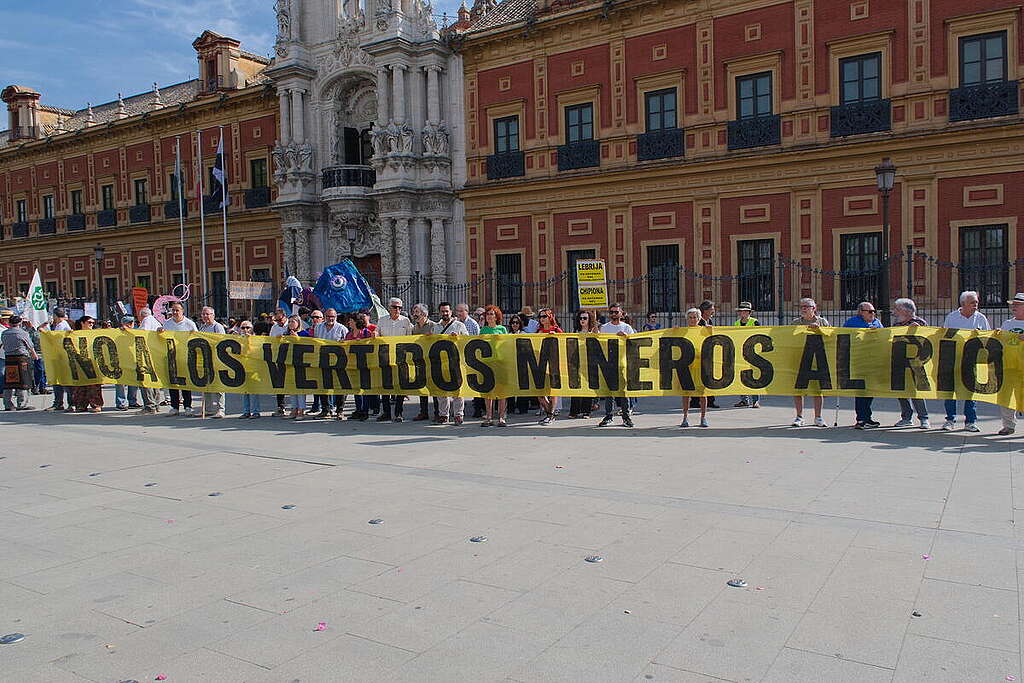
 Spain – A massive mobilisation of civil society and institutional groups including Greenpeace Spain is demanding that the Regional Government of Andalusia immediately revoke the permits for toxic discharges into the river’s estuary.
Organisations warn of the risk of turning the Guadalquivir into a “sewer for mining waste” through the discharge of more than 115,000 million liters of water contaminated with heavy metals. These discharges threaten protected areas of high ecological value, such as Doñana and the Natura 2000 network, and also pose a threat to public health due to their impact on fisheries, agriculture, and the drinking water we obtain from aquifers.
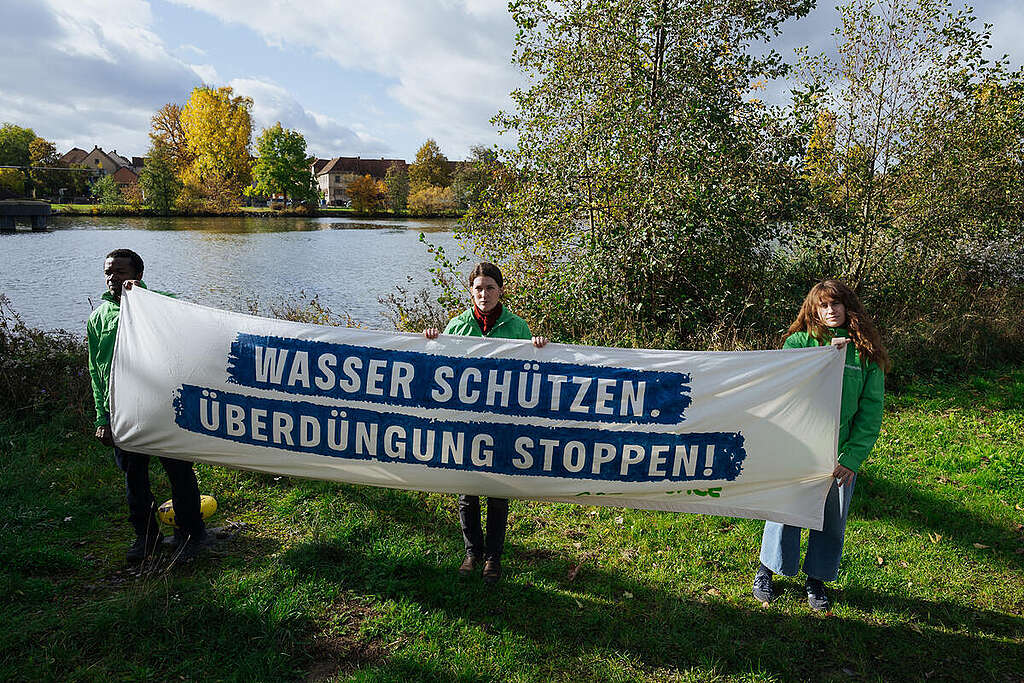
 Germany – Greenpeace agriculture experts measure nitrate levels in surface waters near Karlstadt in der Main-Spessart constituency, represented in the federal parliament by Alexander Hoffmann(CSU). The environmental campaigners take a water sample from the local stream and analyse the results on site.
Governments cannot protect the ocean while sidelining coastal communities
Dr Erika Bjureby Saldes & Nichanan Tanthanawit
With just three years to 2030 – the major milestone for global biodiversity commitments – the world is not on track to meet them. A Global Review of progress towards the Kunming-Montreal Global Biodiversity Framework confirms that implementation is lagging across the board, highlighting marine and coastal regions as a major gap. Marine and coastal ecosystems face overlapping pressures from industrial fishing, coastal developments, pollution and other industrial activities. Governments commit to conservation internationally while continuing to approve destructive activities nationally, so when it comes to marine and coastal areas, only 10.04% are protected or conserved to some degree. Even that figure does not tell the whole story: many areas counted as protected remain exposed to destructive activities, or fail to respect the rights of Indigenous Peoples and coastal communities. With decision makers meeting at the UN Biodiversity Conference COP17 in Yerevan, the question is, how can governments close the implementation gap when it comes to marine protection, while supporting and centering the leadership of Indigenous Peoples and local communities? Protecting 30% of land and ocean by 2030 is not simply about reaching a numerical target. Protection must be effective and equitably governed, respect the rights of Indigenous Peoples and local communities, and address the destructive activities driving biodiversity loss. For coastal communities, governments’ failure is not abstract. In Thailand’s Chana district, coastal communities have resisted an industrial estate project they did not choose, while establishing Talae Na Baan zones in which they set fishing rules, restore biodiversity through traditional “fish homes” and protect local waters. Yet these community-led solutions often lack formal legal recognition and can be overridden by large-scale state concessions. In Chile, legal frameworks exist to recognise Indigenous stewardship of marine and coastal areas, but weak and slow implementation leaves communities facing continued industrial pressures. These cases expose the injustices small-scale fishers, Indigenous Peoples and local communities often have to face. Those who have been protecting vital ecosystems for generations are often sidelined, treated as stakeholders to be consulted within someone else’s plans, and often not even that. Top-down conservation can consequently restrict access to customary waters without addressing the industrial activities driving their destruction. Protecting the marine and coastal ecosystems on which we all depend requires more than participation: it requires legal recognition of the customary and tenure rights and scaling up community-led conservation initiatives, alongside support for community-led and co-managed governance of protected and conserved areas. As governments meet at COP17, the debate over marine protection must go beyond how much ocean is designated as protected. Marine ecosystems do not follow administrative boundaries. Mangroves, seagrass beds, coral reefs, migration routes and the high seas are part of the same living ocean. Protecting isolated patches while the surrounding waters remain exposed to pollution, destructive fishing or extraction will not halt biodiversity loss. The entry into force of the new agreement on Biodiversity Beyond National Jurisdiction, known as the BBNJ Agreement or Global Ocean Treaty, creates a historic opportunity to protect biodiversity on the high seas. Synergies between the Convention on Biological Diversity (CBD) and the Global Ocean Treaty can help drive a seamless network of protected areas from coastal waters to the high seas. But effective marine protection is not only about where protected areas are established. It is also about who has the power to shape and govern them. Indigenous Peoples and coastal communities must have a decisive role in decisions affecting the waters, livelihoods and cultures they have sustained for generations. The evidence shows what this can achieve. After more than a decade of community management, the Kawawana community conserved area in Senegal had restored a heavily degraded ecosystem, with 20 fish species, manatees, dolphins and crocodiles returning. The recovery also helped revitalise the local fisheries economy and improve people’s quality of life. This is not simply a case for consulting communities: it shows what becomes possible when their authority, knowledge and governance are recognised and supported. Governments increasingly praise Indigenous Peoples and local communities as essential partners in protecting biodiversity, while continuing to deny them meaningful authority over the ecosystems they sustain. At CBD COP17 the UN biodiversity conference in Yerevan in October, consultation and participation alone will not be enough. Governments must uphold Indigenous Peoples’ distinct rights to self-determination, customary tenure and free, prior and informed consent. They must equally recognise the rights and role of local communities and small-scale fishers by securing their access to coastal resources and giving them real influence over decisions affecting their waters and livelihoods. An ocean area is not truly protected if destructive activities continue inside it. Nor is conservation just if the people who have stewarded those waters for generations are pushed aside in the process. COP17 should not be another round of ambitious speeches. Governments must close the gap between commitment and delivery, and shift power and resources for ocean protection towards the people already defending the sea. The Global Review makes the failure visible. Governments gathering in Yerevan must make ocean justice part of the solution. Dr Erika Bjureby Saldes is the Biodiversity Global Political Lead at Greenpeace International and Nichanan Tanthanawit is the Global Project lead for Ocean Justice Campaign at Greenpeace Southeast Asia, Thailand. Texte intégral (1042 mots)
Pig waste is polluting Mexico’s Maya rainforest. But local communities are fighting back
José Luis Perlasca
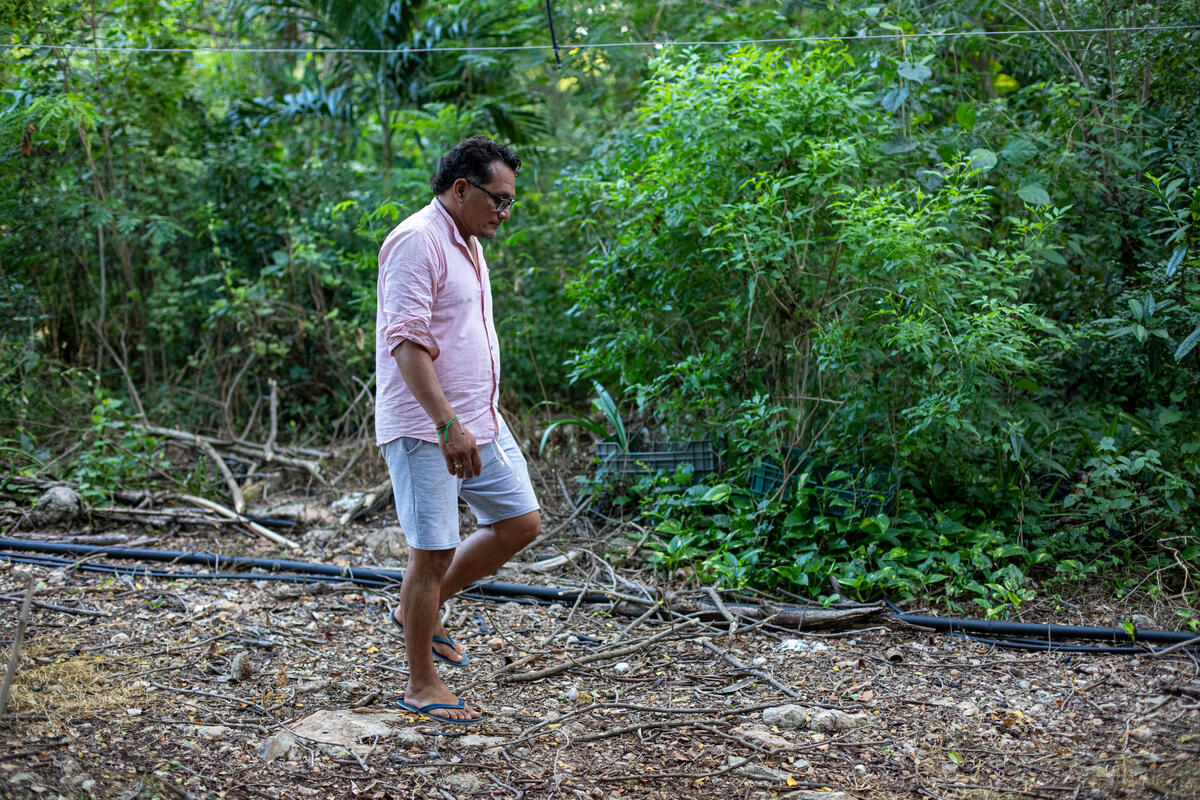
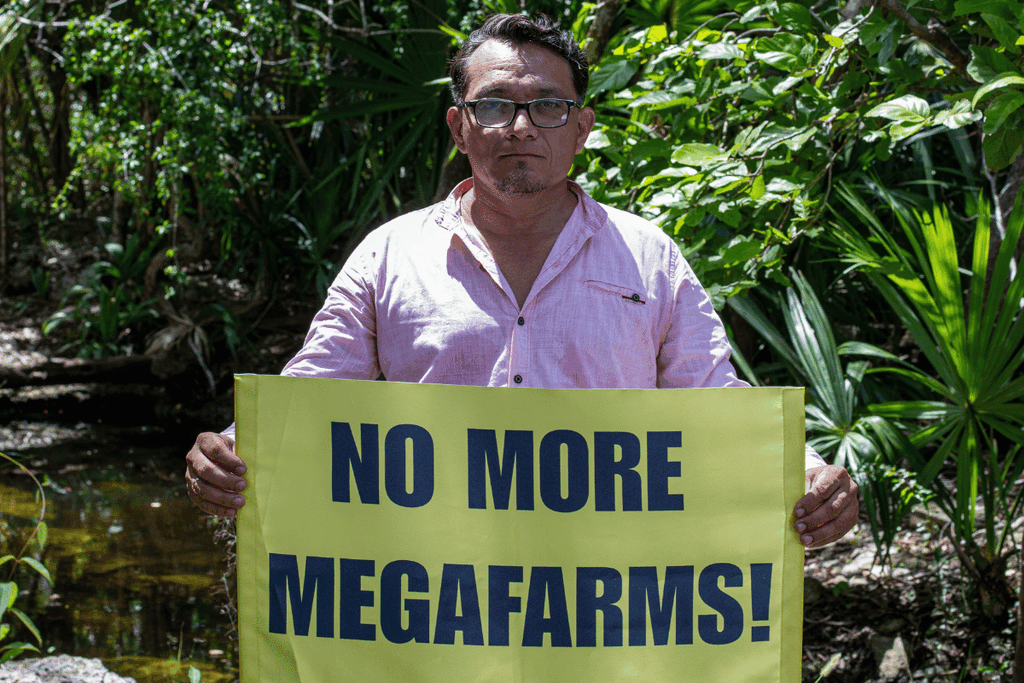
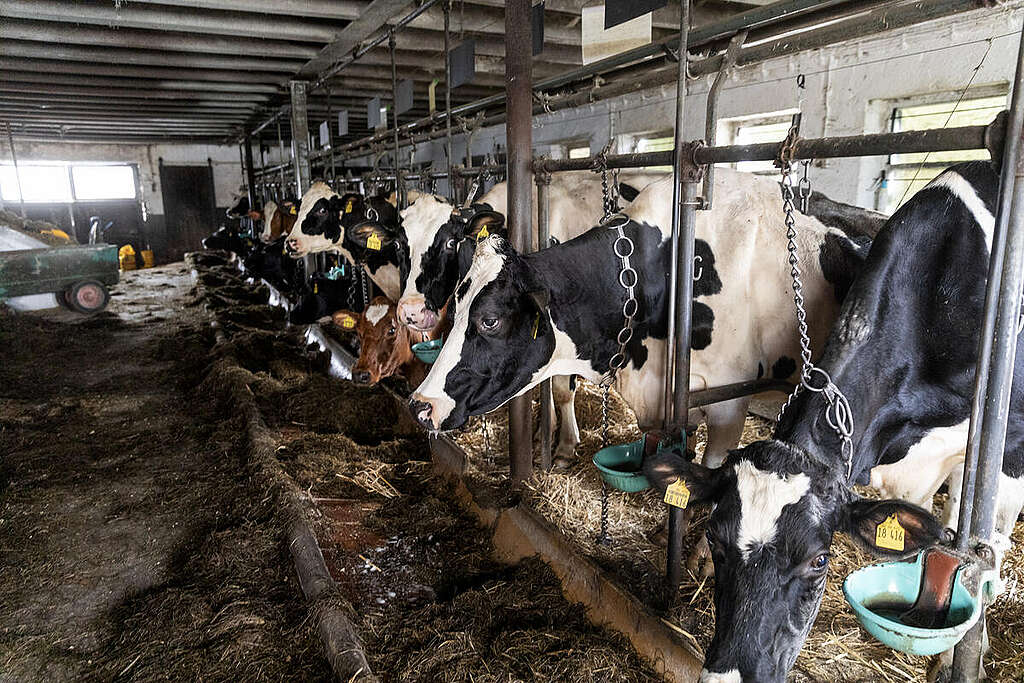
What would you do, if a factory farm close to your home started burning pig waste? If toxic smoke and fumes began choking your community? If you’re Wilberth Alfonso Nahuat Puc, you fight back. Wilberth lives in Santa María Chí, a Mayan community of about 500 residents in the lush forests of Mexico’s Yucatán peninsula. For years, he had to deal with an industrial megafarm holding 49,000 pigs just 250 meters from his town. “The impact was direct. Water contaminated by high concentrations of nitrites, nitrates and fecal bacteria coming from the farms led to gastrointestinal and respiratory diseases,” Wilberth says. By 2023, the megafarm began burning pig waste, filling the air with toxic smoke that left local children and adults suffering from acute pharyngitis (a sudden, severe sore throat). Realising their health and home were on the line, the community organised peaceful protests to stop the burning. The response from the farm’s owners and authorities was swift and aggressive. Wilberth, acting as local Municipal Commissioner, was hit with lawsuits designed to silence local leadership and people standing up for their rights. But Wilberth and his neighbours didn’t go silent, instead they filed 28 environmental injunctions against state, municipal, and federal agencies, demanding transparency and testing. And their persistence worked. On September 4, 2025, environmental regulators permanently shut down the megafarm after confirming illegal wastewater dumping and repeated safety breaches. By April 30, 2026, the last animal was removed from the site. Wilberth’s victory in Santa María Chí offers a hopeful roadmap for local action, but the broader threat remains. The state of Yucatán accounts for nearly 10% of Mexico’s total pork production, driven largely by meat exports to international markets like the United States, South Korea and Japan. The region sits on top of the Great Mayan Aquifer, a vast subterranean freshwater system of wells and sinkholes known locally as cenotes (from the Mayan word “dzonot”). This freshwater system is a vital source of drinking water to 5 million people, and because the region’s limestone ground is highly porous, liquid manure and chemical runoff sink almost instantly into the underground water network. A new report released this week by Greenpeace México and Greenpeace International, titled The Price of Pork, reveals the scope of this crisis. Water samples gathered across 17 sites in Yucatán showed widespread fecal contamination and nitrate levels far exceeding World Health Organization safety guidelines. High nitrate levels in drinking water are linked to serious health conditions, including colorectal cancer and pre-term birth – and a growing body of research links ingested nitrate to these risks at levels far below the current WHO guideline. Despite these risks, official data shows that over 90% of industrial pig farms in the region operate without mandatory environmental impact assessments. Although Wilberth and his community successfully shut down their neighbouring megafarm, their work is far from over. “We insist, resist, and persist against pork megafarms, because there is still much to do,” Wilberth says. “The territory remains damaged, even though the farm that affected my community has closed. It is a problem that affects the entire peninsula, and we know our territory can no longer support another megafarm.” The toxic waste left behind still needs to be safely removed and the groundwater restored. While Wilberth’s story demonstrates the power of local people resisting industrial agriculture, it shouldn’t be left to local communities and volunteers to fight every megafarm one by one. Across the rest of the Yucatán peninsula, hundreds of similar megafarms continue to operate near residential areas and protected ecosystems. To protect local health and save the region’s remaining clean water, Greenpeace México is urging Mexican authorities to place an immediate pause on new or expanding industrial pork operations, hold illegal operators accountable, and ensure local communities have a final say in developments that impact their water and land. Across the world, massive factory farms are polluting local drinking water to line the pockets of a wealthy few. But communities are drawing a line in the sand. From the Yucatán Peninsula to every corner of the world, people are standing up, fighting back, and demanding clean water. Water is a human right, not corporate profit. Join the global movement—sign the petition today. It’s time to cut through corporate lies, cut agriculture emissions and shift towards sustainable agroecology. José Luis Perlasca is a Campaigner at Greenpeace México Texte intégral (2034 mots)
The environmental cost of Mexico’s pork expansion in the Maya rainforest
Community resistance against pork megafarms, and protecting the aquifer
🌱 Bon Pote
Actu-Environnement
Amis de la Terre
Aspas
Biodiversité-sous-nos-pieds
🌱 Bloom
Canopée
Décroissance (la)
Deep Green Resistance
Déroute des routes
Faîte et Racines
F.N.E (AURA)
Greenpeace Fr
Journalistes d'Investigation Ecologie Climat
Journalistes & Ecrivains Nature Ecologie
La Relève et la Peste
La Terre
Le Lierre
Le Sauvage
Low-Tech Mag.
Motus & Langue pendue
Mountain Wilderness
Negawatt
Observatoire des médias sur l Écologie
🌱 Observatoire de l'Anthropocène