
Greenpeace Pictures of the Week
Greenpeace International
A trojan horse, a giant turtle, and a busy week at COP31, here are a few of our favourite images from Greenpeace work around the world over the past seven days. Greenpeace has been a pioneer of photo activism for more than 50 years, and remains committed to bearing witness and exposing environmental injustice through the images we capture. To see more Greenpeace photos and videos, please visit our Media Library. Texte intégral (3049 mots)
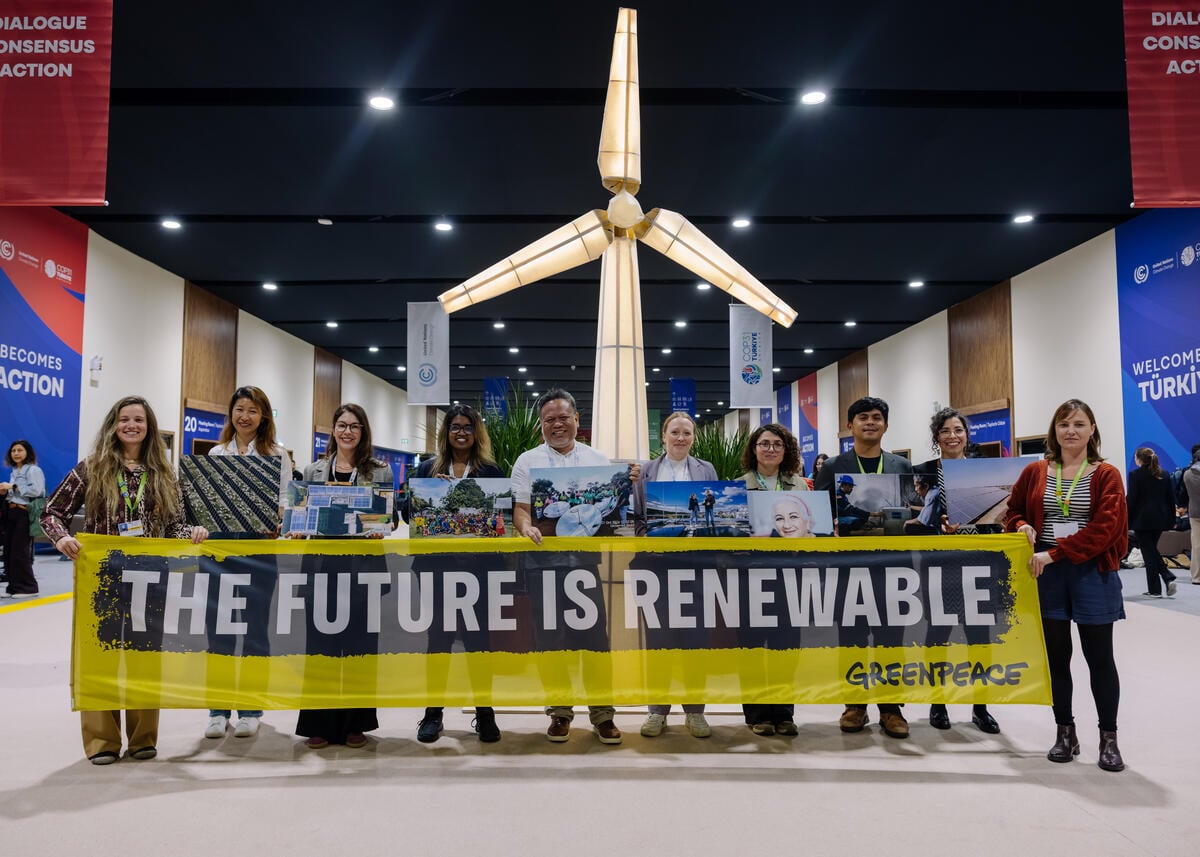
 Türkiye – COP31 in Antalya, Türkiye, Greenpeace installed a symbolic windmill in the UN ‘Blue Zone’. Standing beside it, members of Greenpeace’s COP31 delegation shared inspiring snapshots of the green energy transition from across the globe to send a clear message: ‘The Future is Renewable.’ Stories from Europe, Türkiye, the Pacific, MENA, Africa, Brazil, Southeast Asia, and East Asia passed on a message of hope and inspiration to guide negotiators to live up to their responsibility as COP31 nears its end.
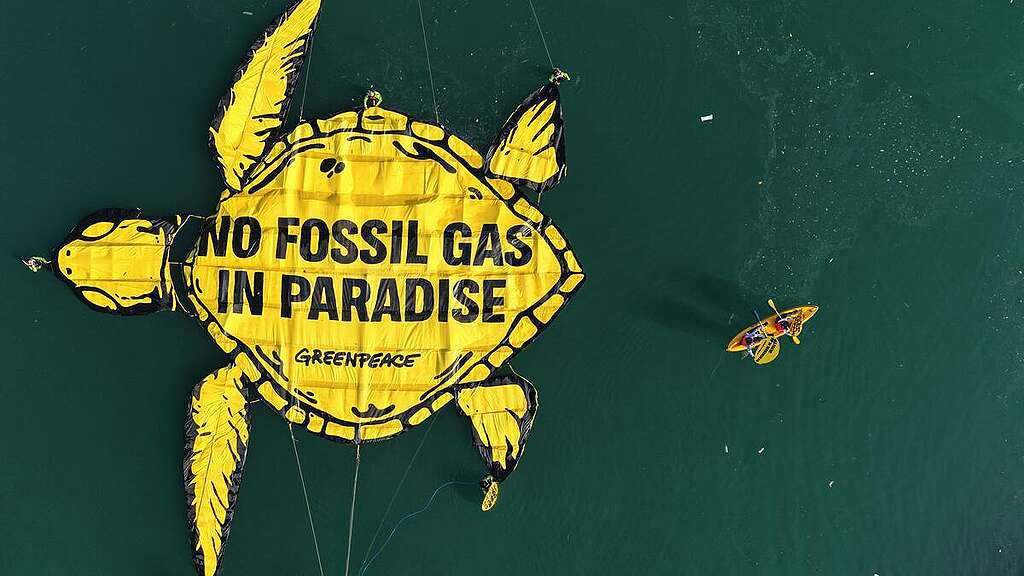
 Indonesia – Greenpeace Indonesia staged a creative, peaceful protest at the centre of climate crisis cause. A banner shaped like a sea turtle was unfurled over the water directly in front of a Floating Storage and Regasification Unit (FSRU) for liquefied natural gas (LNG) in Benoa, Bali. The banner said: “No Fossil Gas in Paradise.” The action aim is to demand Indonesian government to remain committed to energy transition and to exclude fossil fuels in its electricity planning.

 Norway – Greenpeace Norway Legal campaigner Klimentina Radkova hugs a colleague at the Supreme Court in Oslo on 13 November 2026 after the Grand Chamber invalidated government permits for three North Sea oil and gas fields—Breidablikk, Yggdrasil, and Tyrving – developed by Equinor and Aker BP. This result affirmed earlier rulings from the Oslo District Court and the Borgarting Court of Appeal, the Supreme Court established that environmental impact assessments must account for Scope 3 emissions—the global climate damage caused wherever the extracted fossil fuels are burned.
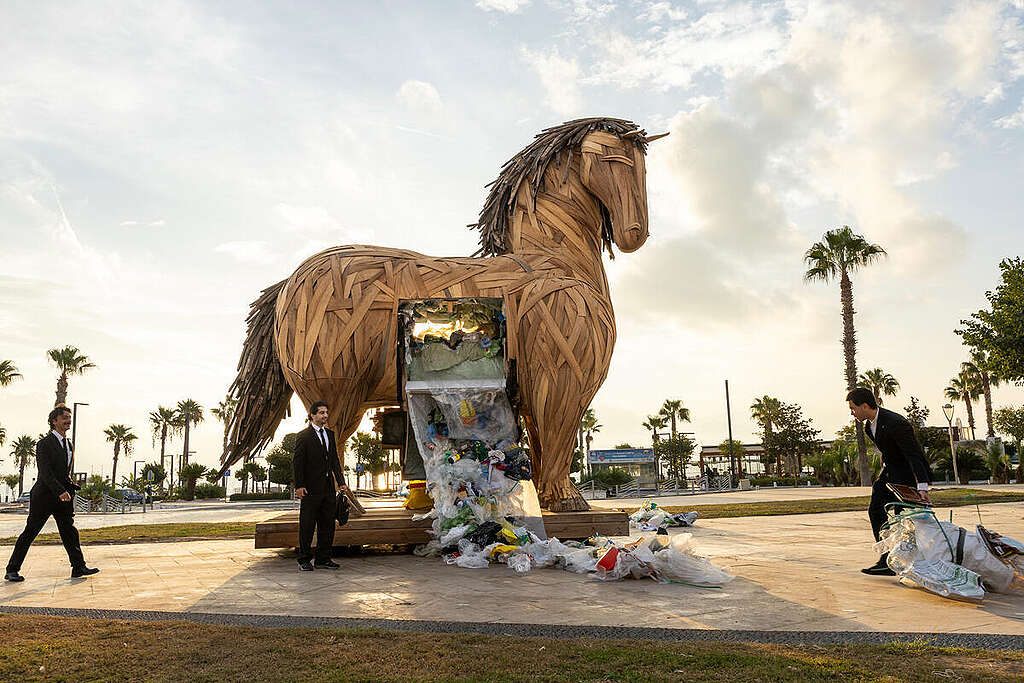 Türkiye – Greenpeace International launches a giant Trojan Horse in central Antalya during the UN climate conference COP31, exposing how the fossil fuel and petrochemical industries are using plastic production to prolong dependence on oil and gas and protect their profits.
Created in collaboration with Danish artist Thomas Dambo for Greenpeace’s plastics campaign, the installation stands six metres high and four metres wide and poured out plastic when the trapdoor in its belly opened. It carries a message to world leaders gathering for climate negotiations: plastic is the big oil’s Trojan Horse.
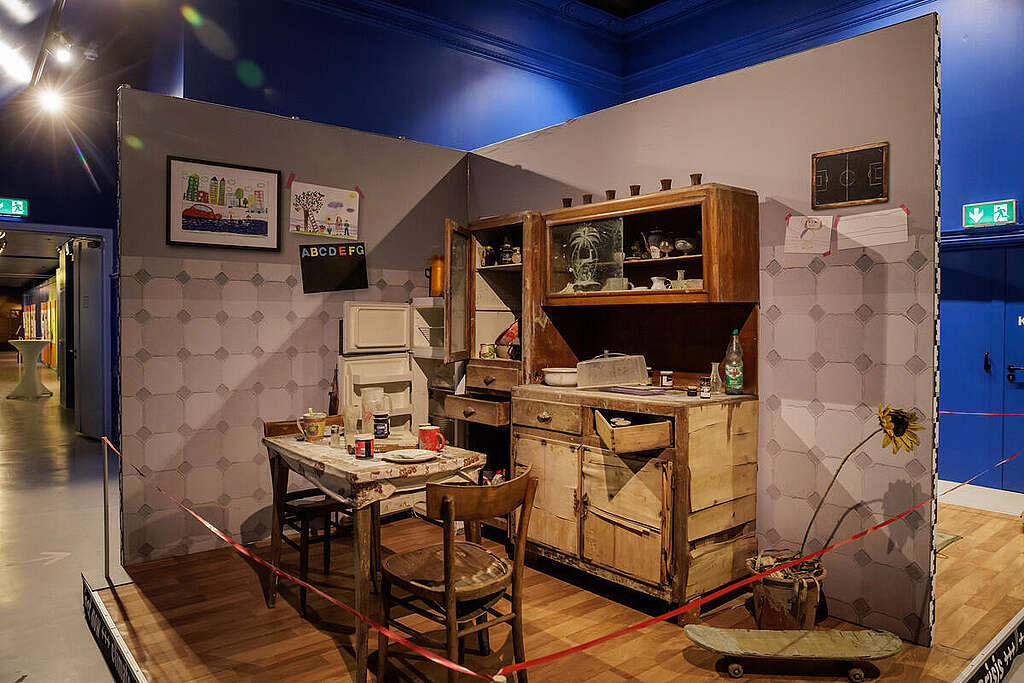
 Germany – Official opening of the Greenpeace exhibition “Flutwohnung” (Flooded Apartment) at the Biosphäre Potsdam, which uses a model of an apartment destroyed by flooding to illustrate the consequences of increasing weather extremes and climate change.
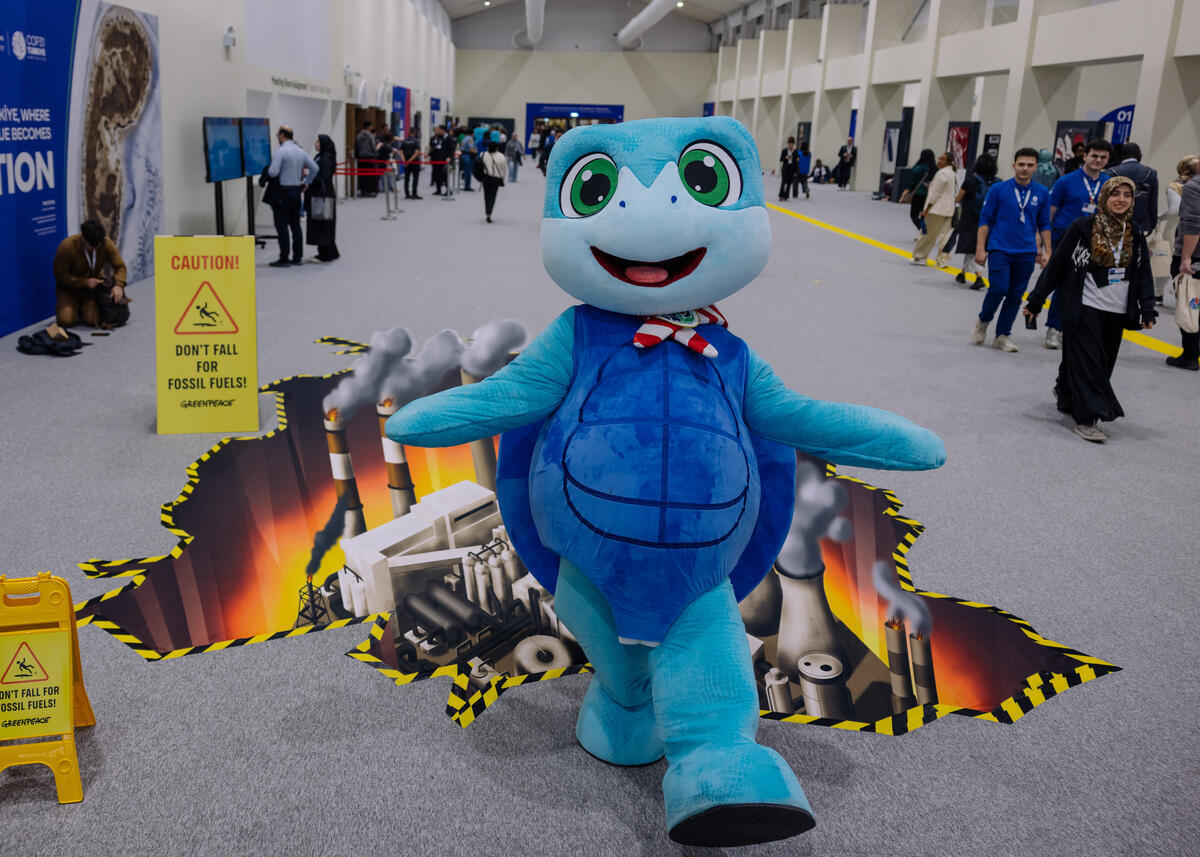 Türkiye – COP31 Mascot Caretta at Greenpeace International 3D artwork. Laid across a high-traffic walkway at COP31, the large-format 3D graphic depicts a fossil fuel power plant inside a deep, cracked pit. The optical illusion challenges passers-by to instinctively step aside to avoid falling in, physically acting out the need to escape the fossil fuel trap. The action calls on delegates and ministers to stop locking economies into volatile fossil fuel dependence and accelerate a fast, fair and funded transition to homegrown renewables, funded largely through progressive polluter taxation.
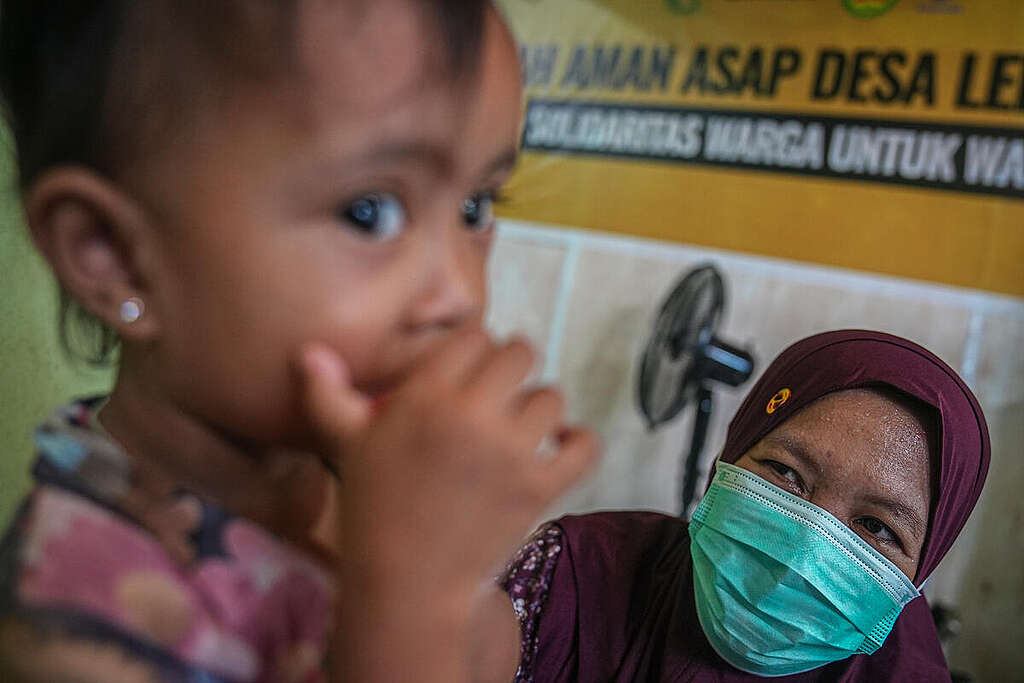 Indonesia – Resa Susanti, a volunteer, examines Sakina, 2.5, who is suffering from an acute respiratory infection (ARI) linked to wildfire haze, at a Haze Shelter in Lebung Itam village, Ogan Komering Ilir regency, South Sumatra. Greenpeace, local civil society organization Rawang and residents established the shelter under the theme “Community Solidarity for the Community” because the village is located near wildfire hotspots. Cases of ARI have increased as air quality deteriorates due to wildfires in South Sumatra.
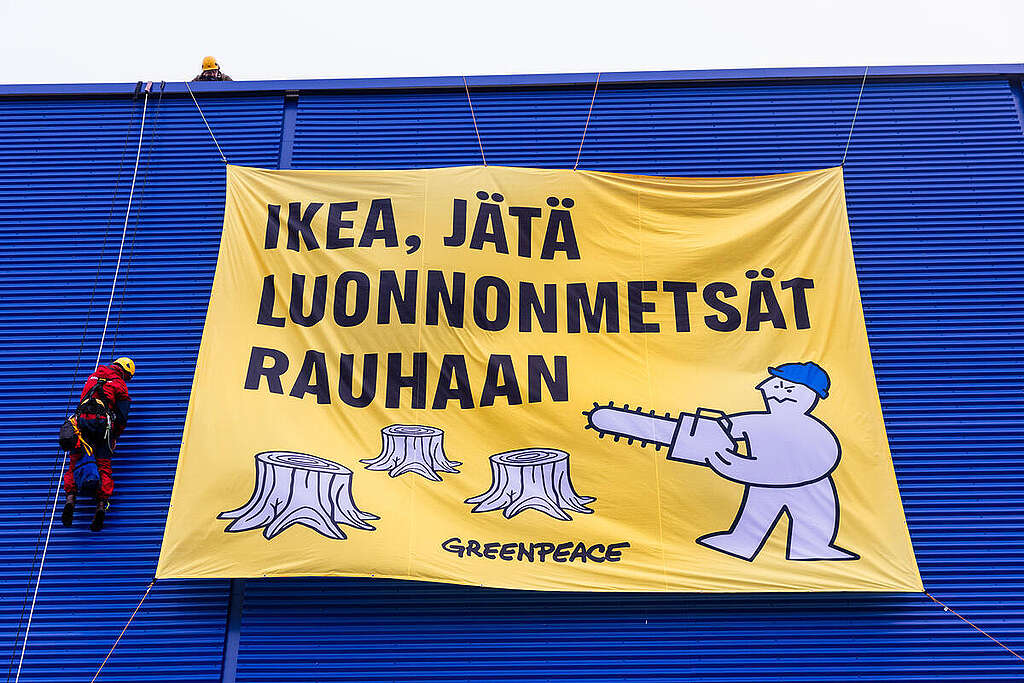
 Finland – Activists from Greenpeace Nordic protest at the Ikea superstore in Vantaa, Finland, with a banner demanding the company to stop using wood from old growth forests. They are challenging the world’s largest furniture manufacturer to protect Europe’s most valuable forests, and stop sourcing wood from forests that should be protected.
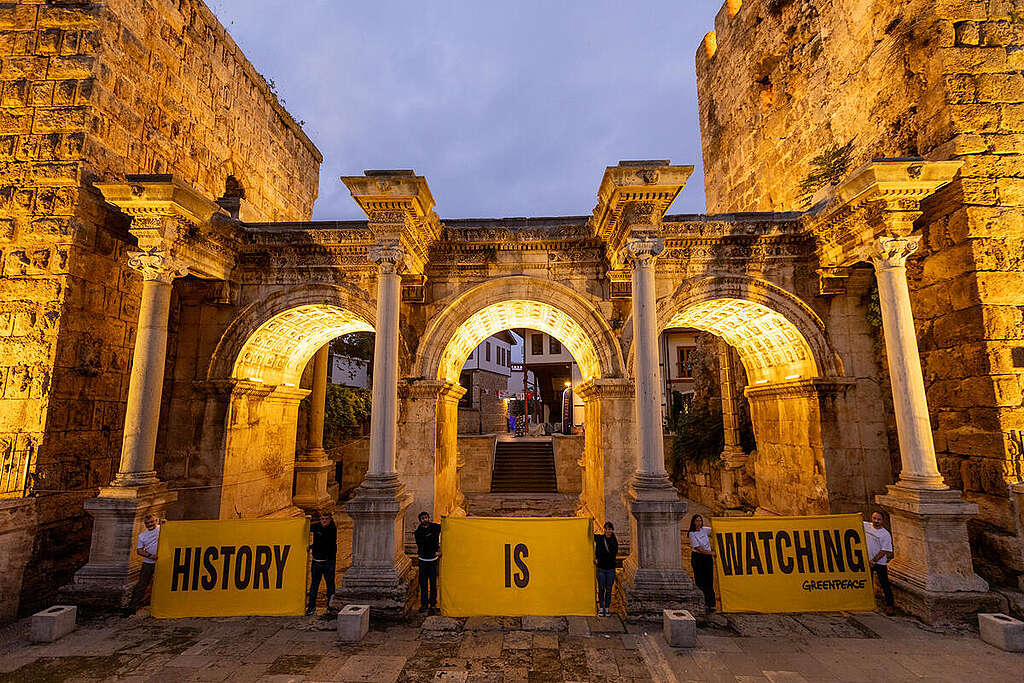 Türkiye – In Antalya, Greenpeace Türkiye activists held banners under the arches of the 1900 years old Hadrian Gate, one of the city’s most iconic historical sites: ‘History is Watching’. Future generations and historians will look back at the decisions made in COP31: It could be a lasting legacy, or a cautionary tale.
Greenpeace responds to IEA new report, calls for urgent clean energy investment to protect the planet and people’s economic and energy security
Greenpeace International
Amsterdam, The Netherlands – The International Energy Agency released its flagship World Energy Outlook 2026 report, which examines multiple scenarios for governments to confront the historic energy supply shock provoked by the war on Iran.[1] The report shows how diversification and investment in alternative sources of supply could reduce the need for oil flows and countries’ exposure to energy shocks. John Noël, Senior Strategist, Greenpeace International said: “After more than eight months of war on Iran, supply shocks, price increases, on top of escalating fossil fueled climate disasters, the World Energy Outlook shows oil and gas dependence running through all of it. “The war on Iran and attacks in the Strait of Hormuz have disrupted the lives and livelihoods of billions of people relying on a never-ending free flow of fossil fuels. How countries continue to respond to these ongoing crises will set the energy trajectory for the future. Notably, IEA confirms that domestically produced clean energy is not only good for the planet, but leads to more stable and predictable energy bills. “The structural change in clean energy underway right now may not reach its full potential without focused attention and bold investments. The report also considers a scenario where societies learn very few lessons from this largest energy crisis in history, and new export routes for oil and gas emerge, a low price cycle starts and fossil fuel demand rises. Governments must act now to avoid this. “We are in a narrow window inside the global energy and inflation crisis to demand governments take emergency level measures that will make countries less vulnerable to geopolitical crises, price shocks and disruptions at oil chokepoints. Acting now means expedited clean electrification of transport, heat, and power, protecting households hit hardest from price shocks, refusing to bankroll all new fossil fuel projects, and taxing the record profits that fossil fuel companies are making amid the war. If not, the next fossil fueled crisis is already scheduled.” ENDS Notes: [1] World Energy Outlook 2026 report Contact: Greenpeace International Press Desk, +31 (0)20 718 2470 (available 24 hours), pressdesk.int@greenpeace.org (404 mots)
Indigenous Peoples have a message to miners: Our Territories are not for sale
Camila Garcez
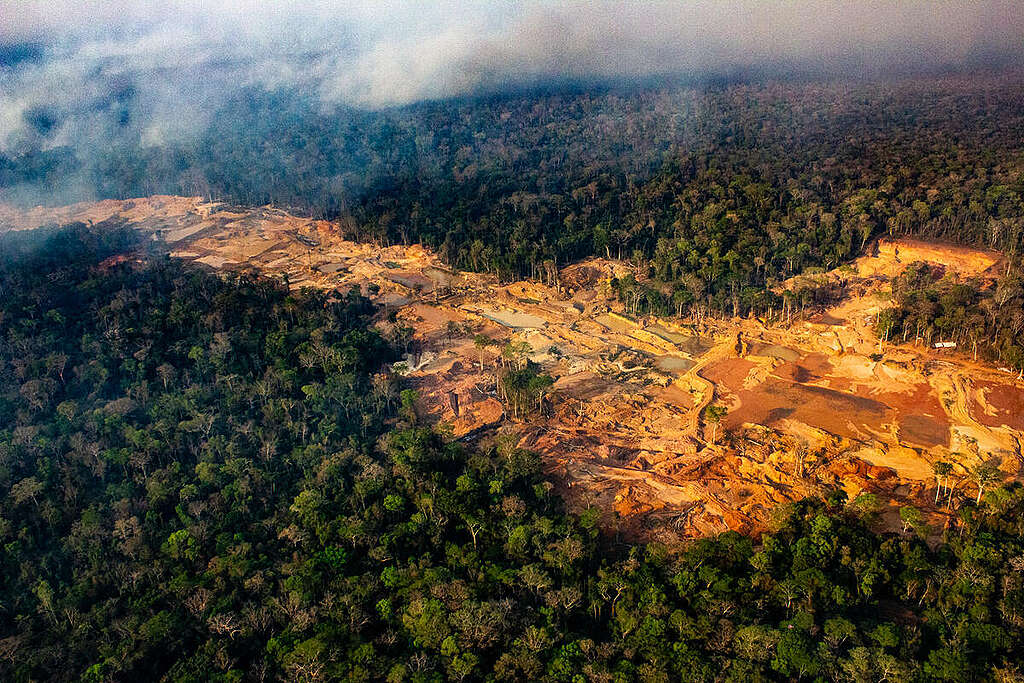
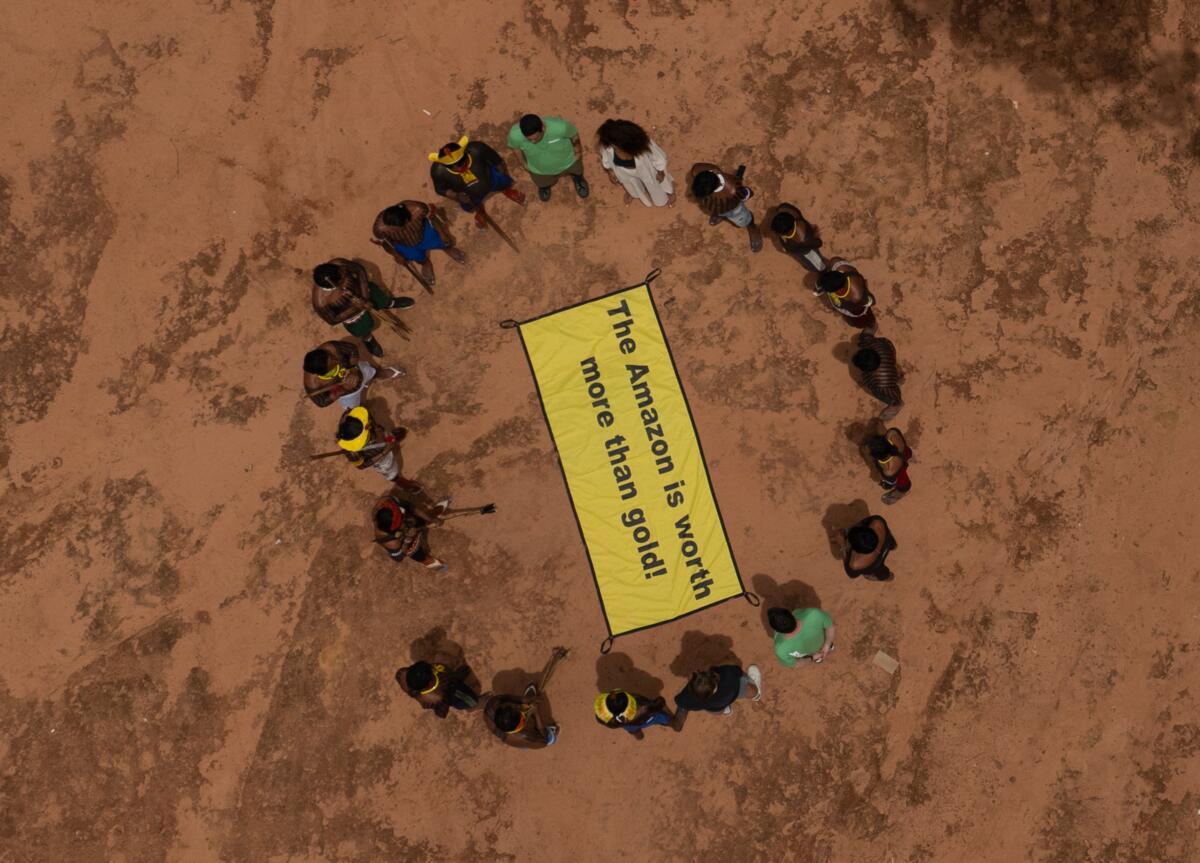
Indigenous territories have long been treated as frontiers open for exploitation, while its Peoples, who have protected the lands for generations, face fresh threats to their physical, cultural, spiritual, and territorial integrity. Earlier this month, the Articulation of Indigenous Peoples of Brazil (APIB) held a seminar “This Land Has an Owner: Indigenous Territories Free from Mining”, with the aim to discuss the threats posed by industrial and illegal mining to Indigenous territories, ways of life, and autonomy Following the gathering, Indigenous Peoples launched a statement that represents their stance against a movement that is gaining momentum with the global race for critical minerals and rare earth elements, weaponising the argument that these resources are necessary for the energy transition. Here’s what they had to say. When the energy transition relies on opening up new frontiers for exploitation, violating rights, and destroying ecosystems, it reproduces the colonial logic that has historically turned territories into sources of raw materials while leaving local populations to bear the socio-environmental costs of that exploitation. While governments and corporations present mining as an inevitable path towards sustainability, Indigenous Peoples warn this must not be used as a justification to deepen the violence, contamination, and appropriation of their territories. Illegal and industrial mining have been posing threats to Indigenous Lands, such as heavy metal contamination from mercury and lead, as well as the destruction of their sacred sites, provoking a series of negative impacts among the peoples and communities who have historically protected the forest and its ecosystems. Indigenous Peoples refuse to be treated as obstacles to economic development. Self-determination is a fundamental right: it is up to the Peoples themselves to decide on their life projects, their forms of organisation, and what may or may not take place on their Territories. For this reason, Indigenous Leaders reject consultations carried out merely to legitimise decisions already made by the state or by corporations. Consultation cannot be reduced to a box-ticking exercise to push projects through, but must serve as an instrument to uphold the right to decide. Free, prior, and informed consent must respect the autonomous protocols of each person and guarantee a genuine right of refusal. Greenpeace Brazil calls for confronting an extractivist model that disregards the social, environmental, cultural, and spiritual dimensions of Indigenous Territories. Projects that shape the future of their lands cannot move forward based on the logic of cobbled-together political majorities, continuing to inflict pain and suffering on Brazil’s more than 300 Indigenous nations. As Indigenous leaders state in their final letter at the end of the seminar: Our sovereignty stems from our peoples and our territories: it cannot be divided between the surface and the subsoil, because the land, the waters, the minerals, and the ways of life sustained there form a single territory of life A truly just energy transition must confront historical inequalities, reduce pressure to open new extractive frontiers, and respect the rights of those who protect the ecosystems vital to climate balance. There is no climate justice when the response to the environmental crisis reproduces the very forms of violence that helped create it. Read the full final letter (in Portuguese) here. Camila Garcez is a Campaign Engagement Analyst at Greenpeace Brazil. Texte intégral (1610 mots)

Spain and Portugal roadmaps help build momentum to end fossil fuels at COP31
Greenpeace International
Antalya, Türkiye – The announced roadmaps away from fossil fuels from Spain and Portugal at COP31 are a welcome development, but must now lead to an ambitious outcome at the UN climate conference to accelerate the phase-out of fossil fuels. At a press conference of the Beyond Oil and Gas Alliance (BOGA) at COP31, Spain, Portugal and Denmark announced they would launch roadmaps for the transition away from fossil fuels, while Luxembourg said it would launch its roadmap before the joint Ireland-Tuvalu conference for the transition away from fossil fuels next year. The BOGA alliance called on greater action to end fossil fuels to limit the extent and duration of the looming 1.5°C overshoot. Jasper Inventor, Head of COP31 of Greenpeace Delegation said: “This is a welcome push by the countries that have announced their roadmaps. We encourage other countries who are yet to do so to step forward and help secure a COP31 outcome that accelerates the phase-out of fossil fuels. These announcements send a clear signal that the era of fossil fuels will end. But the devil is in the detail: if we’re to keep 1.5°C alive we need to go harder and faster. Our collective future is on the line here at COP31.” Greenpeace Spain-Portugal also welcomed the announcement from Spain to not only present its roadmap for phasing out fossil fuels in Antalya, but also advocate for an electrification target linked to renewable energy and the phase-out of fossil fuels in the COP31 outcome. Sara Pizzinato, Climate and Energy Campaigner, Greenpeace Spain-Portugal said: “We hope that the roadmaps will include 2040 as the deadline for the decarbonisation of the economy, along with guidelines to harness the potential of sufficiency, efficiency and electrification with renewables to accelerate the transition. “Greenpeace Spain – Portugal has demonstrated that Spain and Portugal can phase out fossil fuels as early as 2040 by reducing its energy demand by 39 % and meeting the entirety of that demand with renewable energy. What Spain and Portugal must not do is resubmit the same weak targets as those in the current Integrated National Energy and Climate Plans for 2030. It must include dates for phasing out the use of coal, gas and oil (no later than 2040), and measures to end subsidies for fossil fuels.” Simon Bradshaw, COP31 Lead, Greenpeace Australia Pacific said: “The only path to returning warming to 1.5°C is through leaving fossil fuels in the ground. To inject the momentum these talks critically need, Australia must lead by example through developing its own national roadmap away from fossil fuels, including exports. We have just heard Denmark, another fossil fuel producer, say it is putting end dates on oil and gas production. Australia must be willing to do the same. “Australia’s Presidency of Negotiations will be judged on whether it builds further momentum and practical pathways for the global transition away from fossil fuels. This must include an electrification pledge that is powered by clean, renewable sources that actually displace fossil fuels and align with the science of 1.5°C, not a hollow pledge that risks driving up fossil gas production.” ENDS Notes: Greenpeace Spain report: Energy for a Better Life Contacts: Aaron Gray-Block, Greenpeace International, Climate Politics Communications Manager, aaron.gray-block@greenpeace.org Greenpeace International Press Desk, +31 (0)20 718 2470 (available 24 hours), pressdesk.int@greenpeace.org Texte intégral (643 mots)
🌱 Bon Pote
Actu-Environnement
Amis de la Terre
Aspas
Biodiversité-sous-nos-pieds
🌱 Bloom
Canopée
Décroissance (la)
Deep Green Resistance
Déroute des routes
Faîte et Racines
F.N.E (AURA)
Greenpeace Fr
Journalistes d'Investigation Ecologie Climat
Journalistes & Ecrivains Nature Ecologie
La Relève et la Peste
La Terre
Le Lierre
Le Sauvage
Low-Tech Mag.
Motus & Langue pendue
Mountain Wilderness
Negawatt
Observatoire des médias sur l Écologie
🌱 Observatoire de l'Anthropocène