flux Ecologie

▸ les 10 dernières parutions

17.12.2025 à 11:05

Russia’s fossil fuel war economy drives oppression and climate breakdown 

Greenpeace International

Texte intégral (2663 mots)

A toxic troika of extractivism, authoritarianism and war

A new report – the most far-reaching analysis of environment and environmentalism in Russia since 2022 – shows how Putin’s regime relies on a toxic troika of extractivism, authoritarianism and war. Fossil fuels finance war. War justifies repression. Authoritarianism shields elites from scrutiny while blocking demands for justice. Its veil of disinformation, propaganda and control of information is now so thick that free reporting on Russia now depends on information gathered from outside its borders: the world’s largest country has become a void of reliable information.

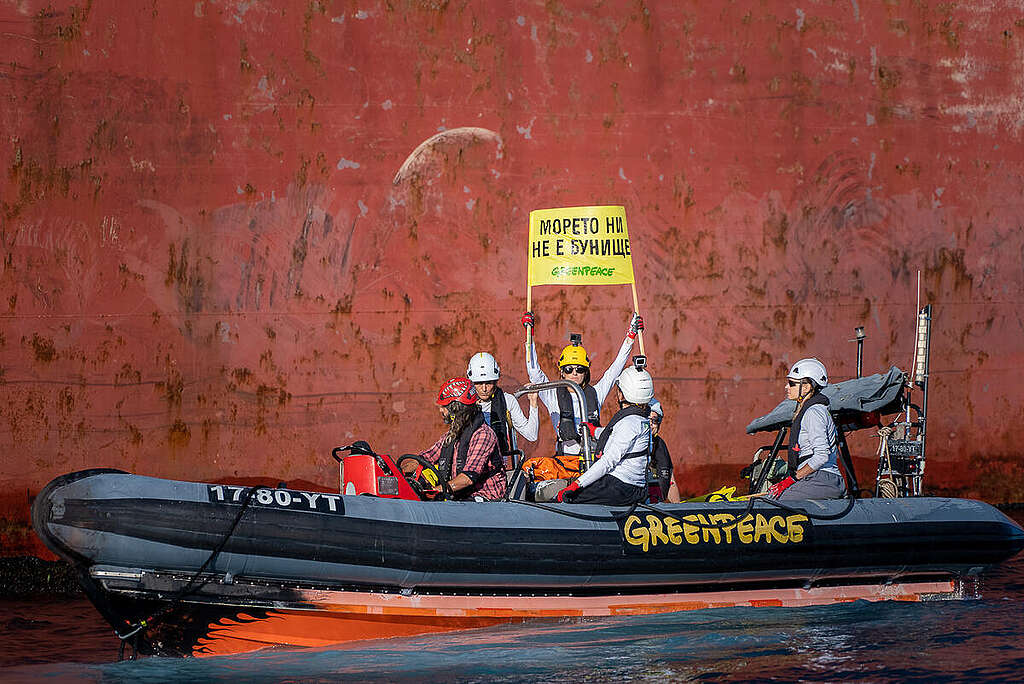
Polish, Ukrainian and other activists paint a Russian 'shadow fleet' tanker in the Baltic Sea © Lucas Wahl / Greenpeace
Polish, Ukrainian and other activists paint a Russian ‘shadow fleet’ tanker in the Baltic Sea off Rostock.
© Lucas Wahl / Greenpeace

This cycle devastates nature, dismantles institutions, oppresses societies, and poses a systemic threat to global security and environmental stability. Russia’s unprovoked aggression against Ukraine is also a danger to the wider world – but, frighteningly, it can provoke other cases. Its hostility is a warning to the world of how far an authoritarian regime based on fossil fuel economy can go. 

Russia’s aggression against Ukraine

Russia’s invasion of Ukraine sent shockwaves around the world. It has brought death, devastation and displacement to millions, triggered one of the largest refugee crises of the 21st century, and upended energy, trade, finance and food systems worldwide. Over three years since Russia’s full-scale assault in February 2022 – which itself came after eight years of illegal occupation of Crimea and parts of Donetsk and Luhansk – the consequences of Russia’s invasion continue to reverberate. Russia’s occupation and weaponisation of Ukraine’s nuclear power plants, including Europe’s largest, not only presents a chilling reminder of the Soviet era Chornobyl disaster that sent a cloud of radiation – and existential terror – as far away as North Africa and Canada. It also creates an unprecedented, more direct and more sinister threat to Europe and the wider world.

From the Arctic to Africa: a global threat with global consequences

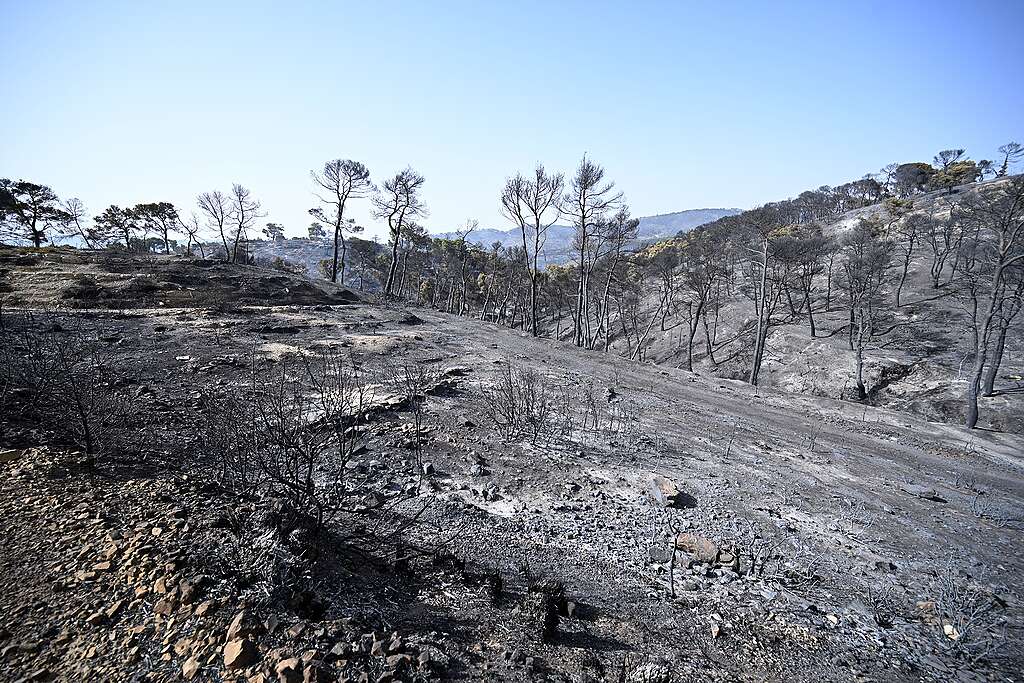
Natural systems in such a large country as Russia have an enormous influence on global environmental and climate stability. Nearly half of Russia is forest, which, alongside vast tundra, wetlands and permafrost, stores immense carbon reserves and safeguards biodiversity (see chapter 4: Biodiversity Crisis). Forest loss could accelerate the climate crisis and trigger irreversible ecological damage but under Kremlin policy, these ecosystems risk losing resilience fast: over half of Russia’s forest is deemed exploitable; fires spread unchecked; permafrost thaws, and fragile habitats fragment.

Meanwhile, the risks of environmental and technological disasters continue to grow. Corruption, ageing infrastructure and dismantled oversight systems make spills, leaks and industrial accidents more likely (see chapter 1: Socioeconomic Context). One doesn’t have to look far for an example: in December 2024, a disaster in the Black Sea, affecting the Russian coast as well as the coast of temporarily occupied  Crimea, made headlines worldwide, when reportedly several thousand tons of heavy fuel oil spilled into the water after two tankers wrecked in a storm in the Kerch Strait. Thousands of volunteers rushed to clean the coastline and protect wildlife, while the authorities once again failed to deliver an adequate response to a disaster rooted in their fossil-fuel-dependent system.

Protest against Russian 'shadow fleet' vessel near Sweden © Greenpeace / Will Rose
Protest against a bunker vessel fuelling the Russian ‘shadow fleet’ off the Swedish island Gotland in April, 2024.
© Greenpeace / Will Rose

The Russian Arctic is now a militarised and ecologically vulnerable zone. Warming four times faster than the global average, it is under pressure from oil and gas drilling, military expansion, and the breakdown of international cooperation. Indigenous Peoples are being displaced from their land, their rights ignored and livelihoods destroyed.

Beyond its borders, Russia exports its extractivist model. Through fossil fuel projects in Uganda, Egypt, Mozambique and beyond – and nuclear deals pushed by state nuclear corporation Rosatom, which is implicated in war crimes allegations at Ukraine’s Zaporizhzhia nuclear power plant – Russia locks countries into dependency while enriching elites. International actors remain complicit: many states and corporations continue buying Russian oil, gas and raw materials, sustaining war, repression and destruction. Greenpeace activists worldwide, however, continue to speak out boldly, urging their governments to sanction Russia’s shadow fleet and halt purchases of Russian fossil fuels.

At global forums like G20 and BRICS+, Russia systematically obstructs and sabotages international cooperation, hiding behind “resource sovereignty” to weaken binding climate and biodiversity agreements. Many of its “green” organisations are state-controlled, while genuine environmental governance has collapsed into imitation initiatives and propaganda.

Protesting Hungarian oil giant MOL’s profits from Russian oil prices following the invasion of Ukraine © Zsuzsi Dorgo / Greenpeace
Greenpeace Hungary activists protest at the Százhalombatta refinery of oil giant MOL, which profited from lower cost Russian oil during the invasion of Ukraine.
© Zsuzsi Dorgo / Greenpeace

A warning to the world 

The lesson for the world is stark: when countries promote reckless extractivism or elites profiteering from destruction, or let fossil fuels dominate their economies, they risk sliding into the same dangerous cycle. The erosion of democracy, the fog of propaganda, and the silencing of dissent go hand in hand with environmental collapse and vicious war-mongering.

The Kremlin has cracked down on civil society, dismantling independent organisations and shrinking access to environmental information. Public oversight is almost impossible – but groundbreaking analysis like this proves reporting can cut through the silence. Moreover, it shows that environmental issues remain one of the few areas where ordinary Russians still find solidarity, even under severe constraints. Many organizations were forced to be closed, and many activists had to leave the home country. Those who remain tend to avoid confrontational topics, use coded language, and focus on expert reports, online petitions, or participation in state advisory councils. Local ecological protests, such as against landfills or industrial projects, continue and sometimes yield local victories, but systemic change is rare amidst the state intimidation.

Greenpeace Russia was forcibly closed after 30 years of defending forests, rivers and communities. But repression has not silenced the movement.

Twelve years ago, the Arctic 30 were arrested at gunpoint for peacefully protesting Arctic oil drilling. Their detention sparked a global outcry, and they were freed after three months. Russia was ordered to pay damages. The episode reminded the world of the power of solidarity, as people across the globe stood together to defend international activists risking their freedom to speak out for the planet. 

A Russian coast guard officer points a gun at a Greenpeace International 'Arctic 30' activist © Denis Sinyakov / Greenpeace
A Russian coast guard officer points a gun at a Greenpeace International activist by the ‘Prirazlomnaya’ oil platform operated by Russian state-owned energy giant Gazprom.
© Denis Sinyakov / Greenpeace

…as the hope for resistance endures, solidarity continues to grow

Today, grassroots resistance in Russia still connects with international allies, keeping alive the hope of a sustainable alternative. Russia holds enormous potential for a different path: vast renewable resources, rich biodiversity, scientific expertise and strong public concern for the environment. But unlocking that potential requires fundamental change: an end to aggressions, restoration of civil society, a shift away from extractivism towards sustainability and others. Even as Putin’s assault on civic space in Russia continues, the environment remains one of the few subjects where civic engagement persists — offering potential that, if nurtured, could contribute to broader shifts in Russian society. 

Virgin Komi Forest in RussiaKomi Urwald in Russland © Markus Mauthe / Greenpeace
Virgin Komi Forest in Russia.
© Markus Mauthe / Greenpeace

Russia is a warning for other countries whose government agenda depends on fossil fuel extraction, authoritarian rule and militarism. It is also a powerful reminder: without resistance there is no fair, green and peaceful future.

But repression breeds resistance – and Greenpeace continues to bear witness and break the silence. Governments and powerful elites have tried to silence us before, by bombing our ship, suing Greenpeace entities, shutting down offices and attempting to erase our existence. It didn’t work then, and it won’t work now. Our movement is global. It is unstoppable.Solidarity fuels hope. Together, we can resist, rebuild and create a fairer, greener and more peaceful future.

Free Speech Message Delivered to Energy Transfer in Dallas. © Laura Buckman / Greenpeace
Stop corporate intimidation

Tell Energy Transfer and other corporate bullies: Stop your attacks on free speech.

Add your name

PDF
17.12.2025 à 08:26

2025 in Images

Sudhanshu Malhotra

Texte intégral (8418 mots)

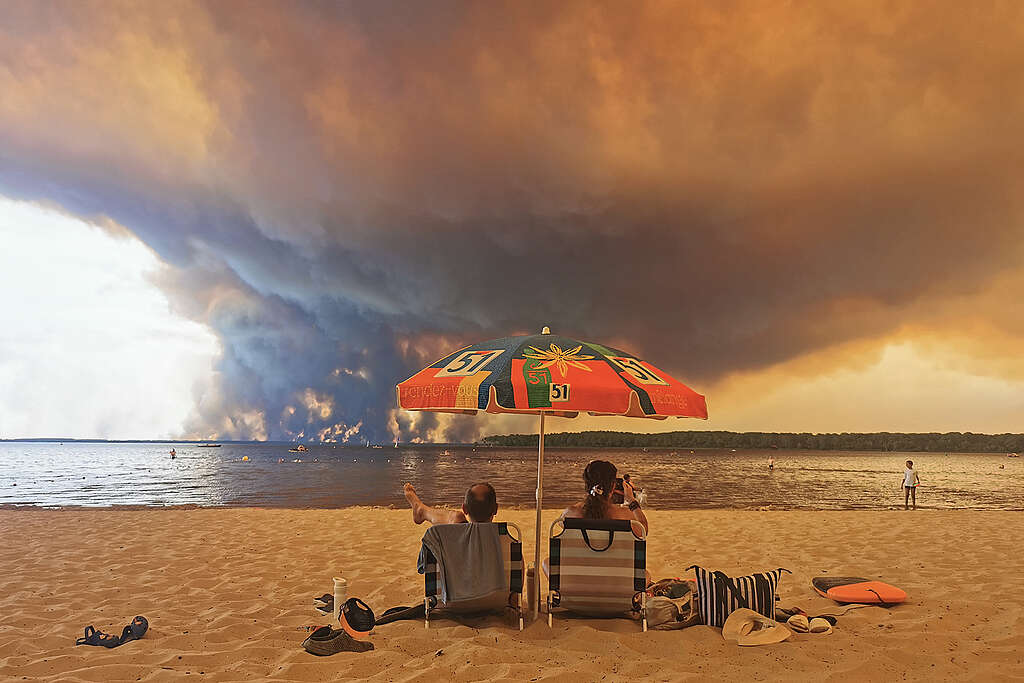
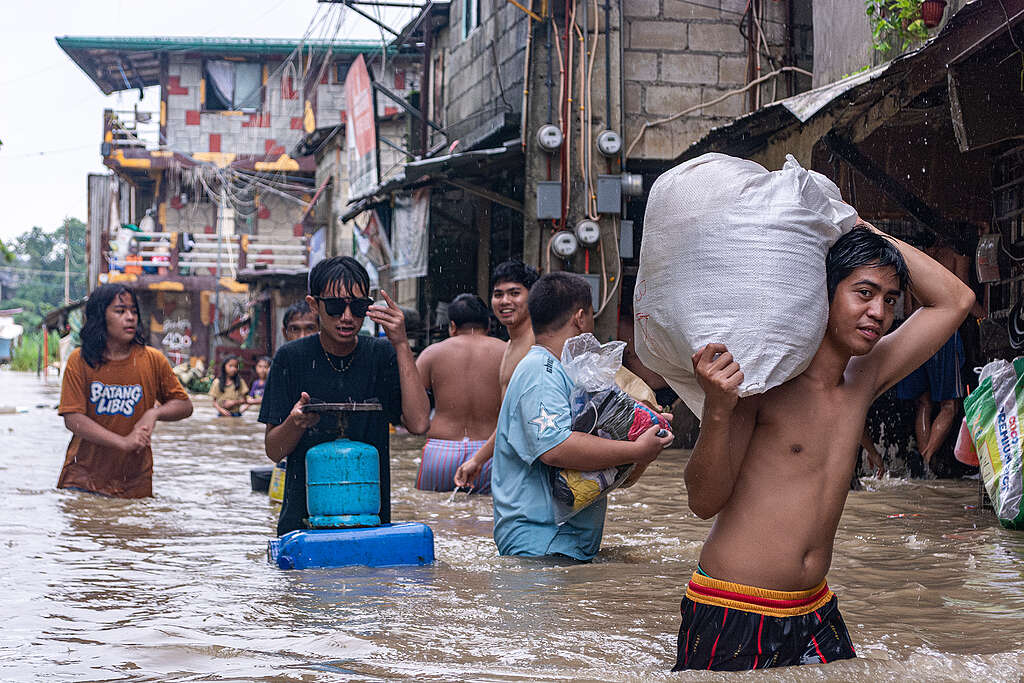
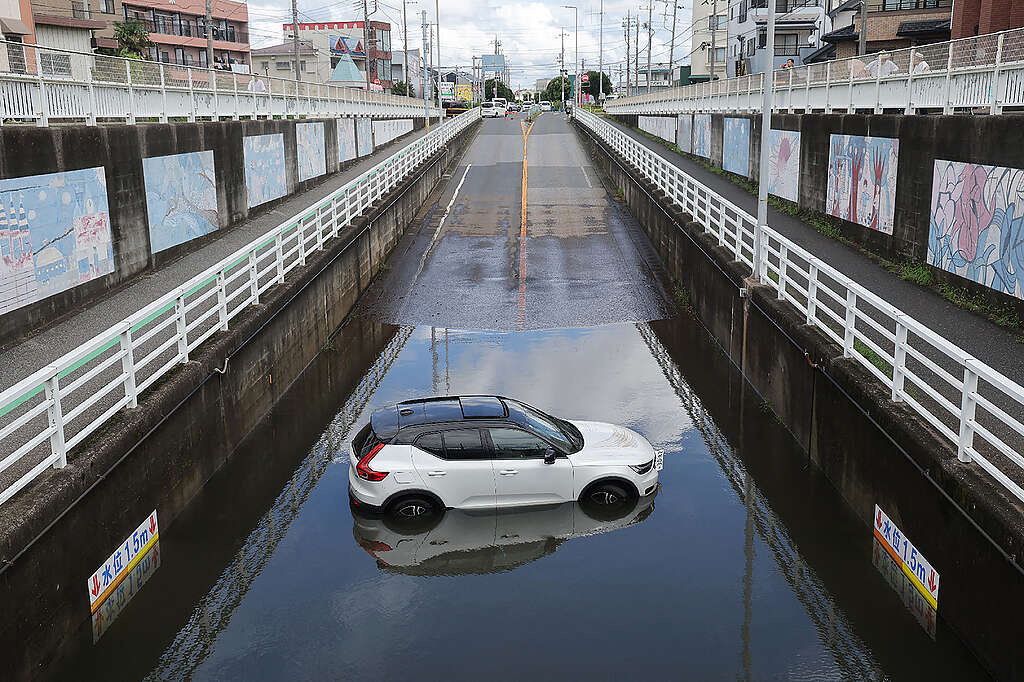
2025 has been yet another year marked by some serious climate emergencies. Throughout the year, we saw irregular weather patterns, back-to-back typhoons, torrential rains, flash floods, forest fires, and polar vortexes — all of which are exacerbated by the fossil fuel-caused climate crisis. These climate disasters have resulted to thousands of people dying, and millions being forced to leave their homes. This is the reality for so many people all around the world, many of whom have contributed the least amount of climate damage.

But the stark contrast to these disasters are the images of courage and hope that we saw year-round: everyday folks rising up against all odds to take charge of their destiny, demanding a better future for all. People from different parts of the world, including Thailand, Sri Lanka, Mexico, Cameroon, Romania, Brazil, the Philippines, and Kenya, have chosen to seek solutions and demand reparations from polluters who have long taken advantage of natural resources, people’s livelihoods, and our collective future. The resilience, bravery, and hope of these people have been the most inspiring, and will fuel the future where we will no longer be taken for granted by the billionaires who only seek to achieve personal gain.

These images fill us with the promise that 2026 will be a continuation of people power; of standing up for our rights and for the next generations. They are a reminder that we need to hold governments and polluting corporations accountable — and that we need the systems to shift towards an equitable and just world where everyone is winning. 

Overwhelmed by the sheer volume of images this year, below is a small selection of the most inspiring images of 2025.

A group of Greenpeace Thailand activists gathered at an iconic place in Bangkok, Thailand, to show solidarity with the global movement for climate justice. Holding banners reading "We will not be silenced" and "Stop Big Oil Bullies", the group called for an end to the intimidation tactics used by fossil fuel companies like Energy Transfer attempting to intimidate climate activists, journalists, and anyone who dares speak truth to power. © Chutiphon Phisitthanadun / Greenpeace
© Chutiphon Phisitthanadun / Greenpeace

🇹🇭 Thailand:  Activists from Greenpeace Thailand gathered at an iconic place in Bangkok, Thailand, to show solidarity with the global movement for climate justice. Holding banners reading “We will not be silenced” and “Stop Big Oil Bullies”, the group called for an end to the intimidation tactics used by fossil fuel companies like Energy Transfer, attempting to intimidate climate activists, journalists, and anyone who dares speak truth to power.

Greenpeace Poland activists on kayaks in Gdansk demand an urgent ratification of the Ocean Treaty.
© Greenpeace / Rafal Wojczal

🇵🇱Poland: Greenpeace Poland activists on kayaks in Gdansk demanded an urgent ratification of the Ocean Treaty. For more than two decades, Greenpeace and other civil society organizations have been seeking a Global Oceans Treaty to protect marine ecosystems from harmful industries,  the Global Ocean Treaty. More than 60 countries have now ratified the agreement. This is a massive achievement for all the activists, supporters and allies who stood up and raised their voices for ocean protection in recent years. 

A shark handler and Greenpeace RHIB team free a blue shark caught on a longline in the Pacific Ocean. The blue shark is currently listed as "Near Threatened" globally by the IUCN (International Union for Conservation of Nature). Greenpeace Australia Pacific took action to stop an industrial longlining fishing operation in the South Pacific Ocean, seizing more than 20 kilometers of fishing gear and freeing nine sharks, including an endangered mako, near Australia and New Zealand.
© Paul Hilton / Greenpeace

🇦🇺 Australia: A shark handler and Greenpeace RHIB team free a blue shark caught on a longline in the Pacific Ocean. The blue shark is currently listed as “Near Threatened” globally by the International Union for Conservation of Nature (IUCN). Greenpeace Australia Pacific took action to stop an industrial longlining fishing operation in the South Pacific Ocean, seizing more than 20 kilometres of fishing gear and freeing nine sharks, including an endangered mako, near Australia and New Zealand.

The Rainbow Warrior is lit up as a “beacon of resistance” in Auckland today on the eve of the 40th anniversary of the bombing of the original Rainbow Warrior by French Government agents in 1985. Twenty crew and Greenpeace Aotearoa staff and volunteers hold letters of light spelling out the iconic phrase, You Can’t Sink A Rainbow.
© Paul Hilton / Greenpeace

🇳🇿 New Zealand: The Rainbow Warrior is lit up as a “beacon of resistance” in Auckland today on the eve of the 40th anniversary of the bombing of the original Rainbow Warrior by French Government agents in 1985. Twenty crew and Greenpeace Aotearoa staff and volunteers hold letters of light spelling out the iconic phrase, You Can’t Sink A Rainbow.

Between August 5 and 7, the Greenpeace Brazil Volunteer Team was in Brasília to participate in the 4th Indigenous Women’s March, which this year carried the theme: “Our Body, Our Territory: We Are Guardians of the Planet for the Healing of the Earth.” During the march, we joined forces with Indigenous women from across Brazil, carrying our banner reading “VET IT, LULA” in protest against the so-called “PL da Devastação", which threatens to weaken environmental licensing and put forests, rivers, and traditional ways of life at risk. We also distributed themed hand fans, which featured information about the Indigenous Women’s House — a crucial initiative that provides shelter and specialized care. Our agenda included a visit to the Ministry of Women, at the invitation of Dadá Baniwa, coordinator of Funai in the Rio Negro region, to discuss the establishment of the Indigenous Women’s House within the Amazon biome, in São Gabriel da Cachoeira (AM). This meeting marked an important step toward advancing public policies that ensure protection and dignity for Indigenous women. © Scarlett Ramos / TAG / Greenpeace
© Scarlett Ramos / TAG / Greenpeace

🇧🇷Brazil: Between August 5 and 7, the Greenpeace Brazil Volunteer Team was in Brasília to participate in the 4th Indigenous Women’s March, which this year carried the theme: “Our Body, Our Territory: We Are Guardians of the Planet for the Healing of the Earth.” During the march, we joined forces with Indigenous women from across Brazil, carrying our banner reading “VET IT, LULA” in protest against the so-called “PL da Devastação”, which threatens to weaken environmental licensing and put forests, rivers, and traditional ways of life at risk.  We also distributed themed hand fans, which featured information about the Indigenous Women’s House — a crucial initiative that provides shelter and specialized care. This meeting marked a significant step toward advancing public policies that ensure the protection and dignity of Indigenous women.

Greenpeace climbers install a major new work by renowned artist Anish Kapoor titled BUTCHERED onto a Shell platform in the North Sea - the world’s first artwork to be installed at an active offshore gas site. After securing a giant 12m x 8m canvas to one side of the structure, the activists hoisted a high-pressure hose on top of the canvas at a height of 16 metres above the sea. They then pumped 1,000 litres of blood-red liquid that gushed into the fabric, creating a vast crimson stain. The work is a stark visualisation of the wound inflicted on both humanity and the Earth by the fossil fuel industry, evocative of our collective grief and pain at what has been lost, but also a cry for reparation. © Andrew McConnell / Greenpeace
© Andrew McConnell / Greenpeace

🇬🇧 United Kingdom: Greenpeace UK climbers install a major new work by renowned artist Anish Kapoor titled  BUTCHERED onto a Shell platform in the North Sea – the world’s first artwork to be installed at an active offshore gas site. After securing a giant 12m x 8m canvas to one side of the structure, the activists hoisted a high-pressure hose onto the canvas at a height of 16 metres above the sea. They then pumped 1,000 litres of blood-red liquid that gushed into the fabric, creating a vast crimson stain. The work is a stark visualisation of the wound inflicted on both humanity and the Earth by the fossil fuel industry, evocative of our collective grief and pain at what has been lost, but also a cry for reparation.

Impacts of the combined effects of Severe Tropical Storm “Crising” (international name: Wipha) and the southwest monsoon’s torrential rains are being felt across the Philippines—flooding communities like those in Calumpit, Bulacan, and disrupting lives, livelihoods, and even important moments like weddings. Greenpeace is calling on President Marcos to use his platform to ensure the passage of the Climate Accountability (CLIMA) Bill—a vital law that requires companies to proactively tackle climate change and prevent further harm to vulnerable communities. Once enacted, the CLIMA Law will raise the bar for climate policy—not only in the Philippines but worldwide—by establishing a strong national framework for loss and damage and enforcing strict corporate transition rules. © Noel Celis / Greenpeace
© Noel Celis / Greenpeace

🇵🇭 The Philippines: Impacts of the combined effects of Severe Tropical Storm “Crising” (International name: Wipha) and the southwest monsoon’s torrential rains are being felt across the Philippines—flooding communities like those in Calumpit, Bulacan, and disrupting lives, livelihoods, and even important moments like weddings. Southeast Asia’s extended monsoon season brought in relentless rains in Nepal, Thailand, Vietnam, and Indonesia, causing some of the worst flooding in recent history. Over a hundred people have died in the region, and thousands have been forced to leave their homes.⁣

Greenpeace Brazil conducted an aerial survey in the Amazon region to monitor deforestation and forest fires. The flight documented cattle ranches, deforested areas, and environmental destruction. Influencers were invited to join the survey, helping amplify the urgency of protecting the forest by sharing their experience and reactions. © Marizilda Cruppe / Greenpeace
© Marizilda Cruppe / Greenpeace

🇧🇷 Brazil: Greenpeace Brazil conducted an aerial survey in the Amazon region to monitor deforestation and forest fires. The flight documented cattle ranches, deforested areas, and environmental destruction. Influencers were invited to participate in the survey, helping to amplify the urgency of protecting the forest by sharing their experiences and reactions.

In Cameroon, Greenpeace Africa volunteers in Yaoundé and Buea will contribute through photo-ops, using visual storytelling to highlight environmental injustices and amplify the voices of youth demanding change. This approach responds to the growing need for creative, accessible, and impactful forms of activism, especially in a context where traditional protest spaces are limited.
© Greenpeace / Ebai Bellen

🇨🇲 Cameroon:  In Cameroon, Greenpeace Africa volunteers Yaoundé and Buea will contribute through photo-ops, using visual storytelling to highlight environmental injustices and amplify the voices of youth demanding change.

Greenpeace International activists from across Europe symbolically “confiscated” private planes at the Engadin airport in Samedan, Switzerland, which is used by participants of the World Economic Forum (WEF). The peaceful protest marks the last of a series of creative interventions calling policy-makers to tax the super-rich, representing 1% of the world’s population, and redirect tax revenues towards affordable green housing, public transport, and climate and environmental action, to support communities and protect the planet. © Nina Fink / Greenpeace
© Nina Fink / Greenpeace

🇨🇭 Switzerland: The peaceful protest marks the last in a series of creative interventions calling on policymakers to tax the super-rich, who represent 1% of the world’s population, and redirect tax revenues towards affordable green housing, public transportation, and climate and environmental action, to support communities and protect the planet.

Greenpeace UK activists pour 300 litres of blood-red dye into the US Embassy pond in London, to highlight the death and devastation caused in Gaza as a direct result of the US’ continued sale of weapons, ammunition and military hardware to Israel. Twelve activists tipped the non-toxic, biodegradable dye from containers emblazoned with the words ‘Stop Arming Israel’ into the large pond located in front of the embassy building in Nine Elms, south-west London. © Greenpeace
© Greenpeace

🇬🇧 United Kingdom: Greenpeace UK activists pour 300 litres of blood-red dye into the US Embassy pond in London, to highlight the death and devastation caused in Gaza as a direct result of the US’ continued sale of weapons, ammunition and military hardware to Israel. Twelve activists tipped the non-toxic, biodegradable dye from containers emblazoned with the words ‘Stop Arming Israel’ into the large pond located in front of the embassy building in Nine Elms, south-west London.

A bold “Make Polluters Pay” projection lit up Houston during CERAWeek—the fossil fuel industry’s so-called “Super Bowl”—calling out Big Oil for its central role in driving the climate crisis. The campaign demands that the industry not only be held accountable for past damage, but also be forced to fund the costs of preparing our communities for the escalating impacts of climate change. © Greenpeace
© Greenpeace

🇺🇸  United States of America (USA): A bold “Make Polluters Pay” projection lit up Houston during CERAWeek—the fossil fuel industry’s so-called “Super Bowl”—calling out Big Oil for its central role in driving the climate crisis. The campaign demands that the industry not only be held accountable for past damage, but also be forced to fund the costs of preparing our communities for the escalating impacts of climate change.

PDF
17.12.2025 à 08:25

Best of Greenpeace action photos 2025

Sudhanshu Malhotra

Texte intégral (5915 mots)

Actions and protests make up the soul of Greenpeace. Every time an activist is climbing an oil rig or holding up a banner, I hope this inspires people across the globe to also take their own action. 2025 was a highly active year, with actions taking place in various cities and seas worldwide, representing the core of Greenpeace’s values.

Check out some of the best images from our action teams across the world in 2025.

Volunteers from Greenpeace Brazil opened a 12-meter banner with the message Respect the Amazon during Lady Gaga's pre-show in Copacabana on May 3. © Bruno Baldrone / Greenpeace
© Bruno Baldrone / Greenpeace

Volunteers from Greenpeace Brazil unveiled a 12-meter banner with the message “Respect the Amazon” during Lady Gaga’s pre-show in Copacabana on May 3.

On the third annual day of Russia starting the war against Ukraine, fifteen Greenpeace activists protest against environmentally damaging Russian oil exports using run-down tankers from the so-called shadow fleet on the Baltic Sea off Rostock. From inflatable boats, the Polish, Swedish, Danish Ukrainian and German environmentalists painted ‘RISK!’ in large yellow letters on the tankers' side as the ‘Prosperity’ passed by. © Lucas Wahl / Greenpeace
© Lucas Wahl / Greenpeace

On the third annual day of Russia starting the war against Ukraine, fifteen Greenpeace activists protest against environmentally damaging Russian oil exports using run-down tankers from the so-called shadow fleet on the Baltic Sea off Rostock. From inflatable boats, the Polish, Swedish, Danish, Ukrainian and German environmentalists painted ‘RISK!’ in large yellow letters on the tankers’ side as the ‘Prosperity’ passed by.

A team from Greenpeace Italy and Greenpeace Germany projected the message "Hear my cry for help" onto the Presena glacier in the Italian Alps to denounce how climate change is contributing to its melting and the consequences of losing a vital water reserve. © Greenpeace / Francesco Alesi
© Greenpeace / Francesco Alesi

A team from Greenpeace Italy and Greenpeace Germany projected the message “Hear my cry for help” onto the Presena glacier in the Italian Alps to denounce how climate change is contributing to its melting and the consequences of losing a vital water reserve.

Greenpeace activists free a blue shark caught on a longline in the Pacific Ocean. The blue shark is currently listed as "Near Threatened" globally by the IUCN (International Union for Conservation of Nature). Greenpeace Australia Pacific took action to stop an industrial longlining fishing operation in the South Pacific Ocean, seizing more than 20 kilometers of fishing gear and freeing nine sharks, including an endangered mako, near Australia and New Zealand. © Paul Hilton / Greenpeace
© Paul Hilton / Greenpeace

Greenpeace activists free a blue shark caught on a longline in the Pacific  Ocean.  The blue shark is currently listed as “Near Threatened” globally by the International Union for Conservation of Nature (IUCN). Greenpeace Australia Pacific took action to stop an industrial longlining fishing operation in the South Pacific Ocean, seizing more than 20 kilometres of fishing gear and freeing nine sharks, including an endangered mako, near Australia and New Zealand.

Greenpeace climbers install a major new work by renowned artist Anish Kapoor titled BUTCHERED onto a Shell platform in the North Sea - the world’s first artwork to be installed at an active offshore gas site. After securing a giant 12m x 8m canvas to one side of the structure, the activists hoisted a high-pressure hose on top of the canvas at a height of 16 metres above the sea. They then pumped 1,000 litres of blood-red liquid that gushed into the fabric, creating a vast crimson stain. The work is a stark visualisation of the wound inflicted on both humanity and the Earth by the fossil fuel industry, evocative of our collective grief and pain at what has been lost, but also a cry for reparation. © Greenpeace
© Greenpeace

Greenpeace climbers install a major new work by renowned artist Anish Kapoor titled  BUTCHERED onto a Shell platform in the North Sea – the world’s first artwork to be installed at an active offshore gas site. After securing a giant 12m x 8m canvas to one side of the structure, the activists hoisted a high-pressure hose on top of the canvas at a height of 16 metres above the sea. They then pumped 1,000 litres of blood-red liquid that gushed into the fabric, creating a vast crimson stain. The work is a stark visualisation of the wound inflicted on both humanity and the Earth by the fossil fuel industry, evocative of our collective grief and pain at what has been lost, but also a cry for reparation.

Greenpeace Indonesia holds a photo-op “Boots to boost justice” using fishers' boots in Muara Baru fishery port, North Jakarta. © Jurnasyanto Sukarno / Greenpeace
© Jurnasyanto Sukarno / Greenpeace

Greenpeace Indonesia holds a photo-op “Boots to boost justice” using fishers’ boots in Muara Baru fishery port, North Jakarta.

As part of World Oceans Day, Greenpeace Mexico hosted a Festival of Monumental Kites featuring various figures of marine species at Holi Beach. A group of 17 giant kites with colourful shapes that evoke the life that inhabits this great aquatic territory were displayed in the sky with the message “Without oceans there is no future”. © Alonso Garibay / Greenpeace
© Alonso Garibay / Greenpeace

As part of World Oceans Day, Greenpeace Mexico hosted a Festival of Monumental Kites featuring various figures of marine species at Holi Beach. A group of 17 giant kites with colourful shapes that evoke the life that inhabits this great aquatic territory were displayed in the sky with the message “Without oceans there is no future”.

Activists from seven countries participate in an action with Greenpeace Italy against climate-wrecking fossil gas at the new liquefied gas import terminal in Ravenna. At sea, activists reached the infrastructure and attached large banners on it reading “Burn, baby, burn” referencing President Trump’s mantra “Drill, baby, drill” alongside an image of a burning Earth flanked by the faces of US President Donald Trump and Italian Prime Minister Giorgia Meloni. © Greenpeace / Francesco Alesi
© Greenpeace / Francesco Alesi

Activists from seven countries participate in an action with Greenpeace Italy against climate-wrecking fossil gas at the new liquefied gas import terminal in Ravenna. At sea, activists reached the infrastructure and attached large banners on it reading “Burn, baby, burn” referencing President Trump’s mantra “Drill, baby, drill” alongside an image of a burning Earth flanked by the faces of US President Donald Trump and Italian Prime Minister Giorgia Meloni.

Greenpeace Africa joined local and Indigenous communities for the Forest Cultural Show (Indigenous People's Day celebration) in Yaounde, Cameroon, to learn about their environmental protection efforts, share their cultures, and explore sustainable solutions for the future. Together, they marked Indigenous Peoples’ Day. Greenpeace Africa documented how the communities apply ancestral knowledge and traditional practices to protect the forest and peatlands they depend on. © Greenpeace / Nene Fembe
© Greenpeace / Nene Fembe

Greenpeace Africa joined local and Indigenous communities for the Forest Cultural Show (Indigenous People’s Day celebration) in Yaounde, Cameroon, to learn about their environmental protection efforts, share their cultures, and explore sustainable solutions for the future. Together, they marked Indigenous Peoples’ Day. Greenpeace Africa documented how the communities apply ancestral knowledge and traditional practices to protect the forest and peatlands they depend on.

The Greenpeace ship Arctic Sunrise visited the Baltic Sea as part of the European campaign against fossil gas. There, Greenpeace activists from Poland, Ukraine, Germany, Belgium, the Netherlands and Italy paid a visit to the Nord Stream gas pipelines, which used to carry fossil gas from Russia to Europe. Greenpeace Poland demands a definitive shutdown of the Nord Stream pipelines, a phase-out of Russian fossil fuels by 2027, and a full phase-out of gas across the EU by 2035 at the latest. © Pawel Starnawski / Greenpeace
© Pawel Starnawski / Greenpeace


The Greenpeace ship Arctic Sunrise visited the Baltic Sea as part of the European campaign against fossil gas. There, Greenpeace activists from Poland, Ukraine, Germany, Belgium, the Netherlands and Italy paid a visit to the Nord Stream gas pipelines, which used to carry fossil gas from Russia to Europe. Greenpeace Poland demands a definitive shutdown of the Nord Stream pipelines, a phase-out of Russian fossil fuels by 2027, and a full phase-out of gas across the EU by 2035 at the latest.

The Rainbow Warrior, Greenpeace’s flagship that for decades has carried a message of defending life to every corner of the planet, is in Cartagena, Colombia, reminding us that the Amazon is not negotiable: it is respected and defended. During its passage through Colombia, on the way to COP30 to be held in Belém, Brazil, it reminded us of the urgency of stopping deforestation, protecting biodiversity and guaranteeing fair financing for indigenous peoples and local communities, who have cared for the forests for generations. In Belém, Greenpeace will demand concrete commitments: zero deforestation by 2030, direct financing and environmental governance that puts life as a priority. © Diana Rey Melo / Greenpeace
© Diana Rey Melo / Greenpeace

The Rainbow Warrior, Greenpeace’s flagship that for decades has carried a message of defending life to every corner of the planet, is in Cartagena, Colombia, reminding us that the Amazon is not negotiable: it is respected and defended. During its passage through Colombia, on the way to COP30 to be held in Belém, Brazil, it reminded us of the urgency of stopping deforestation, protecting biodiversity and guaranteeing fair financing for indigenous peoples and local communities, who have cared for the forests for generations. In Belém, Greenpeace will demand concrete commitments: zero deforestation by 2030, direct financing and environmental governance that puts life as a priority.

A few hours before the start of the COP30 in Brazil today, a Greenpeace activist walked along a highline 30 meters above the center of Madrid with a 30-square-meter banner bearing the slogan “The planet on a tightrope.” With this unprecedented action, the environmental organization seeks to demand that the governments meeting at COP put an end to fossil fuels and deforestation by 2030, halfway through what the scientific community has called the decisive decade in the face of the climate emergency. © Pablo Blazquez / Greenpeace
© Pablo Blazquez / Greenpeace

A few hours before the start of the COP30 in Brazil today, a Greenpeace activist walked along a highline 30 meters above the center of Madrid with a 30-square-meter banner bearing the slogan “The planet on a tightrope.” With this unprecedented action, the environmental organization seeks to demand that the governments meeting at COP put an end to fossil fuels and deforestation by 2030, halfway through what the scientific community has called the decisive decade in the face of the climate emergency.

Greenpeace activists and volunteers march in the annual 'We have had enough!' protest for a more sustainable agriculture in Berlin. Environmental activists take to the streets with Greenpeace's pig and cow balloons, banners, and signs. © Chris Grodotzki / Greenpeace
© Chris Grodotzki / Greenpeace

Greenpeace activists and volunteers march in the annual ‘We have had enough!’ protest for a more sustainable agriculture in Berlin. Environmental activists take to the streets with Greenpeace’s pig and cow balloons, banners, and signs.

Ahead of a federal election, Greenpeace Canada’s activists projected powerful messages on the world famous Niagara Falls: “Don’t Trump Canada”, “Elbows up” and “RESIST”. Greenpeace Canada is calling out politicians like Trump and Poilievre for spreading fear and division, while polluting industries like oil & gas seek to take advantage of a crisis they helped create. Greenpeace Canada is asking Poilievre and all political parties to protect people and the environment, not polluters and billionaires. This projection was also a solidarity statement in support of Greenpeace US, who has been found liable for more than US$660 million in the Energy Transfer SLAPP trial. © Greenpeace
© Greenpeace

Ahead of a federal election, Greenpeace Canada’s activists projected powerful messages on the world-famous Niagara Falls: “Don’t Trump Canada”, “Elbows up” and “RESIST”. Greenpeace Canada is calling out politicians like Trump and Poilievre for spreading fear and division, while polluting industries like oil & gas seek to take advantage of a crisis they helped create. Greenpeace Canada is asking Poilievre and all political parties to protect people and the environment, not polluters and billionaires. This projection was also a solidarity statement in support of Greenpeace US, who has been found liable for more than US$660 million in the Energy Transfer SLAPP trial.

The Rainbow Warrior arrives in Auckland, New Zealand, for the 40th anniversary of the bombing of the original Rainbow Warrior in Auckland by French Government agents in 1985. The Greenpeace flagship has just returned from taking action on bottom trawling on the Chatham Rise off New Zealand's East Coast. © Bryce Groves / Greenpeace
© Bryce Groves / Greenpeace

The Rainbow Warrior arrives in Auckland, New Zealand, for the 40th anniversary of the bombing of the original Rainbow Warrior in Auckland by French Government agents in 1985. The Greenpeace flagship has just returned from taking action on bottom trawling on the Chatham Rise off New Zealand’s East Coast.

Malaysian actress Sharifah Sofia holds a banner reads "Stop Deep Sea Mining" in front of the deep-sea vessel “Hidden Gem” which is anchored at sea in Labuan, Malaysia. The Hidden Gem, owned by AllSeas and commissioned by The Metals Company, is the deep-sea mining industry’s flagship vessel. It is currently in Labuan, Malaysia, in long-term storage. The Metals Company confirmed in late April that they have submitted the first-ever commercial mining application to the US government, with the company stating they are “ready to go”. © Hafizah Juman / Greenpeace
© Hafizah Juman / Greenpeace

Malaysian actress Sharifah Sofia holds a banner reads “Stop Deep Sea Mining” in front of the deep-sea vessel “Hidden Gem” which is anchored at sea in Labuan, Malaysia. The Hidden Gem, owned by AllSeas and commissioned by The Metals Company, is the deep-sea mining industry’s flagship vessel. It is currently in Labuan, Malaysia, in long-term storage. The Metals Company confirmed in late April that they have submitted the first-ever commercial mining application to the US government, with the company stating they are “ready to go”.

Hundreds of people rally outside the “Summit on the Future of Energy Security”, in London. The summit is co-hosted by the UK government and the International Energy Agency and attended by officials from the pro-fossil fuels Trump administration. The demonstrators want an end to new drilling in UK waters, including new projects such as the controversial Rosebank oilfield, as well as a proper plan for transitioning the oil and gas workforce. © Angela Christofilou / Uplift
© Angela Christofilou / Uplift

Hundreds of people rally outside the “Summit on the Future of Energy Security”, in London. The summit is co-hosted by the UK government and the International Energy Agency and attended by officials from the pro-fossil fuels Trump administration. The demonstrators want an end to new drilling in UK waters, including new projects such as the controversial Rosebank oilfield, as well as a proper plan for transitioning the oil and gas workforce.

PDF
16.12.2025 à 02:00

5 ways to disinvite plastic from your holidays

Sarah King

Texte intégral (2352 mots)

The holidays are here again. ‘Tis the season to hang out with (or just tolerate) family and friends, share (and maybe overindulge in) tasty meals, and enjoy festivities (or stay cozy and binge your comfort show). But no matter how you celebrate, the pressure to consume can be extreme. Capitalism’s overconsumption machine can make us think that we need to buy everything during the holidays, but as corporations pump out 430 million tonnes of plastic globally, plastic doesn’t need to get the invite to the big holiday party this year. Dodging certain holiday offerings and embracing some new anti-consumption traditions can be small but mighty acts of resistance against capitalism. 

Global plastic reduction is the best gift

Plastic is everywhere, and at this time of year it’s hiding in plain sight at your holiday gatherings. Plastic packaging is the most obvious major source of waste; however, a closer look at what many decorations and gifts are made of reveals all the other ways plastic creeps into our homes. It is in clothing, bags, bedding, childrens’ toys, holiday figurines, electronics, sports equipment, stuffed animals, cosmetics, kitchenware, furniture, the stir stick in your cocktail or mocktail — the list goes on. 

Why does this matter? Because plastic pollutes air, water, nature and our bodies, across its entire lifecycle. And it’s causing widespread and devastating harm. Plastic isn’t only a waste and pollution issue, it has morphed into a grave public health concern. The more plastic the industry produces, the more we’re pressured to consume, and the more pollution people and the planet are exposed to. 

Action during Visit of Brazil's President Lula da Silva in Berlin. © Chris Grodotzki / Greenpeace
With three “gifts” – a 1.50m cube of compressed plastic waste, a toxic barrel and a greasy combustion engine, each with a red ribbon – five Greenpeace activists demonstrated in front of the Federal Chancellery against the EU-Mercosur free trade agreement. A sign with the words “TO: Lula / FROM: Scholz” hung above the gifts. Brazil’s President Lula da Silva was visit Federal Chancellor Olaf Scholz at the Federal Chancellery in Berlin at the time.
© Chris Grodotzki / Greenpeace

The season of giving doesn’t have to be giving plastic disaster. We’re here to share 5 ways to beat those consumption blues.

Normalize ‘new-to-you’ over brand new gifts. 

It’s never been easier to find pre-loved items in our communities. From thrift shops to antique stores, clothing swaps to flea markets, and numerous online platforms, most gift ideas you have can be found used with a bit of time and resourcefulness. Dodging big corps whenever possible isn’t only satisfying, it’s a win for your wallet and the planet. According to Earth Overshoot Day and its partners, by July 24th, 2025 humanity was using nature about 1.8 times faster than the Earth’s ecosystems are able to regenerate, so reducing demand for new materials is part of our collective consumption reduction equation. If you look at the plastic all around you today, it is set to have more than doubled in the next 25 years. Any signal we can send to big plastic producers and consumer goods companies that plastic isn’t fantastic, can help incentivize them to choose alternatives, and show governments that we support real solutions to the plastic problem.

Packaging Waste and Textiles from SHEIN. © Jana Kuehle / Greenpeace
Textiles, shoes and plastic packaging waste from SHEIN. SHEIN is a controversial online retailer of fashion and sporting goods from Singapore that operates internationally. SHEIN sells fast fashion that is designed at high speed, manufactured in China and sold at low prices.
© Jana Kuehle / Greenpeace

Choose your containers and cookware with care

It’s a lovely time of year for meals out and coffee dates but because non-toxic, reusable containers are not yet ubiquitous, bringing your own plastic-free containers whenever possible will reduce your plastic exposure and footprint. Plastic-lined coffee cups, “bioplastic” packaging and cutlery, and even take-out containers labeled as reusable, present an opportunity for contaminating our food and our bodies with microplastics and chemicals. Various kitchenware items in our homes also contain plastic. Large plastic spatulas and spoons, sieves and strainers, cutting boards, storage containers, sippy cups, electric kettles, blenders and Teflon or coated pans  all can contain or are made from plastic. Scientists have begun to uncover how using these types of items contributes to our ingestion of microplastics and exposure to potentially toxic chemicals. There’s nothing festive about a charcuterie board seasoned with microplastics. 

It’s not easy or affordable to do a full kitchen overhaul, but you can start by doing small changes like ditching plastic cutting boards, never heating plastic, and using stainless steel or cast iron instead of coated pots and pans. When hosting, remember reusable is best — ditch the single-use plates, cups, and cutlery and just use what you have on hand. Crowd source dishware when needed, that’s what friends are for. 

New Reuse Cup Initiative in Tokyo. © Chihiro Hashimoto / Greenpeace
Several coffee chains in Tokyo are currently working on initiatives to promote the reusable cups. Starbucks Coffee Japan is using a container sharing service in some stores and conducting demonstration tests of reusable cups. Onibus Coffee, a local coffee chain in Tokyo, has also developed a unique service that allows customers to use and return cups via a mobile application. As for reducing single-use containers, Greenpeace Japan is calling on Starbucks to roll out its reusable cup system nationwide.
© Chihiro Hashimoto / Greenpeace

Glitter isn’t glam, your inner sparkle is enough!

Who doesn’t want a little glitz at this time of year? So much of what is extra sparkly and shiny is a combination of plastic and metal, and it’s nothing but a beautiful nightmare. Glitter shows up in craft supplies, gift wrap, decorations, clothing, cosmetics, kids’ toys, costumes, party hats, and  snow globes. Plastic glitter and sequins can easily shed into its surroundings, when clothing is being washed or crafts are being cleaned-up, it can shed down the drain, and when combined with paper or other materials, these products ruin recycling potential, sending them to landfill or incineration. And while some may claim to be biodegradable, it’s really not worth the potential pollution risk. 

Resist the urge to purge 

Out with the old and in with the new can be a useful mantra when letting go of negative vibes or questionable habits, but when it comes to “stuff”, we all need to resist the temptation to get the newer, trendier, or upgraded item. We live in an era where we’re being given mixed messages about simplifying our lives and our relationship with material things. We’re told to buy more, but also buy better. Wide leg jeans today, skinny jeans tomorrow. But purging in the name of decluttering isn’t an act for the planet. It can also overburden donation organizations. Unless the purge is paired with a commitment to minimalist living, chances are a lot of that stuff will eventually be replaced, increasing the resource burden. Buying a bunch of new stuff can result in a bunch more plastic produced, so try to ponder before you purge and consider what might be reused, refurbished, re-manufactured, revived, refurnished, repurposed, remade, re-gifted, rotated out, rotated in, rearranged, reimagined, and/or relocated.

Resources Festival in Lausanne. © Violaine Martin / Greenpeace
The Festival des Ressources à Lausanne (Resource Festival in Lausanne), organised by Greenpeace Vaud, Greenpeace Switzerland’s regional volunteer group. The event focuses on sustainability, repair, and upcycling, where people bring in items to be fixed by volunteers, learn repair skills, and promote second-hand goods to extend product life and reduce waste, promoting a circular economy.
© Violaine Martin / Greenpeace

Cozy up with a petition to change the world.

Trying to dodge plastic can be exhausting. If you’re feeling overwhelmed, you’re not alone. We can only do so much in this broken plastic-obsessed system. Plastic producers and polluters need to be held accountable, and governments need to act faster to protect the health of people and the planet. The plastic crisis is a global problem demanding a global solution. We urgently need global governments to secure a strong UN Global Plastics Treaty that reduces global production and consumption, ends our reliance on problem plastics and chemicals, and accelerates a justice-centred transition to a reuse-based, zero waste future. Ensure your government doesn’t waste this once-in-a-generation opportunity to end the age of plastic.

Plastic Waste in Verde Island, Philippines. © Noel Guevara / Greenpeace
Let’s end the age of plastic!

Ask world leaders to support a strong Global Plastic Treaty that addresses the whole life cycle of plastic.

Take action

Sarah King is a Senior Campaign Strategist for the Plastic Free Future campaign at Greenpeace Canada.

PDF
8 / 10

  Bon Pote
Actu-Environnement
Amis de la Terre
Aspas
Biodiversité-sous-nos-pieds

 Bloom
Canopée
Décroissance (la)
Deep Green Resistance
Déroute des routes
Faîte et Racines
 Fracas
F.N.E (AURA)
Greenpeace Fr
JNE
La Relève et la Peste
La Terre
Le Lierre
Le Sauvage
Low-Tech Mag.
Motus & Langue pendue
Mountain Wilderness
Negawatt
 Observatoire de l'Anthropocène

 Reporterre
Présages
Reclaim Finance
Réseau Action Climat
Résilience Montagne
SOS Forêt France
Stop Croisières

  Terrestres

  350.org
Vert.eco
Vous n'êtes pas seuls