
14.10.2026 à 10:57
Quand les machines apprennent à lire nos émotions, ou l’essor de l’« informatique affective »
Charlotte De Sainte Maresville, Postdoctoral research, Université Bretagne Sud (UBS)
Texte intégral (1245 mots)
Imaginez un ordinateur capable de percevoir que vous êtes fatigué, frustré ou enthousiasmé, et d’adapter son comportement en conséquence. C’est exactement ce que promet l’« informatique affective ». Ce champ de recherche désigne l’ensemble des technologies conçues pour détecter, interpréter et simuler les émotions humaines. En d’autres termes : des systèmes en mesure de capter nos états intérieurs afin de mieux interagir avec nous.
L’expression « informatique affective » est née en 1997, sous la plume de Rosalind Picard, chercheuse au MIT. Dans son ouvrage fondateur, elle pose une question simple en apparence : pourquoi les ordinateurs, si puissants pour traiter de l’information, sont-ils si maladroits face aux émotions humaines ? Picard fait le pari que des machines capables de reconnaître et d’exprimer des affects pourraient devenir de bien meilleurs partenaires pour les êtres humains.
Le mot « affective » est emprunté à la psychologie, où il désigne tout ce qui relève de l’affect, du ressenti, des états émotionnels. Accolé à « informatique », il crée une tension productive : celle d’une discipline qui cherche à mettre le calcul au service de ce qu’il y a de plus imprévisible chez l’être humain.
Comment ça fonctionne concrètement ?
Les systèmes d’informatique affective s’appuient sur plusieurs types de signaux. Le plus répandu est l’analyse des expressions faciales : des caméras capturent les micromouvements du visage, que des algorithmes traduisent en émotions supposées (joie, surprise, tristesse, colère…).
Ces catégories d’émotions « de base » ont été théorisées dès les années 1990 par le psychologue Paul Ekman, dont les travaux ont largement inspiré les systèmes actuels de reconnaissance faciale. Mais d’autres canaux sont également exploités pour analyser les émotions : le ton de la voix, le rythme cardiaque, les mouvements du corps ou encore les variations de la conductance électrique de la peau, indicateur physiologique du stress.
Ces données sont captées en temps réel à travers les capteurs intégrés à nos appareils : la caméra de l’ordinateur, le microphone du téléphone ou les capteurs physiologiques d’une montre connectée. Elles sont ensuite traitées par des modèles d’apprentissage automatique entraînés à reconnaître des configurations récurrentes associées à des états émotionnels.
Concrètement, ces modèles ont été exposés à des milliers, parfois des millions d’exemples : une position précise de sourcils correspond à de la surprise, un tremblement de voix à de l’anxiété et une accélération du rythme cardiaque à du stress. Le système apprend à associer ces configurations à une émotion, puis applique ce qu’il a appris à de nouvelles situations.
En d’autres termes, le système ne « ressent » rien : il calcule des probabilités. Il estime, à partir de signaux mesurables, que vous exprimez très probablement de la satisfaction ou que vous semblez concentré plutôt qu’ennuyé.
À lire aussi : Souriez, vous êtes filmés : ce que l’« emotion AI » voit vraiment sur nos visages
Des usages déjà bien présents dans notre quotidien et des applications plus inattendues
L’informatique affective s’est glissée dans des outils que beaucoup d’entre nous utilisent au quotidien, parfois sans le savoir.
Par exemple, les plateformes de visioconférence intègrent désormais des modules capables d’analyser l’attention des participants. Certains outils de formation en ligne s’en servent pour ajuster le rythme d’un cours en fonction de l’engagement détecté chez les apprenants. Les assistants vocaux, eux, commencent à moduler leurs réponses selon le ton perçu dans la voix de l’utilisateur.
Au-delà des réunions en ligne, l’informatique affective investit des domaines plus surprenants. Dans le secteur automobile, des systèmes embarqués détectent la somnolence du conducteur à partir de l’analyse de son regard, déclenchant une alerte avant qu’un accident ne survienne (le dispositif GSR2 rend obligatoire un système de surveillance active de l’attention du conducteur dans les véhicules neufs depuis juillet 2026).
Dans le domaine culturel, des musées expérimentent des installations qui s’adaptent aux réactions émotionnelles des visiteurs. C’est le cas du musée Munch à Oslo (Norvège), qui a co-développé avec des chercheurs une expérience dans laquelle un système d’informatique affective analyse les expressions faciales des visiteurs devant les œuvres et leur remet en souvenir une carte postale visualisant leurs données émotionnelles.
Dans la santé, des outils thérapeutiques aident des patients atteints de troubles de la communication à mieux déchiffrer les signaux émotionnels de leur entourage. C’est notamment le cas pour les enfants autistes, pour lesquels des robots sociaux intégrant des technologies de reconnaissance des émotions ont été développés afin d’améliorer leurs interactions sociales.
Ce que ce terme dit de notre époque
Si l’expression « informatique affective » commence à entrer dans le langage courant, c’est parce qu’elle reflète une transformation profonde de notre rapport aux machines. Né dans les laboratoires de recherche à la fin des années 1990, le concept a longtemps circulé dans les seules sphères académiques. Pendant longtemps, le grand public considérait l’ordinateur était un outil purement logique : on lui donnait des instructions, il exécutait. Avec l’informatique affective, la machine devient un interlocuteur capable de tenir compte de notre humeur, de notre niveau de fatigue, de notre engagement.
Ce glissement dit quelque chose d’essentiel sur nos attentes vis-à-vis des technologies : nous ne voulons plus seulement qu’elles soient efficaces, nous voulons qu’elles soient attentives. L’informatique affective est le nom donné à cette ambition, celle de machines qui cherchent à s’adapter à l’humain qui se trouve en face d’elles, déplaçant une frontière que l’on croyait stable : celle qui sépare le monde du calcul du monde du ressenti.
La série « L’envers des mots » est réalisée avec le soutien de la délégation générale à la langue française et aux langues de France du ministère de la culture.

Charlotte De Sainte Maresville a reçu des financements de ANR dans le cadre du projet France relance 2030.
14.10.2026 à 10:33
Un « espace liminal » entre les humains et l’IA : la frontière sera-t-elle moins discernable qu’on voudrait le croire ?
Ganesh Gowrishankar, Chercheur au Laboratoire d'Informatique, de Robotique et de Microelectronique de Montpellier, Université de Montpellier
Madalina Croitoru, Prefessor, Université de Montpellier
Texte intégral (2019 mots)
L’ESSENTIEL
Les outils étaient jusqu’à présent bien distincts de l’être qui les utilisait.
Aujourd’hui, l’émergence des systèmes d’intelligence artificielle grand public brouille les pistes : nos souvenirs et nos décisions sont souvent intimement liés à nos traces numériques tandis que les systèmes informatiques modernes se nourrissent de nos données.
Considérer un effacement progressif de cette frontière conceptuelle permet de changer les termes des débats et des réflexions autour de l’essor de l’IA.
Il existe quelque chose d’étrangement rassurant dans la manière dont nous continuons à parler de l’intelligence artificielle. Comme si la géométrie fondamentale de cette relation avait déjà été tracée une fois pour toutes. D’un côté, les êtres humains. De l’autre, les machines.
Pourtant, les machines deviennent plus rapides, plus convaincantes, plus autonomes ; les humains s’adaptent, résistent, ou finissent peut-être par s’effacer un peu. Mais la frontière qui sépare les deux demeure remarquablement peu interrogée, comme si sa permanence allait de soi.
Et pourtant, à mesure que nous vivons avec ces systèmes, quelque chose de plus ambigu commence à apparaître.
Une interaction avec les systèmes artificiels de plus en plus internalisée
La particularité de l’intelligence artificielle contemporaine réside précisément dans son refus de rester à l’extérieur de nous-mêmes.
Les outils d’autrefois occupaient une place relativement simple dans nos existences. Un marteau prolongeait la main. Un télescope étendait la portée du regard. Un ordinateur facilitait le calcul. On les utilisait tout en restant solidement ancré dans son identité propre.
L’intelligence artificielle vient troubler cet équilibre. Peu à peu, l’interaction cesse de paraître cognitivement extérieure. La mémoire se disperse dans des archives numériques auxquelles nous revenons sans cesse. Les décisions émergent d’une négociation continue avec des algorithmes capables d’anticiper nos préférences (à l’image des systèmes de recommandation déployés sur les grandes plateformes numériques) avant même que celles-ci ne se soient entièrement formées.
Les systèmes fondés sur le dialogue argumentatif illustrent cette transformation en intégrant les réactions de l’utilisateur dans un processus itératif de justification et de révision des recommandations : la réflexion peut désormais se déployer au travers d’échanges avec des agents conversationnels. En somme, la pensée humaine emprunte de plus en plus souvent des structures artificielles avant de revenir vers nous, subtilement transformée.
À lire aussi : Outil ou compagnon ? Comment nous parlons aux robots en dit long
Dans le même temps, les systèmes artificiels se nourrissent d’immenses quantités de traces de l’expérience humaine. Les modèles de langage y découvrent les multiples formes d’expression des émotions et acquièrent la capacité d’en interpréter les nuances. Ils en ont appris les indices linguistiques, les nuances affectives et les contextes d’expression, jusqu’à reconnaître des états émotionnels complexes dans les interactions textuelles. Ils assimilent les traces de l’expérience humaine sans jamais relever de l’expérience humaine elle-même.
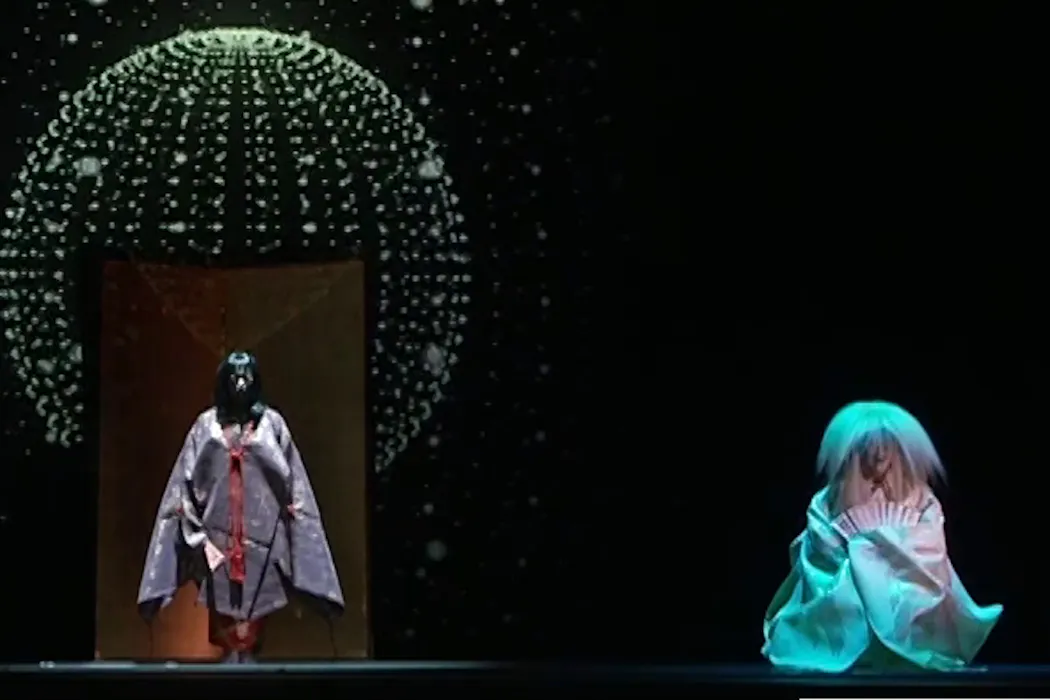
Ce qui apparaît alors est un « espace liminal » : un territoire où il n’y a ni fusion véritable ni séparation nette, mais un état intermédiaire, fluide, dans lequel les catégories qui structuraient autrefois nos interactions perdent progressivement leur évidence.
L’humain devient partiellement artificiel à travers l’externalisation graduelle de sa cognition, de sa perception et de son action. La machine, quant à elle, absorbe le langage, les mouvements, les comportements et les affects humains au fil même de l’interaction. Autour d’eux, l’environnement commence lui aussi à se transformer, acquérant une nature hybride qui lui est propre.
Aucune de ces catégories ne disparaît complètement. Mais aucune ne ressort intacte de la rencontre.
À lire aussi : Vous prendrez bien un sixième doigt ?

Les technologies d’augmentation des capacités humaines : au cœur de cette ambiguïté
Une personne munie d’une prothèse adaptative est accompagnée par un dispositif qui ajuste continuellement son comportement à ses mouvements et à ses intentions. Cette logique d’adaptation s’étend aujourd’hui aux prothèses motorisées du membre inférieur, capables d’ajuster leur assistance à la dynamique de la marche.
Au-delà de la compensation d’une fonction perdue, les robots portables prolongent le corps en lui offrant de nouvelles possibilités d’action, parfois au moyen de membres supplémentaires directement contrôlés par l’utilisateur.
D’autres approches privilégient une collaboration étroite entre l’humain et des bras robotiques portés sur le corps afin d’assister l’exécution de tâches complexes.
Enfin, les systèmes cognitifs prédictifs exploitent les données produites en continu par l’utilisateur pour anticiper certains de ses états ou besoins et adapter leur fonctionnement en conséquence.
La pensée, le mouvement et la perception commencent à circuler simultanément entre des couches biologiques et artificielles. L’agentivité déborde progressivement les limites du corps pour se distribuer dans des systèmes qui anticipent, répondent et s’adaptent en retour. Et le cerveau, lentement, redéfinit ce qu’il considère comme faisant partie du corps et du soi.
Ce qui émerge n’est alors ni entièrement humain ni entièrement artificiel, mais une condition plus fluide, continuellement reconstruite à travers l’interaction avec la machine et l’environnement qui l’entoure.
Les machines transforment aussi notre environnement
La réalité virtuelle et la réalité augmentée offrent sans doute l’expression la plus visible de cette transformation de l’environnement. Dans ces univers immersifs, le corps demeure physique tandis que la perception s’ancre dans un monde généré computationnellement. La présence cesse de coïncider parfaitement avec l’espace matériel. L’environnement lui-même acquiert une qualité « liminale », suspendue quelque part entre réalité tangible et construction artificielle.
À lire aussi : Que sont les xénobots, ces robots biologiques qui bouleversent les frontières entre vivant et machine ?
Pourtant, une grande partie des discussions actuelles autour de l’intelligence artificielle continue de se concentrer sur l’intelligence, la conscience ou le remplacement de l’humain. Ces questions sont certes importantes, mais elles ne sont peut-être pas les plus profondes.
La transformation essentielle n’est pas dans un éventuel remplacement de l’humain
La transformation principale réside dans l’effacement progressif des frontières conceptuelles au moyen desquelles les sociétés modernes ont longtemps organisé leurs relations avec les machines et avec leur environnement.
Et c’est peut-être cela qui confère à l’intelligence artificielle contemporaine son étrange mélange de fascination et d’inquiétude. L’interaction ne modifie pas seulement nos habitudes ou nos comportements. Elle commence à déstabiliser les catégories mêmes à travers lesquelles nous avons traditionnellement compris ce que nous sommes, ce que sont nos machines et ce que sont les mondes que nous habitons.
Les collaborations futures entre psychologues, neuroscientifiques, informaticiens et artistes seront essentielles pour explorer cet espace liminal. Comprendre comment il transforme le cerveau humain, les comportements individuels et les dynamiques sociales constitue une étape nécessaire si nous souhaitons développer une intelligence artificielle conçue comme une entité de collaboration plutôt que comme une entité de compétition.
Les auteurs remercient Shotaru Oku et l’équipe d’Evision Tokyo pour leur collaboration artistique de longue date, marquée par la réalisation conjointe de spectacles et d’œuvres cinématographiques immersives, ainsi que pour les échanges qui ont enrichi les travaux présentés dans cet article.

Les auteurs ne travaillent pas, ne conseillent pas, ne possèdent pas de parts, ne reçoivent pas de fonds d'une organisation qui pourrait tirer profit de cet article, et n'ont déclaré aucune autre affiliation que leur organisme de recherche.
14.10.2026 à 10:33
Pourquoi les petits chiens vivent-ils plus longtemps que les grands ? Un paradoxe à l’échelle du vivant
Sara Hoummady, DMV, PhD, Associate professor in ethology and animal nutrition, UniLaSalle
Léna Rousseau, Postdoctoral fellow, UniLaSalle
Texte intégral (1469 mots)

L’ESSENTIEL
Chez la plupart des animaux, les grandes espèces vieillissent plus lentement que les petites, le chien fait figure d’exception.
Un chihuahua peut souffler ses 16 bougies, alors qu’un dogue allemand ne dépasse que rarement les 10 ans.
Derrière cette simple observation se cache une véritable question scientifique. Quelles sont les principales pistes d’explication connues à ce jour ?
Le chien contredit une tendance du vivant : celle qui veut que les espèces de grande taille aient en général une espérance de vie plus longue. L’éléphant vit ainsi des décennies, tandis que le rat, lui, n’a qu’une espérance de vie de trois ans.
Chez le chien, les individus de petites races ont tendance à vivre plus longtemps que ceux de grandes races. Ce paradoxe est au cœur de nombreuses études en gériatrie canine, alors même qu’un médicament est actuellement testé aux États-Unis pour augmenter la longévité des chiens de grande taille.
Une relation claire entre la taille et la longévité
Une étude états-unienne portant sur plus de 2 millions de chiens, suivis par leur vétérinaire au moins deux fois entre janvier 2010 et décembre 2012, a permis d’observer que l’espérance de vie des chiens de taille géante (plus de 40,9 kg) était de 11,11 ans, contre 13,38 ans pour les grandes races (entre 22,7 kg et 40,9 kg), 13,86 ans pour les races de taille moyenne (entre 9,1 kg et 22,7 kg) et 14,95 ans pour les petites races (moins de 9,1 kg), avec une survie supérieure pour les chiens croisés (14,45 ans) comparés aux chiens de race pure (14,14 ans).
Bien que la taille reste un des facteurs importants, ce n’est pas le seul à intervenir. D’autres facteurs semblent jouer un rôle, comme la brachycéphalie (le fait d’avoir un nez très court, comme chez le carlin) ou encore le sexe et le statut reproducteur (stérilisé ou non) de l’individu. Ces tendances se retrouvent dans les bases de données d’autres pays.
Des profils de maladies différents selon la taille
Des données issues du Dog Aging Project apportent des éléments de réponse à ce phénomène. La taille semble associée à la survenue de maladies cutanées, de cancers ainsi qu’à des maladies infectieuses et orthopédiques. Les chiens de grande race sont ainsi plus à risque de certaines maladies chroniques, comme les cancers, tandis que les chiens de petite race développent plutôt des maladies cardiaques ou ophtalmologiques. Une étude se focalisant sur les cancers et leur malignité a mis en évidence que cette dernière augmente globalement avec la taille.
Ces premières données suggèrent une piste : les grandes races seraient plus à risque de certaines maladies mortelles. Mais cette hypothèse ne permet pas, à elle seule, d’expliquer cette différence.
Croissance et vieillissement : des pistes biologiques
Une autre piste est également explorée : celle de la croissance rapide des grandes races. Au cours de ses premiers mois de vie, un chiot dogue allemand passe de quelques centaines de grammes à la naissance, à plus de 50 kg en deux ans. Il s’agit d’une croissance très exigeante sur le plan biologique, comparée à celle d’un chihuahua.
Pour permettre cette croissance, l’organisme active fortement des mécanismes qui stimulent la production et la multiplication des cellules. L’un des principaux acteurs de cette croissance est l’IGF-1 (Insulin-like Growth Factor 1), une molécule proche de l’insuline. Ce facteur de croissance agit comme un signal ordonnant aux cellules de croître, de se multiplier et de fabriquer davantage de protéines. Ce mécanisme a été vérifié au sein de différentes espèces, de la souris à l’humain, il a été démontré qu’une signalisation élevée de l’IGF-1 était associée à une vie plus courte. Chez les chiens, les concentrations d’IGF-1 sont plus élevées chez les grandes races que chez les petites, ce qui crée une réelle différence au sein de la même espèce, une spécificité de l’espèce canine.
Cette croissance accélérée pourrait avoir un coût à long terme : une activité cellulaire et un renouvellement des tissus plus importants pourraient augmenter les dommages cellulaires ou solliciter davantage les mécanismes de réparation de l’organisme. À terme, cela pourrait contribuer à un vieillissement plus rapide.
Cette hypothèse reste toutefois à démontrer, l’IGF-1 n’est probablement pas le seul mécanisme en jeu pour expliquer cette différence de longévité entre les petites races et les races dites « géantes ». D’autres modifications du métabolisme sont également observées. Les cellules des grands chiens présenteraient une activité glycolytique plus importante pour dégrader le glucose et produire de l’énergie. Ces modifications pourraient être liées à une plus forte sollicitation des cellules et, à long terme, contribuer au stress cellulaire et au vieillissement.
Il est aussi possible de citer le tryptophane, un acide aminé utilisé par l’organisme pour fabriquer différentes molécules, dont le métabolisme est différent entre les chiens de grande et de petite race. Or, certaines voies de transformation du tryptophane interviennent dans des processus liés au fonctionnement cellulaire, à l’immunité et à l’inflammation. Cette différence pourrait donc constituer une nouvelle piste de compréhension.
Une question encore ouverte
Il reste encore beaucoup de recherches à mener pour comprendre précisément pourquoi les petits chiens vivent plus longtemps que les grands. Les chiens partagent notre environnement et une partie de notre mode de vie. Ce contexte exceptionnel est également une source d’apprentissage pour les spécialistes du vieillissement humain, ainsi que pour les vétérinaires, afin de mieux cerner les spécificités de chaque espèce et de proposer un accompagnement personnalisé à chacun de nos animaux.
Que l’on partage sa vie avec un Jack Russell terrier (petite race) ou un bouvier bernois (race géante), le rythme du vieillissement se joue en partie dans les gènes, mais aussi dans la qualité de vie offerte au fil des années : cela passe par un suivi régulier du poids, un exercice régulier et un suivi vétérinaire. Les grands chiens nous quittent trop tôt, mais comprendre pourquoi, c’est déjà commencer à réfléchir à la manière de leur offrir, à nos côtés, une vie de qualité.

Sara Hoummady a reçu des financements de la FVE (Federation of Veterinarians of Europe), a travaillé dans l'industrie pharmaceutique vétérinaire et est membre fondatrice de l'Association Française pour la Gériatrie Animale et les Soins Palliatifs.
Léna Rousseau ne travaille pas, ne conseille pas, ne possède pas de parts, ne reçoit pas de fonds d'une organisation qui pourrait tirer profit de cet article, et n'a déclaré aucune autre affiliation que son organisme de recherche.
- GÉNÉRALISTES
- Ballast
- Fakir
- Interstices
- Issues
- Korii
- Lava
- La revue des médias
- Time France
- Mouais
- Multitudes
- Positivr
- Regards
- Slate
- Smolny
- Socialter
- UPMagazine
- Le Zéphyr
- Idées ‧ Politique ‧ A à F
- Accattone
- À Contretemps
- Alter-éditions
- Contre-Attaque
- Contretemps
- CQFD
- Comptoir (Le)
- Déferlante (La)
- Esprit
- Frustration
- Idées ‧ Politique ‧ i à z
- L'Intimiste
- Jef Klak
- Lignes de Crêtes
- NonFiction
- Nouveaux Cahiers du Socialisme
- ✝ Période
- ARTS
- Actualitté
- Autre Quotidien (L')
- Beaux Arts
- Collateral
- Recours au poème
- Villa Albertine
- THINK-TANKS
- Fondation Copernic
- Institut La Boétie
- Institut Rousseau
- TECH
- Dans les algorithmes
- Framablog
- Goodtech.info
- Libre à lire (April)
- Quadrature du Net
- Revue Eur. Médias et Numérique
- INTERNATIONAL
- Alencontre
- Alterinfos
- Gauche.Media
- CETRI
- ESSF
- Inprecor
- Guitinews
- MULTILINGUES
- Kedistan
- Quatrième Internationale
- Viewpoint Magazine
- +972 mag
- PODCASTS
- Arrêt sur Images
- Le Diplo
- LSD
- Thinkerview