
31.07.2026 à 16:55
Lire plus (443 mots)
Recent moves by cryptocurrency exchange HTX could soften the blow of new sanctions on the firm, experts warn, including a European Union ban on transactions.
One of the world’s largest crypto exchanges, HTX is closely associated with the crypto billionaire Justin Sun, who was a primary booster of the Trump family’s digital currency business before the relationship recently soured. The European Union last week included the exchange in a roster of 18 firms allegedly involved in Russia’s vast crypto ecosystem, which the country has used to evade Western sanctions aimed at pressuring Russia to end its war in Ukraine.
HTX did not respond to repeated requests to comment on this story, but the exchange recently told Bloomberg News that regulatory compliance is “our absolute top priority.”
Reporting from the International Consortium of Investigative Journalists’ Coin Laundry investigation, which explored illicit uses of cryptocurrency, found accounts at HTX, previously called Huobi, tied to accused Russian money launderers and to an organization known for funding Russian military entities.


CRYPTOCURRENCY Crypto giant Circle rebuffed efforts to help scam victims, police say Jul 08, 2026
Recommended reading CRYPTOCURRENCY Canadian intelligence flags crypto-to-cash services as ‘knowingly facilitating money laundering,’ document shows Jul 21, 2026 CRYPTOCURRENCY Crypto giant Circle rebuffed efforts to help scam victims, police say Jul 08, 2026 IRS As crypto industry expands, US slashes office examining dirty money safeguards of cryptocurrency exchanges Feb 17, 2026
23.07.2026 à 17:11
Texte intégral (9163 mots)
Maria trusted that she had stumbled onto a second chance at love. From her home in Nicosia, Cyprus, she spent nearly two years on a dating platform exchanging photos, voice messages, letters and late-night thoughts on travel, children, art and love on the AmoLatina dating site with Dan, 45.
Dan said that he had a degree in finance and a passion for photography, and that he was a divorced Brazilian living in Argentina with a 20-year-old son. Attractive, gentle and attentive, Dan called Maria his “soulmate,” his “beautiful Greek goddess,” the “wife of my life,” promising he would never hurt her and that they would be together forever.
At 51, divorced after a court battle, raising two children, and carrying the weight of family tragedies including the suicide of a close relative and the sexual abuse suffered by another, Maria wanted to believe him. “He was never rude to me or cruel,” she said.
AmoLatina charged her for virtually every interaction. Maria paid every time she replied to a message, clicked on a photo, and opened a video.
On its landing page, AmoLatina promised a safe, verified, protected environment that would provide “lots of attention from attractive members.”
Dan wrote: “In a world where honesty seems like a hard-to-find treasure, I deeply value transparency, respect and loyalty. I’m not looking for a fleeting moment but rather a sincere love, someone to share my life with and build a future full of unforgettable moments.”
For Maria that attention came at a bitter cost: She discovered her relationship with Dan was a facade cultivated to engage her. And when she ended it, profiles, videos and images of two other models — one a gay movie actor — manipulated her twice more, one costly click at a time.
The International Consortium of Investigative Journalists discovered Maria, who lives a short walk from bakeries selling honey-soaked baklava and warm cheese pies, plus three churches and the shaded paths of Athalassa Park, after receiving a short anonymous email in October 2025. The email from a “concerned victim” spoke of a group of related dating sites where possibilities for love seem endless but the reality was often quite different.
ICIJ looked for other victims, finding them in Norway, Portugal, the United Kingdom, the United States, Australia, Brazil and scores more of both genders online — a long line of people who reported falling into similar exploitative virtual relationships that upended their lives. Many of the women said they were lured onto AmoLatina.com and related platforms by advertised promises that the sites were safe, the users were verified and the communications were authentic. Instead, they said they were emotionally corralled into relationships with highly attractive, smooth-talking profiles, who, unlike them, were using the site free of charge and keeping the paying users engaged. Indeed, the women were shelling out for each text, emoji and video message — with zero prospect of romance. AmoLatina is part of a phalanx of dating platforms, including Dating.com and DateMyAge.com, that are operated by SOL Networks and are part of the Social Discovery Group (SDG), which is headquartered without external signage in a nondescript office building in Silema, Malta.
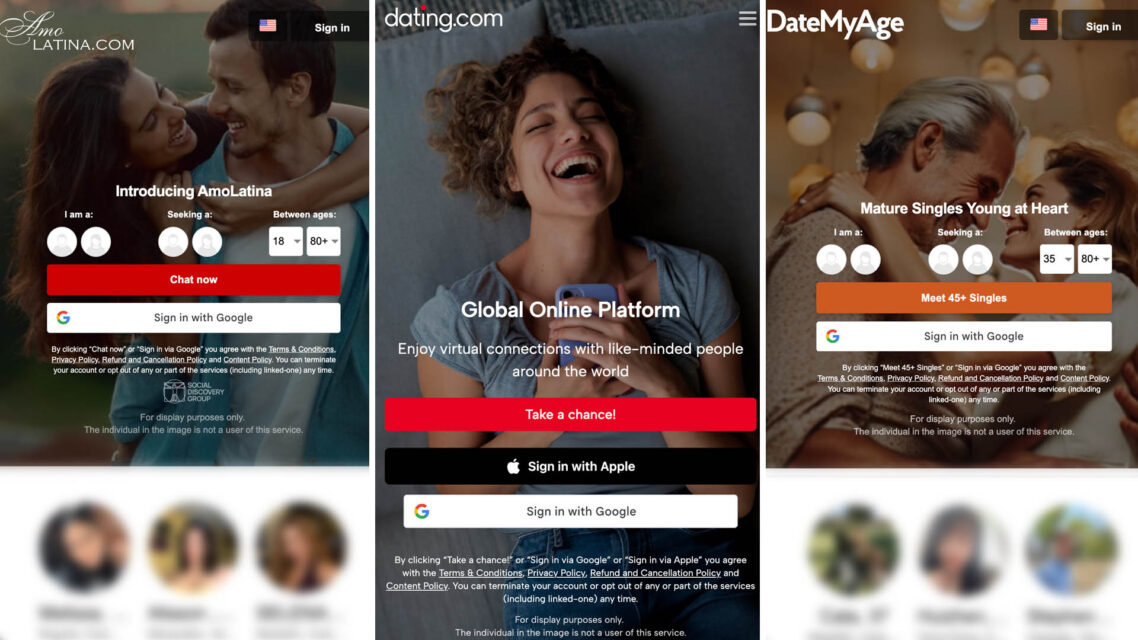
The Social Discovery Group runs a network of dating websites that require users to pay per interaction. Image: Screenshots
Maria and one other woman discovered avowedly straight male courtiers appearing in gay films and online content; a gay woman found her love interest in straight erotica; another woman discovered the man who asked her to marry him had a wife.
The models or influencers are recruited online and in person by intermediaries — marketers, modeling agencies, fellow models, photographers, groups of friends — to create photos and videos that are used in dating profiles on multiple platforms, often simultaneously, typically mixed in with genuine profiles. These free users don’t pay and instead are required to generate engagement on the site. They use aliases and manicured bios, often recounting sad stories of lovers who cheated on them and loved ones who died. They smile, wave, blow kisses, recite syrupy verse and shape their hands into love hearts in active, well-lit prerecorded videos with no one else in the background, often using similarly scripted lines with several paying members at the same time across multiple platforms operated by SDG and its subsidiaries.
“My love, I stop here to remind you that you are the sun in my gray days, the laughter in my sad moments and the love in every bit of my heart,’’ one model, clearly reading from a script, declares in a video reviewed by ICIJ.
Each of the women interviewed by ICIJ managed to free themselves from the attention of one catfishing profile — only to be approached by another, and another.
The platforms, which stretch from Malta to Colombia, the United States to Ukraine, Australia, Hong Kong and beyond, deny paying models to pose as genuine dates or enabling predatory behavior to drive up their profits.
But they freely admit to partnering with marketing firms that find models and employ content creators, so-called chat operators who generate revenue for the sites by building and burnishing models’ profiles and translating their love notes in real time.
y Special Agent Keith Custer of the FBI’s Baltimore field office, romance scams are among the costliest for those who are targeted. “It is in our top four or five of all scam types and the average for all complaints is about $20,000, and it is not unusual to see victims lose hundreds of thousands of dollars or even more than a million dollars,” Custer told ICIJ. “The scammers do not stop until they have bled the victims dry.”Custer said romance scams were also among the fastest growing online crimes, with cases reported to the FBI soaring by 38% last year, an explosion partly caused by artificial intelligence.
All but one of the women that ICIJ spoke with asked to be identified by their first names only to avoid further personal distress, to protect family members and so as not to harm their employment prospects.
The women’s cumulative losses totaled in the thousands for some, in the tens of thousands of dollars for others and, for one, more than $130,000 (later the subject of a confidential settlement).
None of the women ICIJ interviewed made a genuine romantic match. When they questioned the authenticity of the men they were confiding in, they received reassurance videos from them on the platforms.
The videos were prerecorded.

Screenshots from pre-recorded videos from AmoLatina users whose stories were questioned. The men refused to engage in live video chats. Image: Supplied
The Online Dating and Discovery Association, which represents about 500 brands globally, recognizes that fraudulent users are an industry-wide problem that many sites such as Tinder and Match are actively contending with. Not all dating site companies are members of the trade group. Not all discourage live video or audio calls between users. And not all forbid exchanging contact details between users on their platforms.
But the women ICIJ spoke with were clients of inter-related platforms with these peculiar policies, and behind all of those platforms, and a global web of companies, is a wealthy and colorful Russian entrepreneur named Dmitry Borisovich Volkov.
Sex robots and the multiverse
Volkov, who turned 50 in July, controls more than 60 global dating brands, including AmoLatina, through his companies Social Discovery Group, formerly Social Discovery Ventures or SDVentures, SOL Networks Ltd., SOL Holdings Ltd. and other smaller entities which are part of the dating group, including Dil Mil, which is operated by DMM Solutions Inc., and CupidMedia. SDV continues as a Volkov investment group with stakes in blockchain developer Bitfury, AI-powered conversation agent Woebot, Patreon, Revolut and a real estate development fund, among other assets.
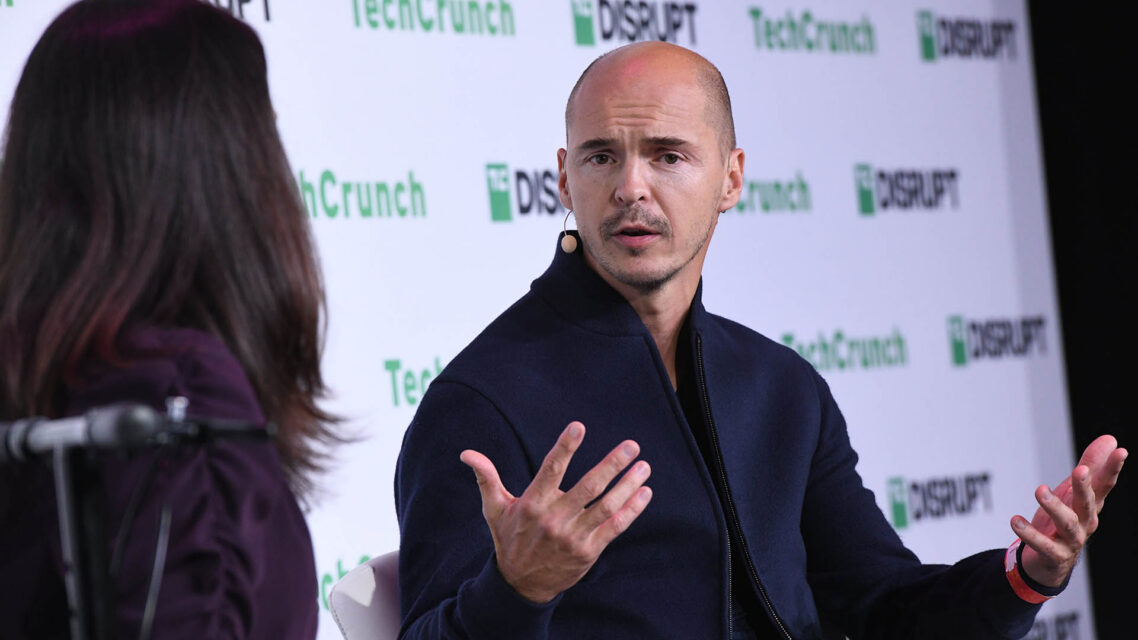
Social Discovery Group founder Dmitry Volkov speaking at a conference in San Francisco in 2023. Image: M. Reinerston / The Photo Group for TechCrunch (via Flickr CC BY 2.0)
Born in Moscow in 1976, Volkov obtained Maltese citizenship in the past decade. He reportedly has a luxury villa in Malta’s affluent Sliema district, where many of his platforms are based, and a second address in Il-Gzira. He moves often between there and Stresa, a tourist town in northern Italy on the shores of Lake Maggiore, as well as Dubai, the French Alps, Moscow, New York, San Francisco and other international hubs. In 2019, Forbes Russia reported that he was flying to and from a Gothic castle in a remote forest setting near the medieval town of Kuldiga, Latvia, that he had purchased for $4 million.
Volkov, who started his career working as an assistant for someone who was building nightclubs in Moscow, has been involved in IT projects since the 1990s. He reportedly purchased the dating company AnastasiaDate in 2011 from an American-Russian couple, David and Elena Buseden, after his company IT-Online first automated AnastasiaDate’s profiles and photos. Volkov appeared in 10 Days=Wife: Love Translated, a 2010 documentary about a Canadian man who travels to Ukraine but fails to find love on an AnastasiaDate tour. In 2013, a judge in Manhattan ruled against Anastasia in a defamation case, saying it had failed to show that a competitor had put out stories labeling it a scam on a site called AnastasiaDatefraud.com which featured stories purportedly written by women who worked for Anastasia International in which they said they were paid employees hired to correspond with men and then “break their hearts”.
Volkov is a patron of contemporary art and scientific research who has shared his interest in sentient and sex robots, multiverses and interfaith and intercultural dialogue. In 2017, at a meeting described on a religious foundation website between Russian scholars and the Dalai Lama in India, Volkov asked what “the self” is and proposed uploading a person’s mind to a computer.
By connecting and verifying the women’s stories through written testimonies, record and payment reviews, job ads, social media posts,text messages and numerous international interviews in several languages, ICIJ discovered that SDG and SOL Networks have left a trail of victims in their wake.
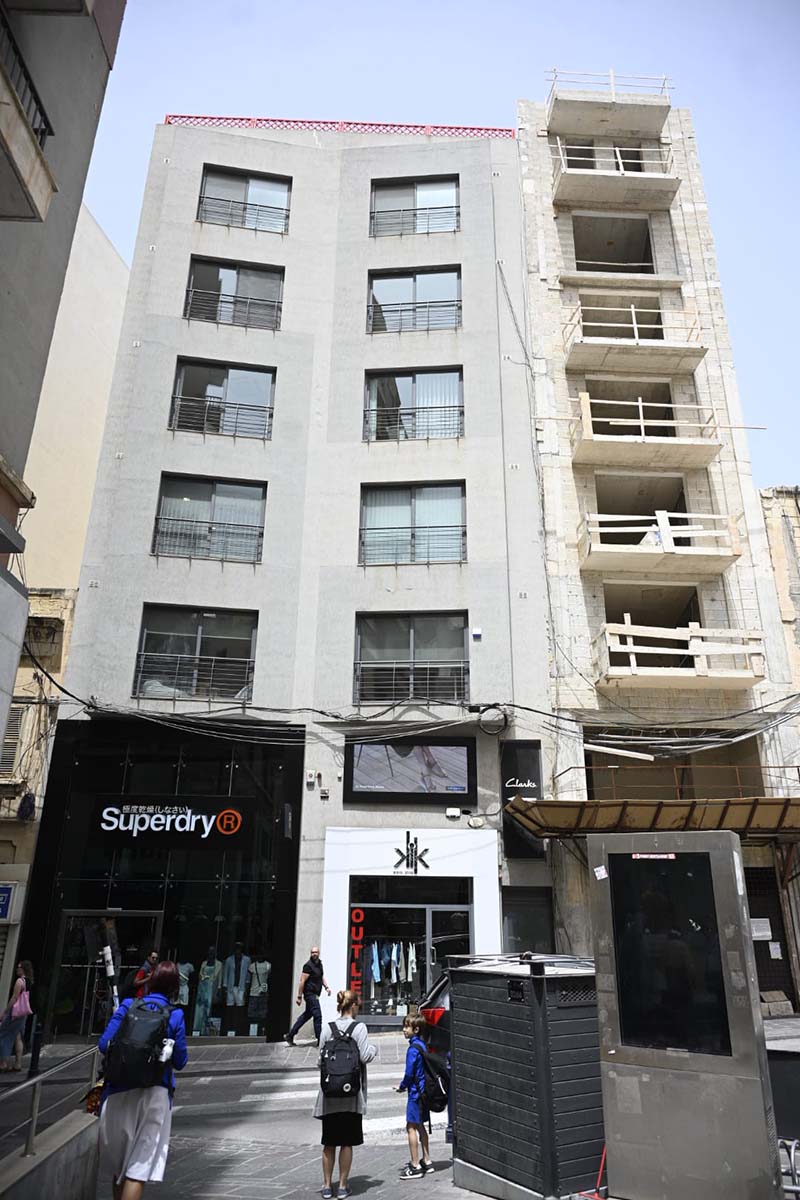
Social Discovery Group is headquartered in Malta, where its listed address sits in a nondescript building above retail shops. Image: The Times of Malta
AmoLatina’s published communication policy, a mirror image of those for other SDG sites, requires free users to sign in at least three times and spend at least eight hours online per week, reply to at least 60% of incoming emails within 72 hours and 60% of chats within 10 minutes, upload new photos regularly, and participate in video calls with other members on their “contact list” at least twice a month. Despite the policy, none of the women that ICIJ spoke with had had any live video calls.
SDG, which claims to solve the problem of loneliness with the help of virtual intimacy, told ICIJ in a statement that it does not pay models or free users and does not allow users to use “licensed likenesses or any arrangement where the person depicted in the profile is different from the person operating the account.”
“Every profile on our platforms must represent a real individual who personally uses that account,” SDG’s public relations team said, adding “Accordingly, there is no category of ‘licensed likeness’ profiles on our platforms, and we do not distinguish between such profiles internally because they are not permitted to exist.”
The company acknowledged hiring “third-party affiliated marketing partners” to assist it in finding people willing to become free users. These marketing partners, it said, assisted with onboarding these users, provided them with translation services, and helped them maintain accurate and up-to-date content.
SDG said its affiliate marketing partners were not permitted to communicate on behalf of, or to pay users. Free users, it said, were “prohibited” from receiving compensation from affiliated marketing partners and were banned if found to be doing so, without an option to restore their membership.
Finding Dan, 45
Divorced for eight years, Maria, a former gym owner, joined EuroDate in November 2023, then migrated to its sister site AmoLatina, where she struck up a digital conversation with Dan, 45.
Maria knew deep connection was rare, but Dan’s texts and videos seemed to embody it. Dan sent Maria soft-spoken voice messages and personalized videos using her name — smiling into the camera, addressing her directly. But never live.
Platform membership started at $9.99 per month. One credit cost 40 to 80 cents, 20 credits $15.99, and 1,000 credits $399. A basic chat cost one credit per minute, an email 10 credits, and the opening or sending of a video 15 credits.
Maria continued to buy communication credits to send and receive messages, open videos and otherwise interact with Dan on the platform day and night. “In the first few months, everything felt very real and natural,” Maria recalled. “I truly believed I was developing a real relationship. We communicated daily, there was emotional closeness, and I trusted him. He often spoke about a future together, which made the relationship feel serious and meaningful.”
Experts like Becky Holmes, author of “Keanu Reeves Is Not in Love With You: The Murky World of Online Romance Fraud,” compare dating fraud victims to gambling addicts. Holmes, who was once a gambling addict herself, said people in these situations prioritize hope over evidence and suppress doubts rather than face them.
I always say to people, ‘For God’s sake, don’t put online that you are a widow.’ — romance fraud expert Becky Holmes
She told ICIJ that romance scammers often tell stories involving cancer, troubled children, car crash deaths and abusive pasts as a means of bonding over trauma. To build dependency, she said, the scammers repeatedly love-bomb their victims (“you are like a princess”) and pepper them with constant “low-stakes” messaging (good mornings, hellos). “They choose to target the thing that you hold dear,” Holmes said. “I always say to people, ‘For God’s sake, don’t put online that you are a widow.’ ”
After 20 months, even Maria had to face her doubts. Messages came at odd hours. Despite nearly two years of daily communication, Dan never agreed to live video calls, stating both that a contract prevented him from communicating off-platform and that a manager ran his social media accounts.
As her unease peaked, Maria contacted AmoLatina, which offered explanations about privacy and professional constraints on Dan’s availability. AmoLatina also sent Maria a prerecorded video of Dan sitting on a bench as evidence that he was genuine. The video came with a threat from AmoLatina that sharing it could result in legal action.
SDG said its payment structure is transparent and simple to understand: It allows affordable access for users to engage with each other and pay for its services at their own pace, at a scale of their choosing.
Exhausted by her unsustainable spending and the pattern of affection, evasion and reassurance, and having finally concluded that Dan was playing her, Maria moved on with a heavy heart.
After complaining to AmoLatina, Maria received a video from the platform “to help clarify any misunderstandings and to reassure you of his [Dan’s] genuine intentions.”
Between chats with him and the profiles of two other purported lovers, she had spent $61,141, she said.
Maria decided to find Dan, 45. Using a reverse image search, she identified him as Danilo Magni, a Brazilian model and influencer. Maria shared their exchanges with ICIJ.
Maria communicated with two other men on the site: Daniel, 41 and Ricardo D, who sent her personalized videos urging her to continue communicating while, paradoxically, avoiding live video calls.
She later identified them, too, as Brazilian models, Daniel Benjamin, an influencer, DJ , actor and model; and Leo Silva, a 2016 Mister Brasil contestant, whom the dating site labeled as verified users under their profile names. In a video sent to Maria by the platform, Leo Silva tells her from what appears to be the back seat of a taxi that Ricardo is “just a nickname” he uses on the platform.
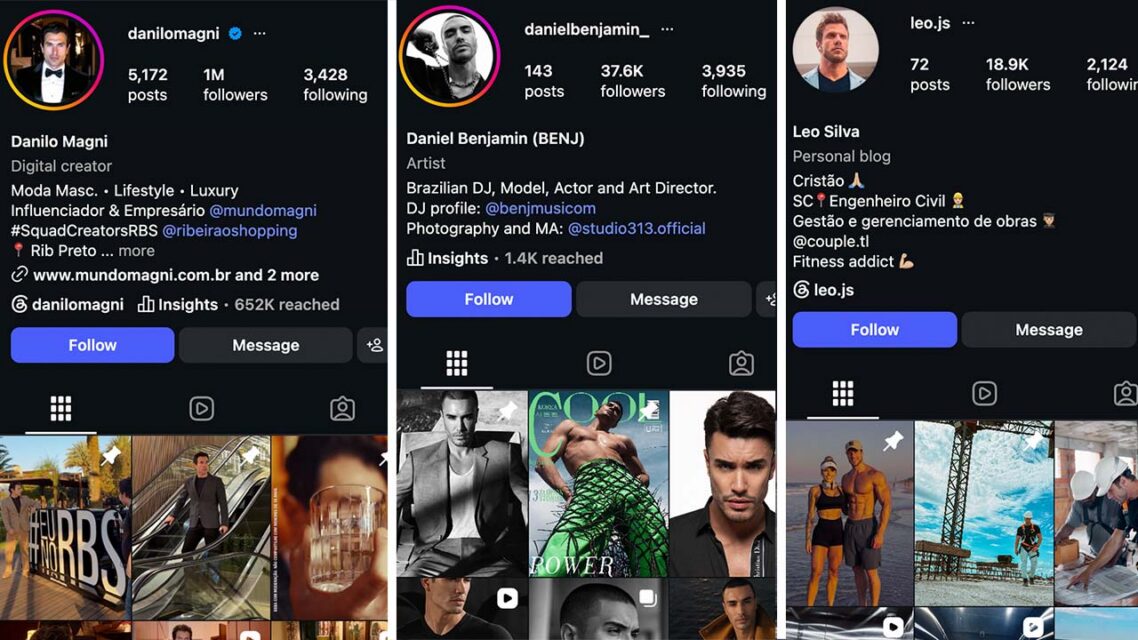
Maria identified Danilo Magni, Daniel Benjamin and Leo Silva’s profiles on social media after exchanging messages with accounts that appeared to be the men on dating platform AmoLatina. Image: via Instagram
Daniel, 41 continuously resisted live communication with Maria, citing technical difficulties.
Maria confronted Daniel Benjamin via social media in July 2025. She shared their off-platform exchanges with ICIJ. In the Instagram messages, Benjamin said his platform ID and his photos, which included many shirtless ones at home, had been stolen. Benjamin added that AI had probably been used by scammers to fake the “personal explanation.”
After Maria found Benjamin on social media, AmoLatina sent her a video of him, sitting on a train, telling her – over the sound of a Chinese rail service announcer — that his modeling agent did not know that he was on the dating platform and that he was breaking off his communication with her.
As it turned out, Benjamin was also an actor in queer romance films — who would claim without evidence that it hadn’t been him communicating with her at all.
The three men did not respond to questions from ICIJ. Magni’s modeling agency, First Models, said in reply to questions that it had no reason to believe that he would authorize the improper use of his image. Maria said she reported the men’s profiles to AmoLatina. She said that she received no meaningful response.
Maria later discovered AmoLatina’s published communication policy — and its frantic requirements that free users engage with paying users, thus generating revenue for SDG platforms. “These requirements read more like performance expectations than the behaviour of individuals casually looking for relationships,” she said.
Reflecting on her ordeal, Maria said she remains convinced that she was talking to Danilo Magni, but she accepts that she may also have been communicating with chat operators at other times.
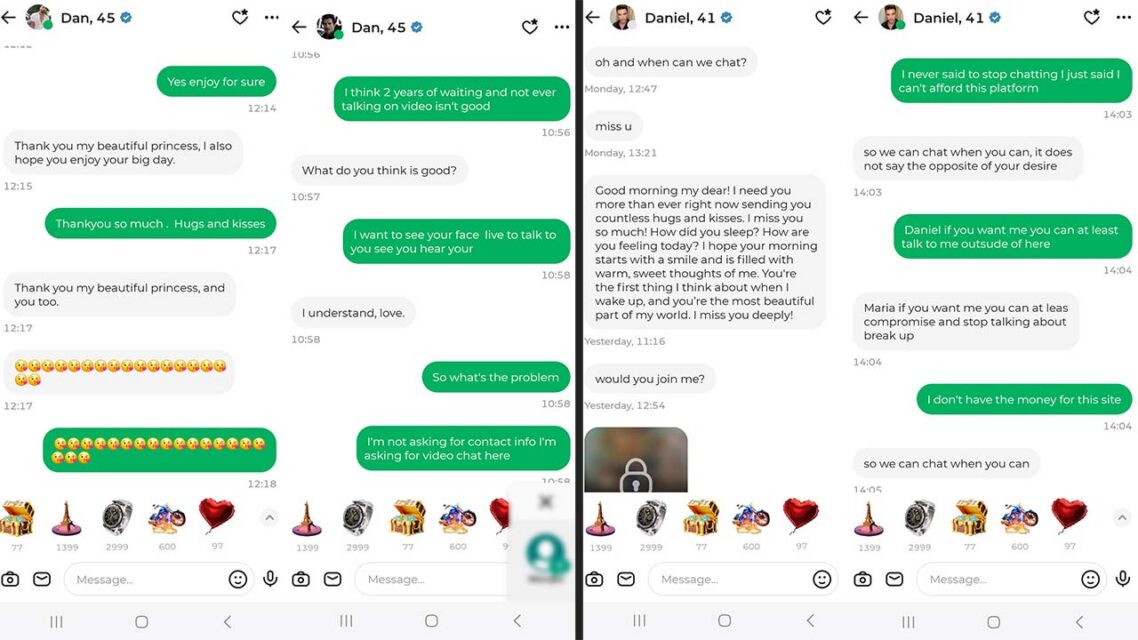
Maria shared with ICIJ screenshots of her conversations with Dan, 45 and Daniel, 41 on AmoLatina Image: Supplied
SDG said that it does not employ chat operators or models, directly or indirectly, and that profiles operated by agents or third parties are strictly prohibited.
But ICIJ’s interviews, review of scores of documents, and allegations in a civil racketeering lawsuit filed in the U.S. contradict SDG’s claims minimizing the role played by these parties on its dating sites. In the lawsuit against DMM Solutions Inc., a service provider for SDG-owned sites, a former paying user, Michelle Grimmett, from St. Louis alleged the sites use “fake profiles” to trick clients into engaging with people they think are love interests.
In fact, she alleged, DMM Solutions-operated websites “are populated by scores” of “fake ‘catfish’ profiles that are set up to use photographs of paid models with the sole goal and purpose of enticing users to buy credits to engage with them.” The suit, filed in 2024 under civil racketeering laws in U.S. federal court in New York City, was sent from the federal court to arbitration and is pending.
The Better Business Bureau, a U.S. organization that tracks consumer complaints nationwide, told ICIJ that it had received 64 complaints, including 19 in the last year, about Dil Mil, DMM Solutions and the Social Discovery Group’s dating platforms. Consumers, it said, had complained about billing, refunds and feeling pressured to spend money on gifts and photos, as well as alleging that they had been interacting with fake profiles or bots and expressing frustration over the inability to move conversations off-platform or verify whether connections were genuine. The BBB said DMM Solutions has an F consumer rating, the lowest possible ranking.
Maria complained to the Malta Competition and Consumer Affairs Authority, claiming she had been scammed and had lost more than $60,000 on AmoLatina.
The MCCAA requested Maria’s consent to use the information and documentation she had provided, together with a sworn affidavit detailing her complaint and supporting evidence, she said. They informed her that any investigation would be administrative and regulatory in nature and would not result in compensation or personal redress for her. She is considering her options. AmoLatina offered a refund of 1,500 euros (about $1,700), which she declined.

https://www.icij.org/investigations/coin-laundry/holiverse-lado-forsage-cryptocurrency-scam/
CRYPTOCURRENCY The Russian crypto guru’s Hollywood gambit Nov 17, 2025
Recommended reading IMPACT Alleged cryptocurrency Ponzi scheme ‘goddess’ extradited from Thailand to face conspiracy charges in US May 17, 2026 CRYPTOCURRENCY The Russian crypto guru’s Hollywood gambit Nov 17, 2025 DUBAI A notorious drug kingpin set up shell companies in the British Virgin Islands and Dubai to employ alleged cartel underlings, documents show Aug 20, 2024
alignright"> Jean Moreno, who went by “Lorenzo” on his online dating profile.
 Image: Screenshot
The platform promoted itself as offering “Protection,” “Verification,” and “Deep Affinity.” Over nine months, Lorenzo professed love and even proposed — asking Rhonda’s aunt for permission to marry her niece. But like Maria’s Dan, Lorenzo — who was in fact Brazilian model Jean Moreno, married and living in New York — avoided live video calls and in-person meetings.
Dating.com sent Rhonda a video from Lorenzo saying “there were no false promises” and that things not happening at the right time had caused him to stop talking. “It’s mental manipulation. I would never have believed it if I hadn’t lived it,” Rhonda said.
Denying Rhonda a refund, Dating.com customer success manager Nekechi told her: “After reviewing Mr. Lorenzo’s social media, we did not find any indications of him being dishonest.” Nekechi added, “The name on his social media is his birth name, while the one used on our dating site is an alias. It is common for members to use aliases for security purposes and to make them comfortable.”
Jean Moreno did not respond to questions from ICIJ.
SDG did not answer questions about Moreno.
SDG told ICIJ that it understood that while some users may be disappointed with their experiences on its platforms, it has investigated every complaint and not all revealed a rules violation; where violations are confirmed, accounts may be warned, suspended or permanently removed, it said.
“I went to counseling to get over the heartbreak,” Rhonda said.
Rhonda married on May 28. After she first met her husband, on Facebook Dating, he drove for three and a half hours from Alabama to meet her in person. “I’m so blessed to have him. He is amazing,” she told ICIJ.
“Sometimes I Just Wanna Die.”
Anna Rowe, co-founder of the romance fraud victims’ group LoveSaid, described creating a fake online identity to deceive someone into a sham romantic relationship as a fraud that is rarely punished.
She said that after multiple Dating.com victims approached her, she logged onto the site to check for herself and instantly was messaged by Tony, 48, who claimed to be an engineer. In fact, he was a German model and actor, and his name was Hilton.
Rowe said that when she questioned Dating.com, saying she did not want to pay if the man was not real, it responded that Tony was “fully approved and verified.”
She said the victims of fake profiles had little legal recourse. “It is awful. It is vile.”
In Greer, S.C., where new construction rises beside quiet neighborhoods and the BMW plant hums in the distance, Dana joined Dating.com and AmoLatina in 2022 after coming out as gay at 52. A woman calling herself Patti contacted Dana. Patti said she was 28, living in Colombia, a model with a 7-year-old son. She was affectionate, vulnerable and intense.
Patti refused to video chat. Every message cost Dana credits. Gifts both real and virtual became central: scores of virtual hearts and hummingbirds, actual roses, a teddy bear for Patti’s son, but Dana drew the line at buying Patti a phone. Dana estimated that she spent between $25,000 and $30,000.
While Dana was grieving a nephew’s death, she said, Patti told her she would harm herself if Dana left the relationship. In one of several messages along similar lines, Patti wrote: “You are the only thing that fills my life and without you, I don’t have a life I am interested in living.” In another, she simply stated: “Sometimes I Just Wanna Die.”
“She manipulated me really badly, especially about suicide,” Dana said.
Then Dana created a second profile under a different name, and “Patti” began courting that one in exactly the same way. Later, Dana learned other women had received the same messages.
“It broke me,” Dana said.
According to SDG, during 2025 its monitoring systems flagged more than 60,000 messages as potentially related to explicit or prohibited content, and employees took enforcement action where violations were confirmed.
Dana traced “Patti” to Angie Miraval, a heavily tattooed Colombian model with thousands of followers on SnackVideo and thousands more on TikTok. She has also appeared as “Patricia” on Whispark and Winkiworld, two platforms for men seeking women, where she exchanges erotic messages and photos.
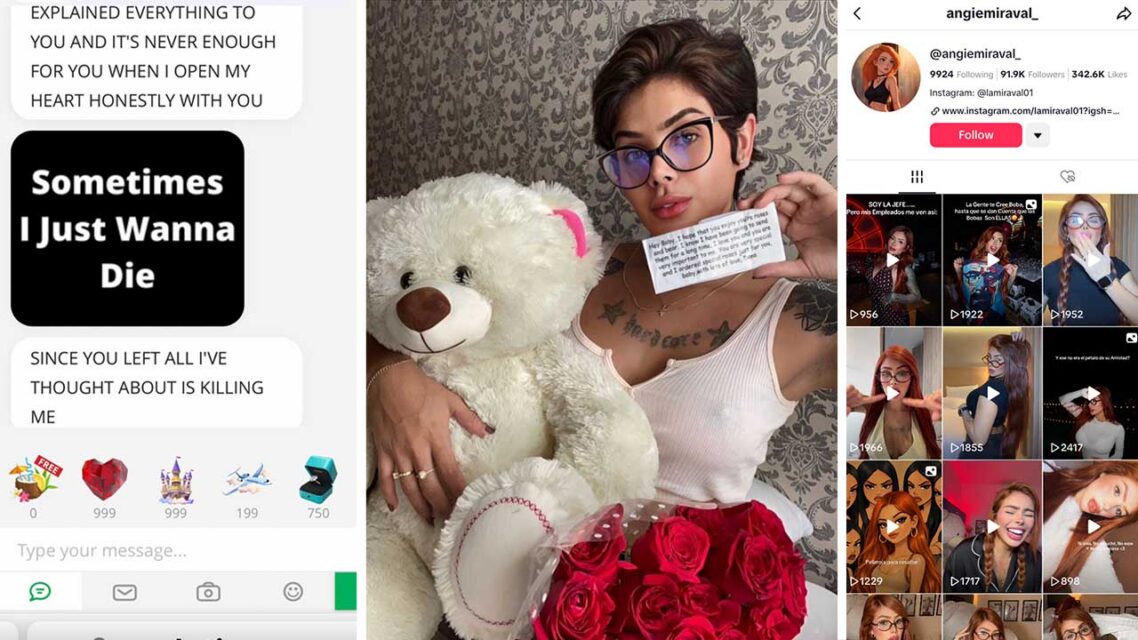
“Patti” sent messages that Dana says manipulated her into continuing the relationship. Dana sent expensive gifts before discovering “Patti” was actually a woman named Angie Miraval, who had an extensive presence on social media. Image: Screenshots
When Miraval denied involvement, Dating.com wrote to Dana stating that Patti was using its site, then wrote a second time apologizing and saying that Patti had told it that she was not, in fact, managing her use of the site. “For a more comprehensive understanding of the situation, we have included a video in which Patti provides an explanation,” it said. Dana said she laughed at the absurdity of the situation.
Dana is currently recovering from a stroke.
In response to questions from ICIJ, Miraval said she was not the person using the dating platform. She said: “More than one girl has written to me, and I’ve sent reports to the platform asking them to check who that profile is and remove it from the website. The platform responds that it was deleted two years ago!”
“I’m not that person,” she wrote. “I’m tired of saying it.” The photos and videos shared with Dana by the person calling herself Patti on AmoLatina are unquestionably those of Miraval. Dating.com told Dana that Patti had left its site “for personal reasons.”
SDG confirmed that Miraval had a profile on its platforms. It said Miraval, like Daniel Benjamin and Dimka Tryakin, was an identifiable public model or influencer who had been verified in accordance with its rules.
Another Colombian model told ICIJ that she had been recruited by a photographer to share her photos with the dating platform. The second model, who asked not to be named, said models were paid per photograph and video — they received no other payments — and did not chat on the platform. She said that she knew Miraval from their youth.
She said that, in her case, the photographer who recruited for dating platforms aimed at men saw her modeling portfolio and paid her 300,000 Colombian pesos ($83) for her initial profile photos for the site. “They just use our image; they’re the ones who do the talking and deceive men,” said the model, who said she found the whole scene sad and quit quickly. “We don’t talk to anyone. It’s them.”
After the recruiter logged her ID and had her sign a contract, she said, photos were taken of her which were to be used by dating platforms to lure men. She said there were countless beautiful Colombian women and it was not difficult to lure some into the dating business on the promise of easy money and gifts, as many were poor. “When men ask the girls for photos to verify they’re real, the recruiters contact the models and ask them for photos in real time to make the men believe they’re there in real time,” she said.
SDG said it allows free users because “many individuals (particularly in world regions where disposable income is limited) are interested in meeting people internationally but may not be able to afford credit-based participation.”
The fact that people like Daniel Benjamin or Angie Miraval might be publicly known as models or influencers did not disqualify them from participating on SDG sites, nor did it make their profiles illegitimate, the company added.
SDG said that neither Benjamin, Miraval nor several other models ICIJ asked about were ever under contract with, licensed by, or otherwise specially authorized by SDG or SOL Networks, or any affiliated entity.
Limousines, helicopters, Mad Max and Bach
Volkov, the Russian owner of SDG and its affiliated companies, flies helicopters over Dubai’s glimmering towers, skis the white powdered slopes of Chamonix-Mont-Blanc and crunches curl-ups to maintain his washboard abs. An admirer of Mad Max and Bach, he posts images of himself tilting rotor discs, throttling over desert dunes on motocross bikes, tackling steep glacial slopes and traversing the globe as a self-styled digital nomad. He has reportedly organized a Burning Man camp; claims to have been in a Broadway musical at age 12; and appeared as a child actor in a Russian movie.
In one Instagram-friendly shot, Volkov sits on the rear of a flatbed truck beneath a mounted, belt-fed, Type 77 heavy machine gun next to soldiers in military fatigues and berets indicating they are from Niger. In another, Volkov wrestles with a Mundari tribesman from South Sudan. During the same trip in 2024, he played the organ at sunset to long-horned Ankole cattle, who share a symbiotic relationship with the Mundari.
“When people ask where I live, I lie,” he wrote on Facebook, captioning a shot of himself standing on a custom-built, off-road “art car” inspired by the post-apocalyptic aesthetic of George Miller’s Mad Max film franchise. “That question is usually meant to spark small talk. Yet it can reveal a lot about one’s lifestyle, preferences, political views, and social status. San Francisco, Dubai, Ufa. People from different planets, right?”
Ufa is the capital and largest city of the Republic of Bashkortostan, Russia, just west of the southern Ural Mountains. It is known for its oil, its gas and its healing honey.
Volkov employs several Malta-based personal assistants to organize limousines, helicopters, entertainment, gifts and art, according to an ad for one more assistant posted by SDG. He calls himself a brand ambassador for Cadillac and the luxury watch brand Jaquet Droz and says that he studied at Harvard Business School. Harvard confirmed that Volkov had taken part in an executive education program at its business school. Jaquet Droz and Cadillac did not respond to questions from ICIJ.
For years, AnatasiaDate, AmoLatina and other SDG platforms have received poor customer ratings and scathing reviews online, including on the Danish review site Trustpilot and the Brazilian consumer site Reclame Aqui, with many accusing them of being a scam. Anastasia International, which grew into AnastasiaDate, was also the subject of an investigation by Shaun Walker of The Guardian in 2014 and a subsequent book by him that reported on men falling victim “to a number of sophisticated scams” at the hands of “Odessa’s sinister marriage industry.”
Confidential documents leaked to BuzzFeed News and shared with ICIJ as part of 2020’s FinCEN Files investigation show that an AnastasiaDate affiliate, Sellinge Management SA, was the subject of a Suspicious Activity Report filed with the U.S. Department of Treasury. Sent by the Bank of New York Mellon (BNY) to the Financial Crimes Enforcement Network, or FinCEN, the SAR reported 197 suspicious wire payments in 2013-2014 totaling $861,121.92 that were sent by the “shell-like” company.
BNY said many of the payments from November 2013 to August 2014 went through Latvijas Pasta Banka in Latvia, nested with Moscow-based Promsvyazbank, or with money services businesses. The term “nested” refers to a smaller, unvetted service provider routing transactions through the accounts of a larger, established financial institution.
BNY said Sellinge implemented services offered on AnastasiaDate, including translation and gift services, and then made payments “to private entrepreneurs or representatives that provide the services.” It said Sellinge, which was “purportedly located” in the British Virgin Islands, was associated with “a questionable dating service,” AnastasiaDate, and “its affiliate program may also be fraudulent.”
The SAR, which named Russian Olga Melnikova as the owner of Sellinge, said details of payment were vague and that they involved the high-risk jurisdictions of the BVI, Belize, Moldova, Latvia and Ukraine. Separate records leaked to Süddeutsche Zeitung and shared with ICIJ show that AnastasiaDate Ltd. changed its corporate name to Dating.com Group Ltd. in May 2016 but both brands continued to operate. Sellinge was liquidated in 2017. A suspicious activity report (SAR) is not an accusation, it’s a way to alert government regulators and law enforcement to irregular activity and possible crimes. ICIJ was unable to contact Melnikova.
SDG told ICIJ that AnastasiaDate was not aware of any investigation related to a SAR or similar reports. The company said that it rejected the characterization of its products as “scam platforms:” “The rules that govern how people communicate on our platforms exist to protect users from scams and unwanted contact.”
In May, Russian news outlet Verstka published an investigation into Web Flex — a Tbilisi, Georgia-based operation whose employees reportedly profit from users of the SDG sites AnastasiaDate and Dating.com.
Verstka reported that Web Flex operators — mostly Ukrainian refugees and Russians who fled after the 2022 mobilization of military reservists — work around the clock in shifts, posing as ordinary users and chatting on Dating.com and AnastasiaDate with lonely people around the world. Several operators told Verstka that they worked systematically to extract money from Americans and Europeans through messages, virtual gifts and expensive real-world purchases.
Verstka reported that AI tools are used extensively to generate photos, videos and voice messages. Verstka said “Dating.com categorically denies any collaboration with companies like Web Flex.”
Georgia-based WebFlex holds a database of approximately 2,000 profiles of models from around the world (although not Russia), feeding Dating.com and AnastasiaDate, according to staff quoted by Verstka. It said chat operators could choose from up to 300 profiles at a time to interact with paying clients. Job sites including Jooble advertise live vacancies for models and chat operators (with duties described as conducting correspondence on behalf of “the girls,” meaning models) and English optional, night shifts preferred to match North American time zones and recruitment via Telegram accounts.
SDG told Verstka, which spoke with one American man who had spent $8,000 on Dating.com in one month, that the leaders of Web Flex were never employees of SDG or any other company in the group. SDG told ICIJ that it has retained an outside firm to investigate Web Flex’s activities and had suspended payments to its affiliate partner.
Meanwhile, three Ukrainian software companies, ChatOS, Sender.Services and Quick Simple Bot, or QSB, have advertised browser extensions and other software products designed for chat operators to use on dating platforms, including the Social Discovery Group sites AnastasiaDate, Dating.com, DateMyAge and AmoLatina, allowing chats with multiple accounts at the same time, with machine-like efficiency.
state, social media apps, a learning platform and AI. He was reportedly an early investor in the music recognition app Shazam and has invested through SDG in Patreon, which allows people to donate to content creators.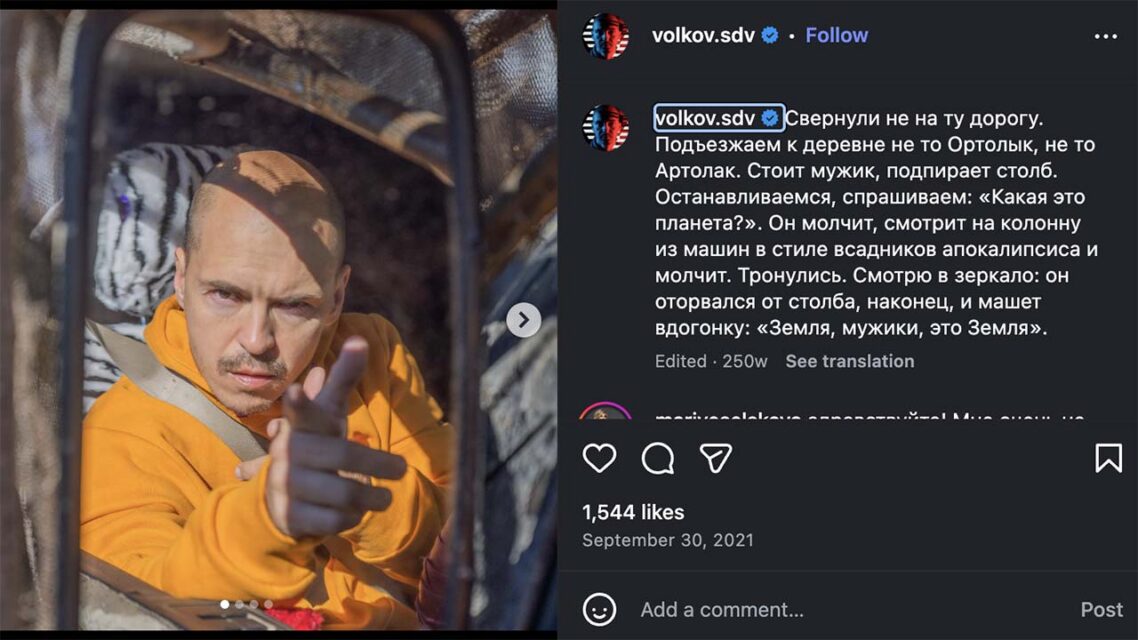
A Facebook post by Dmitry Volkov. Image: via Facebook
Sanctions and Russian connections
In response to a wide range of questions from ICIJ to Volkov and his companies, SDV’s public relations team said SDV had participated as a partner in a number of global private equity and venture capital funds, including Blockchain Capital, DN Capital, Khosla, Lakestar and NEA. It said SDG was one of SDV’s investments and was co-founded by Volkov.
In 2019, Volkov’s SDVentures and Alla Gubenko, the founder of SOL Holdings and a key shareholder and former director of SOL Networks (a chain of dating platforms with more than 8,000 domain names, according to the domain search engine Whoxy) merged assets to create Dating.com Group.
Gubenko is the daughter of Sergey Gubenko, who headed a local branch of the Vladimir Putin-aligned United Russia political party in the Tyumen region from 2007 to 2012. She worked as head of human resources with Volkov’s IT-Online from 2008 to 2011. In response to questions from ICIJ, Gubenko said she no longer had any involvement with SDG’s management or operations.
SDG does not do business in Russia or Belarus, and its platforms and services are not available in those markets. The company declined to confirm for ICIJ how many countries it covers, its staff numbers, its user numbers, or its revenues, stating that it was not a public company and was not required to release detailed figures on these. Online, it has made widely varying claims on user numbers.
Gubenko, Volkov and Latvian model Lasma Kuhtarska founded a payment company called NaudaPay, also known by the brand name Noda, which was actively backed by SDV. Gubenko and Volkov are no longer involved in the company.
In October 2022, Ukrainian authorities sanctioned Volkov for alleged commercial activity generating income for the Russian government. SDV’s public relations team said Volkov disputes the allegation and is challenging the penalty in court.
Dimitri Berezniakov, the founder of Verified Love, a website dedicated to verifying dating profiles and exposing scammers, told ICIJ that an honest dating platform lets its customers move to direct communication once there is a personal connection.
Berezniakov, who started a legitimate matchmaking service in Ukraine in the late 1990s, said that if the only way to talk is through paid messages, something is wrong. And if a profile looks like it came from a modeling agency, with professional lighting, makeup and studio poses, it probably did.
He told ICIJ that competition and a lack of regulation corrupted international dating into “a huge scam industry.” Ukraine alone, he estimated, is home to about 1,000 agencies employing thousands of people to operate scam profiles.
Raising red flags
Simon Newman, who heads the Online Dating and Discovery Association trade group, said that romance fraud has been a persistent problem as the industry has grown.
“We hate scammers,” Newman said. “We want to stop fraud where we can. We also want to call out bad practices in the sector. But it is not without its challenges.”
The only global trade body for the online dating sector, ODDA, said it represents 70% to 75% of the market, made up of about 500 brands across 15 or 16 member companies. Among them are Tinder and its sister Match (two of the most popular dating platforms in the world), Hinge, MeetMe, Plenty of Fish, LOVOO and OkCupid. SDG is not a member.
Newman said the ODDA only accepts companies that meet their membership standards, but he acknowledged that ODDA had seen data suggesting that on some sites as many as 70% of profiles may be fraudulent. While Newman said agencies such as the FBI and the U.K.’s National Crime Agency are pursuing scammers, such active cases represent “the tip of the iceberg.”
Some governments are making initial stabs at tightening regulations on the fraud-ridden sector. The U.K.’s Online Safety Act and the EU’s Digital Services Act expanded platform safety duties. Australia’s voluntary online dating safety code requires transparency reports on account removals.
In the U.S., a proposed Romance Scam Prevention Act would require online dating services to notify users who had interacted with a profile later removed for fraudulent activity. “The goal is to raise red flags,” the bill’s sponsor, Rep. David G. Valadao, R-Calif., told ICIJ. “This is a piece of legislation that fixes one aspect and helps with one solution.”
Valadao said he introduced the bill after hearing about online swindlers from people in his district, in California’s Central Valley region. The bill passed the U.S. House but remains held up in the Senate, he said.
SDG said romance fraud was a systemic industrywide problem, not one confined to any single platform and that no operator could guarantee the complete elimination of fraudulent activity, but it invested meaningfully in verification, monitoring and enforcement systems to promote genuine international connections between real people.
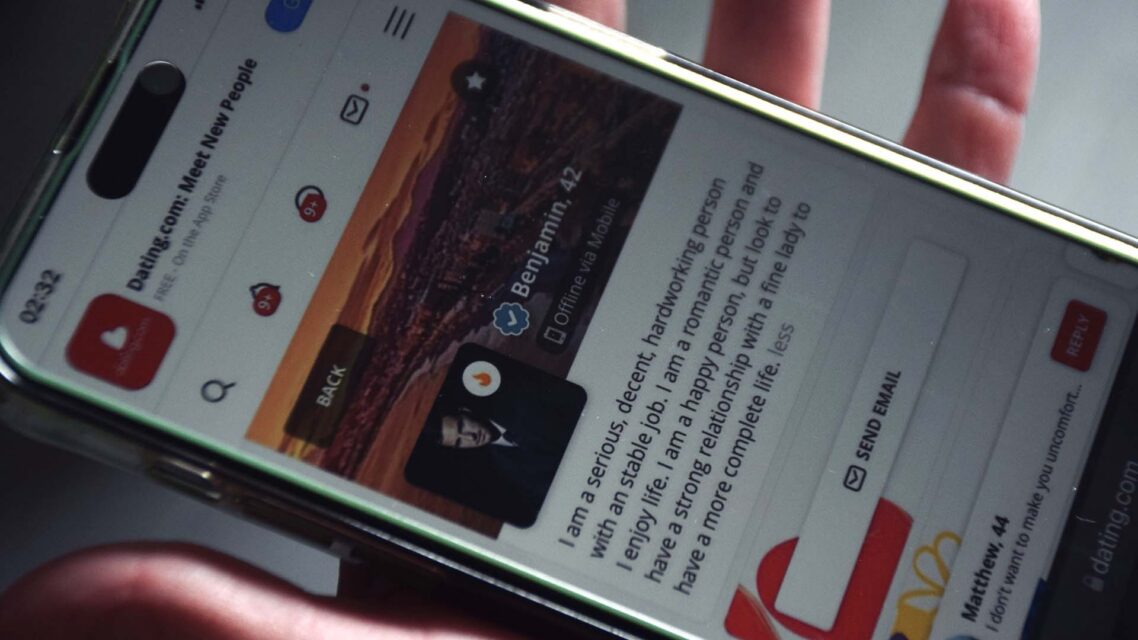
Women from around the world shared photos, screenshots and chat logs with ICIJ, documenting their experiences using dating websites. Image: Eiliv Frich Flydal / VG
A team of chat operators
In New York, Elizabeth, 67, a retired exercise physiologist and aerobics instructor, got a peek behind the curtain of YourTravelMates.com upon joining a year after the death of her second husband. YourTravelMates is operated by the Social Discovery Group subsidiary Dil Mil.
“Enzo,” or Lorenzo, said he ran a restaurant on Italy’s glittering Amalfi Coast, had a boat and a playful cat named Fernando. “I thought he liked me,” Elizabeth said from the Manhattan apartment where she now lives with her daughter.
Every text, photo view or message she opened cost her money. She was even asked by the platform to send Enzo birthday gifts. The more she talked to him, the more the meter ran.
Soon her profile, without her consent, started to appear on AmoLatina, EuroDate and Hotti.com. Thinking she was gaming the system, she would switch platforms to keep introductory prices low. Instead, she found the same man on every site.
Elizabeth communicated with him through various platforms and soon was bombarded with messages from Enzo asking her to buy gifts, attach a photo, attach a video, boost her profile, become a premium member — all at great cost. When she asked, Enzo denied that he was a free user.
“I want to marry you. I want everything with you. You are the reason for my happiness. I love you so much that you can not imagine,” Enzo wrote.
Enzo never video chatted. He never met Elizabeth. She estimated that she spent $50,000. “I wasted six years of my life,” she said.
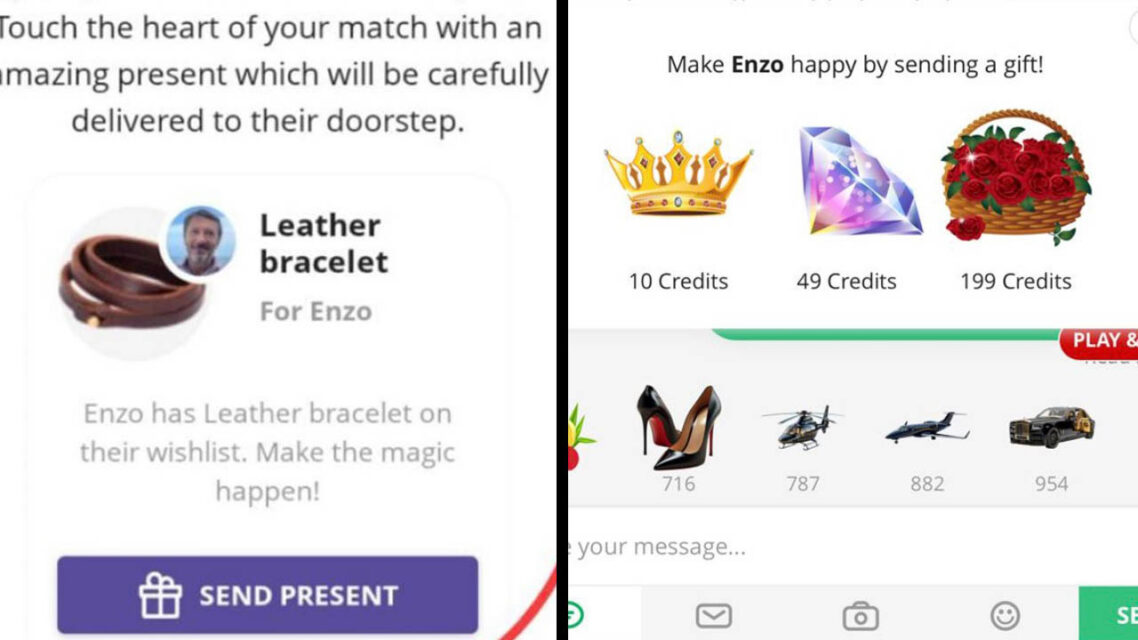
The dating platforms prompt users to send gifts and spend money on interactions. Image: Supplied screenshots
She learned two of her friends had been approached by Enzo on the same platform — even as he was professing his undying love for her. “He told my friend his cat was called Coco,” she said.
As she hunted for answers, Elizabeth contacted a Filipino called Robert Wilson who had posted videos on social media attacking what he calls sham dating sites. Wilson told Elizabeth — in Messenger texts reviewed by ICIJ — that he was paid $400 a month to oversee a team of chat operators, via a dashboard, who conducted scripted interactions with people like her, pretending to be actual love interests on multiple SDG sites, to keep them chatting and paying.
“All the photos are staged,” Wilson wrote to Elizabeth, adding that there were operators like him around the world. Wilson said he had hired free users for SDG sites, via Facebook ads, while working as a platform manager for seven months from November 2023 to June 2024.
Wilson has uploaded videos summarizing his allegations on Facebook and YouTube. The videos show Dating.com’s “administrators’ panel,” an internal accounting system, and explain how chat operators’ earnings are calculated based on how often they communicate with paying users. Wilson’s account of the panel mirrors the allegations made in the U.S. lawsuit against DMM Solutions, which like Dil Mil is part of SDG.
Wilson, who declined to comment to ICIJ, also uploaded photos and video footage of Dating.com chat operator colleagues around the globe, who he says in social media postings worked with him servicing multiple paid members at the same time on multiple SDG sites, on a commission basis using scripts.
In one video, Wilson said: “This network is one. They have different names, but they are all one. … The company has hired workers to chat to consume all your credits.”
ICIJ independently confirmed that several of the people in the video did work for SDG and we reached out to them. None responded to questions. Wilson exchanged texts with ICIJ over several months but declined to answer questions.
In a string of texts to Elizabeth, Wilson said that the chat operators behind the platforms typically come from what he described as “poor countries,” including the Philippines, Russia, China and Colombia.
In a statement to ICIJ, SDG said that the person presenting himself as Robert Wilson “was never an employee of SDG or any other part of the group. We believe that this is not in fact his real name.” It said “Wilson” was a third-party external contractor with whom SDG cut ties in 2025 “following evidence of his improper personal conduct and breaches of our rules governing third-party contractor behaviour.”
SDG said he demanded “inflated payments” as a contractor. “He made clear to us that if he did not get those payments, then he would pursue a public disinformation campaign against SDG.” The company said it had issued multiple cease-and-desist letters and was considering further legal action against him.
Fight for accountability
In Queensland, Australia, Melanie, 53, is recovering at an uncle’s farm from the trauma of a betrayal that triggered a complete breakdown. Once a high-earning med-tech professional, Melanie — who now spends time building furniture from reclaimed wood — recalled for ICIJ how her life collapsed after the grueling end of her 14-year marriage.
She spied an ad for Dating.com while searching online for divorce attorneys; she clicked, and a child psychologist in Córdoba, Argentina — muscular, with a dog named Hades — contacted her instantly. The man, calling himself Rodrigo David Gonzalez, said he was in his early 40s with no kids, an only child who had grown up poor. Before long, he was declaring his undying love for Melanie.
“From the moment our paths crossed, my life has taken an unexpected and wonderful turn,” he wrote to Melanie. “Every meeting, every conversation has been like a flash of light in my world.” He sent her photos of himself on the beach, in football shirts, eating meals alone; in the bath as a child; and with his parents both as a boy and a man.
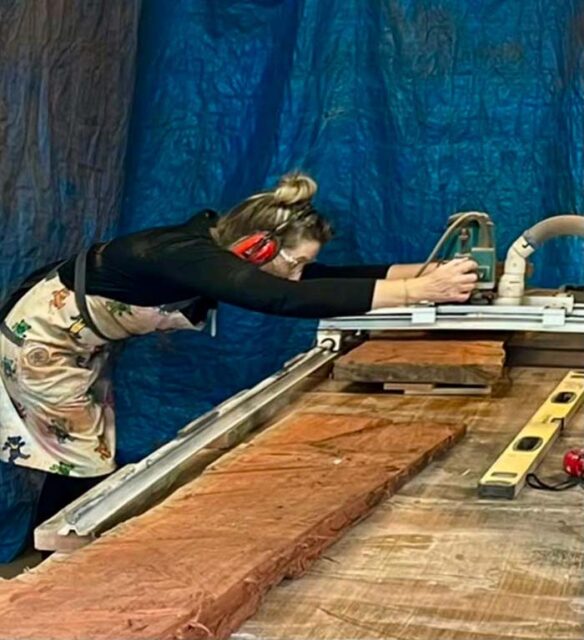
Melanie now spends time building furniture as she recovers from a relationship breakdown. Image: Supplied
With Melanie online, Rodrigo said his heart beat to “the rhythm of a heavenly symphony.” To his ears, her “laughter was like a melody” and her eyes were “beacons that illuminate even the darkest days.”
But he said they could not meet because he had information that dangerous people wanted to get hold of and it would be unsafe for her.
Every interaction cost Melanie. Rodrigo, she said, harangued her to receive and send more letters, to buy credits in bulk, to upgrade, to invest in “them.” One long-winded story about a ghost cost her $1,600, she said.
Isolated, depleted and by now battling breast cancer, Melanie was wary, but still she kept paying. When she disclosed her sickness, she recalled, Rodrigo said his mother had had cancer and claimed to have spent a lot of time studying oncology.
In seven months, she said she spent $136,000.
When she questioned him, he grew angry — “Enough of defaming me!” — withdrew, then returned, pleading for conversation. “It felt like abandoning him,” she said.
Melanie hired a private investigator who found “Rodrigo” was in fact a model named Carlos Ignacio Rodriguez Jauregui, who didn’t live in Córdoba, had two sisters and grew up in a wealthy family.
Melanie sued SOL Networks, Dating.com and Jauregui, alleging that the sites engaged “Rodrigo” as their agent and had failed to perform appropriate verification checks. The companies at first dismissed her concerns — even telling her to “find a hobby” — but later reached a confidential settlement with Melanie.
Melanie said SOL Networks and Dating.com denied that Jauregui had ever been an employee, agent or representative. According to her, the dating platform did not concede that “Rodrigo” had misrepresented himself or his profession despite numerous differences between his story and Jauregui’s real-life story.
She provided ICIJ with photos of Jauregui on other dating sites over several years, vowing that she would continue to pursue him. “I went after Dating.com and they gave me back every cent I spent,” she said. “Now I have to go after Ignacio and force him to be accountable, because it is not okay to steal from broken people.”
Jauregui did not respond to ICIJ’s questions.
An SDG spokesperson said it was not able to discuss anything regarding Melanie due to legal constraints.
The spokesperson added, “We have not been made aware of anything other than to suggest the situation was previously resolved to the mutual satisfaction of both sides.”
In June, Dating.com advertised for its first ever Chief Breakup Officer, a part-time, remote position paying $3,000 a month to someone whose entire job is ending other people’s relationships for them.
Jamie Bronstein, one of Dating.com’s resident relationship experts, told Vice.com: “The statistics show us there is a problem with tough communication, emotional responsibility, and accountability.”
Anna Rowe reacted to the news with astonishment: “Can you believe this? Genius for a company where the users can’t actually meet the people in the photos.”
Contributors: Dean Starkman, Kathleen Cahill, Angie Wu, Mikhail Maglov, Mikhail Rubin, Jacob Borg, Sandra Crucianelli, Eiliv Frich Flydal.
If you or someone you know needs help, visit 988lifeline.org or call or text the Suicide & Crisis Lifeline at 988. To find support outside the U.S., visit Lifeline International or Open Counseling.
21.07.2026 à 17:25
Texte intégral (586 mots)
As scammers and terrorists increasingly turn to crypto, a Canadian intelligence office is raising alarms about risks posed by an emerging industry offering discreet means to convert cryptocurrency to large sums of physical cash and vice versa.
A substantial portion of these services across Canada are being “heavily exploited for illicit purposes” and are “knowingly facilitating money laundering, sanctions evasion” and a variety of “transnational organized crime activities,” according to a Canadian intelligence memo reviewed by the International Consortium of Investigative Journalists.
The memo’s assessment shows top financial intelligence officials echoing a concern that some crypto experts have voiced with growing urgency over the past year: A worldwide industry of services converting cryptocurrency into large sums of physical cash — often with few questions asked and conducted with deep anonymity — has opened a gaping hole in the global bulwark against dirty money.
the Strategic Intelligence, Research and Analytics Unit, the intelligence-gathering office within FINTRAC, the country’s agency overseeing efforts to combat money laundering and terror financing.Garry Clement, who formerly ran the Canadian national police’s proceeds of crime program, told ICIJ that he’s not surprised by the government assessment.
Crypto-to-cash operators “service really professional money launderers,” Clement said. Their money, he added, “comes from the drug trade, it comes from human smuggling, it comes from massive amounts of fraud and it comes from a lot of cyber crime.”
The memo notes that recent media reporting has highlighted the rise of such services in Canada. Last November, ICIJ and 37 other news organizations released the Coin Laundry, a global investigation that examined illicit finance in cryptocurrency around the world, including Canada’s thriving crypto-to-cash businesses. These services allow holders of cryptocurrency to cash out huge sums without touching the mainstream banking system. In doing so, these operations sidestep banking systems’ traditional safeguards on dirty money tied to organized crime, human trafficking or foreign sabotage operations.

CRYPTOCURRENCY Crypto giant Circle rebuffed efforts to help scam victims, police say Jul 08, 2026
IMPACT Canada revokes dozens of crypto firms’ registrations Mar 24, 2026
Recommended reading CRYPTOCURRENCY Crypto giant Circle rebuffed efforts to help scam victims, police say Jul 08, 2026 FINANCIAL SECRECY From Dubai to Toronto, inside the crypto-to-cash storefronts fueling money laundering’s new frontier Nov 17, 2025 IMPACT Canada revokes dozens of crypto firms’ registrations Mar 24, 2026
17.07.2026 à 23:24
Lire plus (431 mots)
Swedbank has agreed to pay a $50 million fine to New York’s state financial regulator to settle a money laundering case tied to the Panama Papers.
The Swedish group reached the settlement with the New York State Department of Financial Services (DFS), which first launched the investigation in 2019.
The probe was into the bank’s anti-money laundering and counterterrorism financing controls, and its disclosures to regulators between 2007 and 2019, according to a statement by Swedbank.
The DFS had accused Swedbank of withholding information and misleading investigators during the probe into its ties with the Panamanian law firm, Mossack Fonseca.
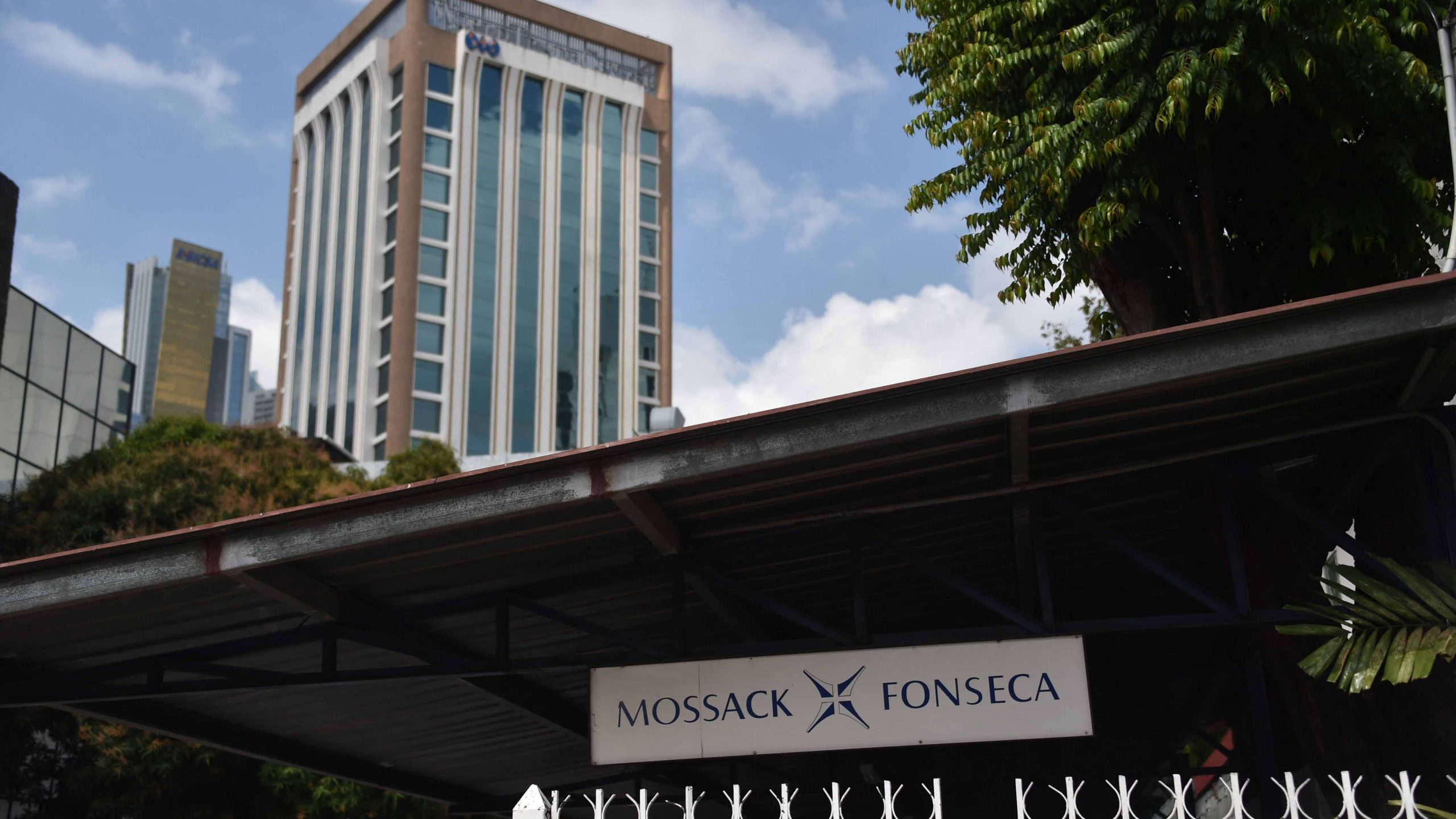
The Panama Papers, a 2016 cross-border journalistic expose led by ICIJ and Suddeutsche Zeitung, was based on a huge trove of leaked Mossack Fonseca documents. Among those documents was proof that customers of Swedbank’s Estonia subsidiary used Mossack Fonseca as a registered agent.
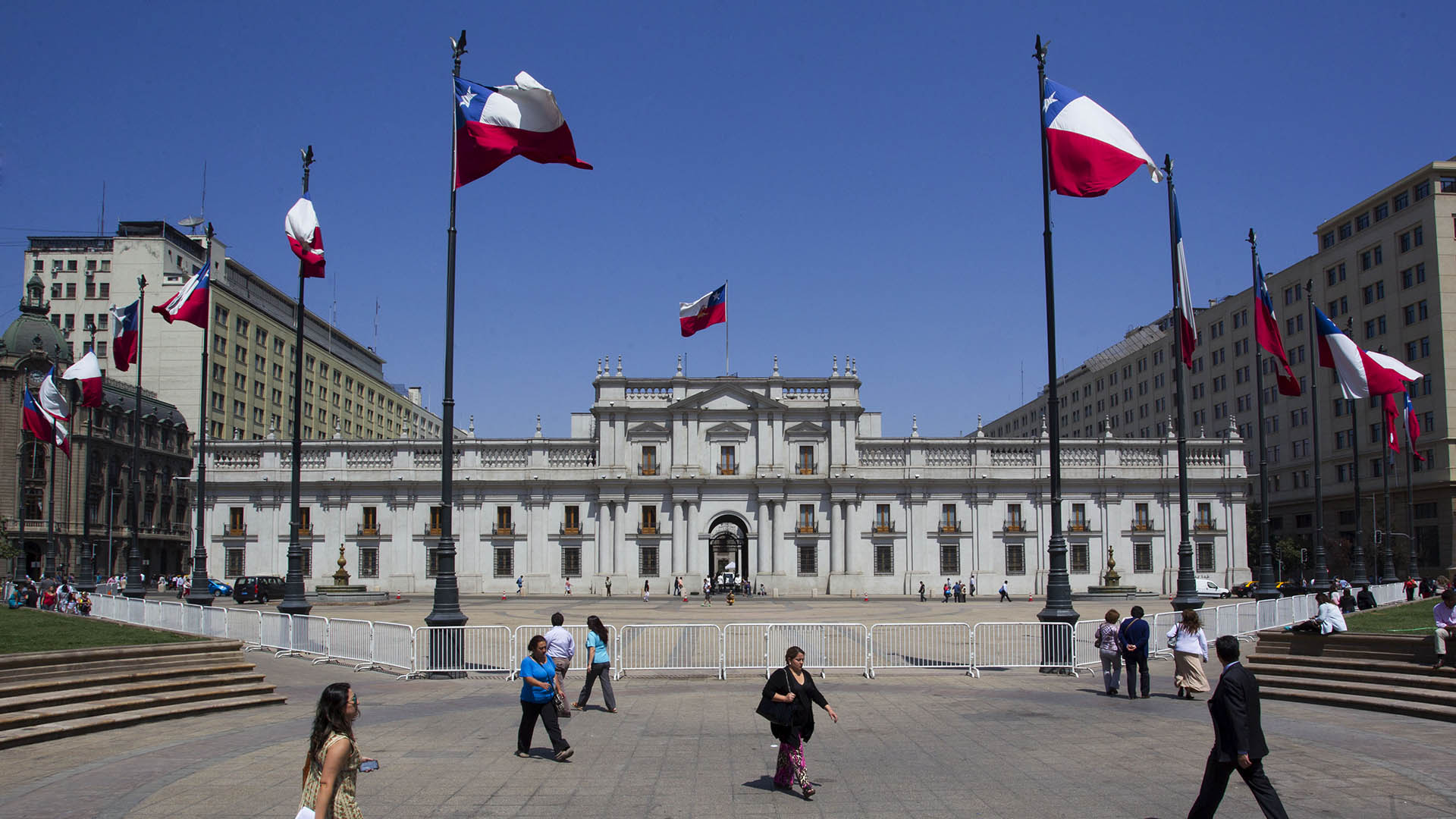

Recommended reading IMPACT Former co-owner of Panama Papers law firm convicted of aiding and abetting tax evasion Apr 24, 2026 IMPACT Chilean authorities expect to recoup more than $1.5B after ICIJ investigations, government data reveals Oct 11, 2024 IMPACT Ten years after the Panama Papers, enablers and tax cheats are still being brought to justice Apr 02, 2026
17.07.2026 à 10:59
Texte intégral (1907 mots)
For more than 30 years, the unemployed ex-wife and ambitious son of Italian drug trafficker Giacomo Tamburello relied on an international network of bankers, lawyers and brokers to amass a $230 million fortune and shield it from authorities, according to Italian prosecutors.
Their recent investigation — which has made international headlines because of Tamburellos’ alleged links to one of Italy’s most powerful mafia clans — led to the trio’s arrest in May and the seizure of assets spread across nine jurisdictions.
Prosecutors found that Tamburello earned millions primarily through the illicit trade of hashish from Morocco and shared 10% of the revenues with Matteo Messina Denaro, a notorious mafia boss until his capture and death in 2023. Starting in the 1980s, Tamburello allegedly laundered the funds with the help of his then-wife Maria Antonina Bruno and, later, their son Luca Tamburello, who studied banking and international finance at elite European business schools.
“This operation represents a result of extraordinary importance in the fight against organized crime and the financial networks fueled by drug trafficking and international money laundering,” Chiara Colosimo, the president of the parliament’s Antimafia Commission, told Italian media.
The 327-page judicial document demanding the arrest and asset freeze reads like a manual on how — and where — to hide and allegedly launder illicit money. Over the years, the fortune grew to include:
36 pounds of gold in the vault of a Swiss bank. A Porsche Carrera, a Land Rover Defender, three smaller cars and a maxi-scooter. About two dozen properties, including an apartment in Western Sicily and villas and commercial real estate on Spain’s Costa del Sol. Shell companies in the secrecy jurisdictions Panama, Gibraltar and the Cayman Islands. 50 accounts at a dozen European financial institutions, including in the tax havens Luxembourg, Monaco and Andorra. Shares in a Lebanese bank worth $89 million. Investments in Bitcoin and other cryptocurrencies.
The high-profile case sheds light on the underbelly of a global financial system that has long enabled criminals to enrich themselves by defying international rules meant to prevent financial crimes.

Authorities seized multiple luxury assets linked to the Tamburello family, including a Porsche sports car. Image: via Guardia di Finanza
Leaked records obtained by the International Consortium of Investigative Journalists as part of the 2021 Pandora Papers investigation also provide new insights into the role played by financial services providers working for the Tamburellos in Panama, Andorra and Spain. The records show how these professionals facilitated the family’s lucrative investments while rarely questioning the origin of their funds.
Giacomo Tamburello is currently in prison in Italy. Bruno and Luca Tamburello are in Spain and have appealed an extradition request from Italian authorities. Through their lawyers, Bruno and her son denied wrongdoing and told ICIJ’s media partner L’Espresso that the seized assets were the result of successful investments and not linked to her ex-husband’s activities. They added that “the decision to place the proceeds of certain investments abroad … does not in any way reflect an intention to conceal the funds.”
Michele Riccardi, an expert in organized crime and money laundering, told ICIJ that the Tamburellos managed their wealth like a typical family office, exploiting some financial services providers’ “mix of complicity and complete lack of awareness.” He added that the family mostly chose banks in jurisdictions outside European anti-money laundering regimes and invested heavily in the poorly regulated property sector.
“I was not surprised when I saw each jurisdiction being misused for exactly the vulnerability they have,” said Riccardi, the deputy director of the Transcrime research center at the Università Cattolica del Sacro Cuore in Milan. For Italian mafias, he said, the family is still “the most trust-based social unit.”
“Much easier than a bank of unknown people.”
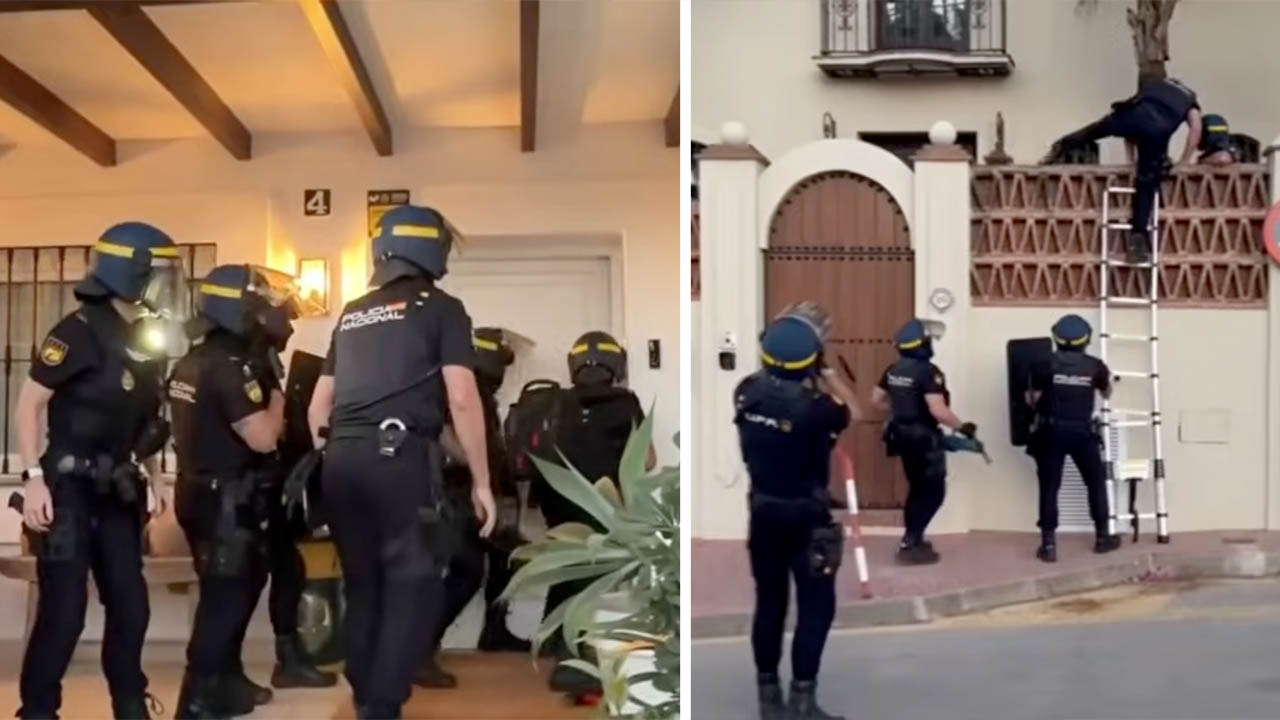
Authorities raided properties in Spain as part of the Tamburello family asset seizures. Image: via Guardia di Finanza
One red flag after the other
After failing as a clothing retailer, Giacomo Tamburello began to make a name for himself in the drug trafficking business in 1983 when he joined a criminal organization that smuggled cocaine, heroin and hashish into Italy through Spain and Switzerland.
By the 1990s, he was a wanted man. While he evaded authorities, his wife became his financial proxy, setting up shell companies in Gibraltar, opening bank accounts in Monaco and acquiring Spanish real estate, prosecutors found.
Even after Tamburello was arrested for the first time in 1994 for drug trafficking and other crimes, the family could count on professional enablers to multiply their assets.
Leaked Pandora Papers records show that the same year her husband was arrested, Maria Antonina Bruno became a client of Gestoria Pascual, a Marbella consulting firm that remained by her side for years, providing legal documents that helped her open companies in offshore jurisdictions. The firm’s representative told El País and ICIJ in an email that Bruno “ceased all dealings with our office many years ago, and no documentation regarding her remains on file.”
Tamburello and Bruno divorced during his 14 years behind bars. Yet their fortune continued to grow.
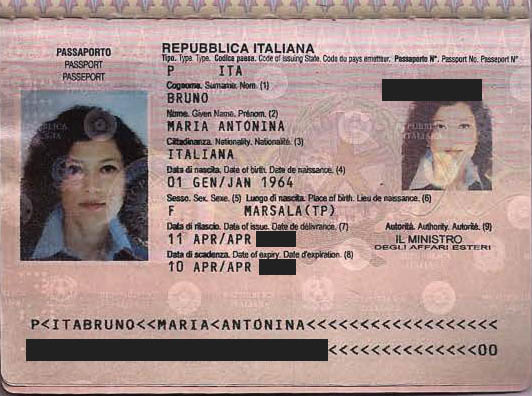
Maria Antonina Bruno’s passport. Image: Pandora Papers leaked files
Bruno set up a Panama-based investment firm, Inversiones Oro Rey, in 2002 to hold shares in companies that owned luxury properties on Costa del Sol, a coastal region in eastern Spain known as the “Florida of Europe” for its sandy beaches and resort towns.
She then became a resident of Andorra — a small principality north of Spain that was notorious for not cooperating with international authorities — and opened bank accounts for herself and her Panamanian firm. In 2005, Bruno and her then 21-year-old son, Luca Tamburello, moved about $2.6 million from a Monaco bank to Banca Privada d’Andorra, according to the recent investigation. Around that time, she declared herself a widow with an annual income worth a little more than $2000.
It was in those years that Luca Tamburello, now 42, emerged as the leading force in the family’s financial dealings, prosecutors found, after gaining experience as an investment analyst at prestigious private banks in London and New York.
In 2015, the U.S. Financial Crimes Enforcement Network, designated the Andorran bank as a financial institution of “primary money laundering concern,” after finding that senior managers had facilitated transactions for Russian and Chinese organized crime groups as well as corrupt individuals.
When Banca Privada d’Andorra shut down, Bruno moved her funds to another local bank and a former Andorran subsidiary of Sabadell, one of Spain’s largest financial groups. In a statement to ICIJ’s media partner El País, a spokesperson for Sabadell — which sold the subsidiary in 2021 — said that the bank applies all due diligence measures according to laws against money laundering and terrorism financing.
In the meantime, leaked records reveal, a financial services provider that had helped Bruno run the Panamanian firm, Inversiones Oro Rey, resigned. In need of a new registered agent for her company, Bruno approached the Panamanian law firm Alcogal with the help of an Andorra-based consultant.
ICIJ’s Pandora Papers investigation revealed in 2021 that Alcogal had established more than 200 shell companies in Panama and other jurisdictions at Banca Privada d’Andorra’s request, including some allegedly used to siphon public funds in a Venezuelan corruption scheme.
Leaked emails show that Alcogal officers were initially suspicious about taking Bruno on as a client. One noticed that a representative for Bruno at the Andorran bank had approached the law firm two years earlier but the registration had stalled when she was unable to provide the necessary documents.
“This company does not have an accountant, notary, or lawyer,” the bank representative had told Alcogal in a 2015 email.
Alcogal also required Bruno to disclose the ownership of her Panamanian firm’s bearer shares but accepted a self-declaration when she said that the certificates had been lost. Such shares are currently illegal or restricted in most jurisdictions because ownership rests with the person who physically holds the share certificate at a particular point in time, making them prone to abuse.
Bruno listed her job as “manager of personal assets,” declaring that the company operated on a “global scale” and that the origin of the funds was “heritage.” It is not clear if Alcogal required any proof. Sabadell bankers and the Marbella consulting firm, which had been working for her since the 1990s, vouched for her, the records show.
“To date, the business relationship that Ms. Bruno has maintained with our firm has been satisfactory, proceeding without incident and with her consistently meeting her payment obligations,” the consulting firm’s director wrote in a letter.
Alcogal accepted Inversiones Oro Rey as a client. The Tamburellos used the company to own and manage properties in Spain until 2019, when they closed it, according to the recent probe.
Responding to ICIJ questions in 2021, Alcogal denied any wrongdoing and said that it “had no reason whatsoever to suspect that BPA Andorra was providing banking services to some questionable clients.”

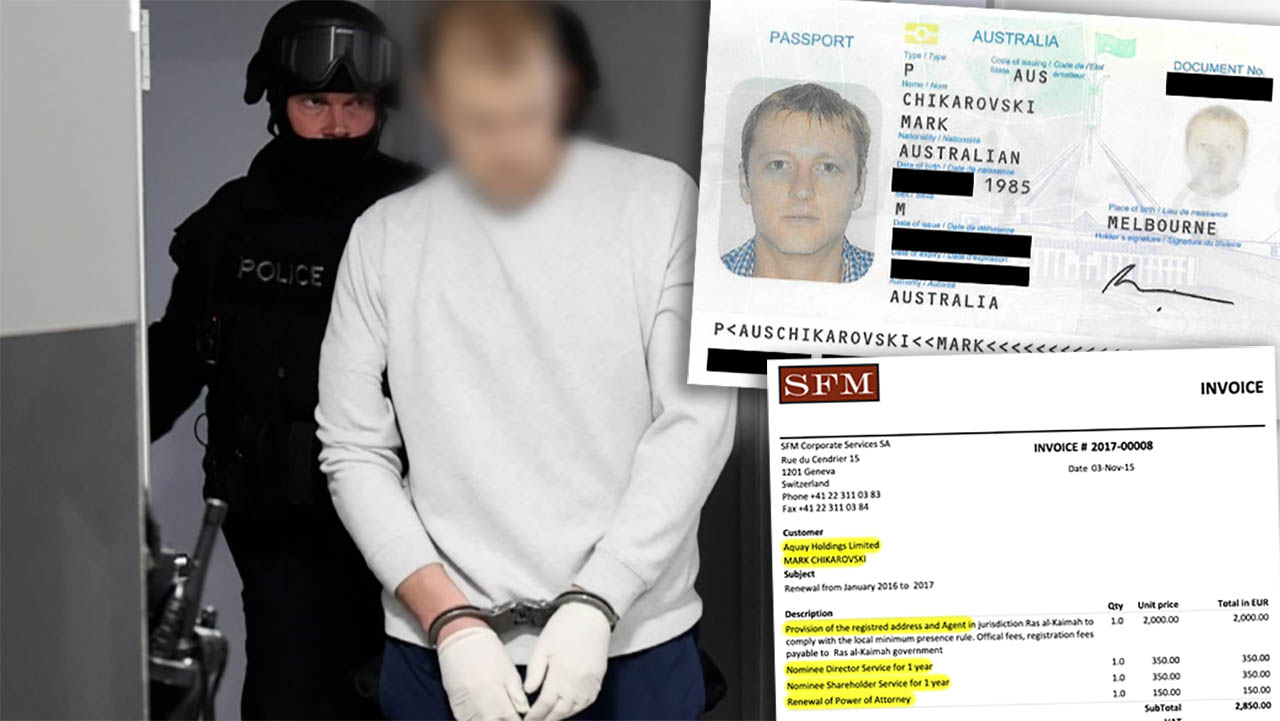
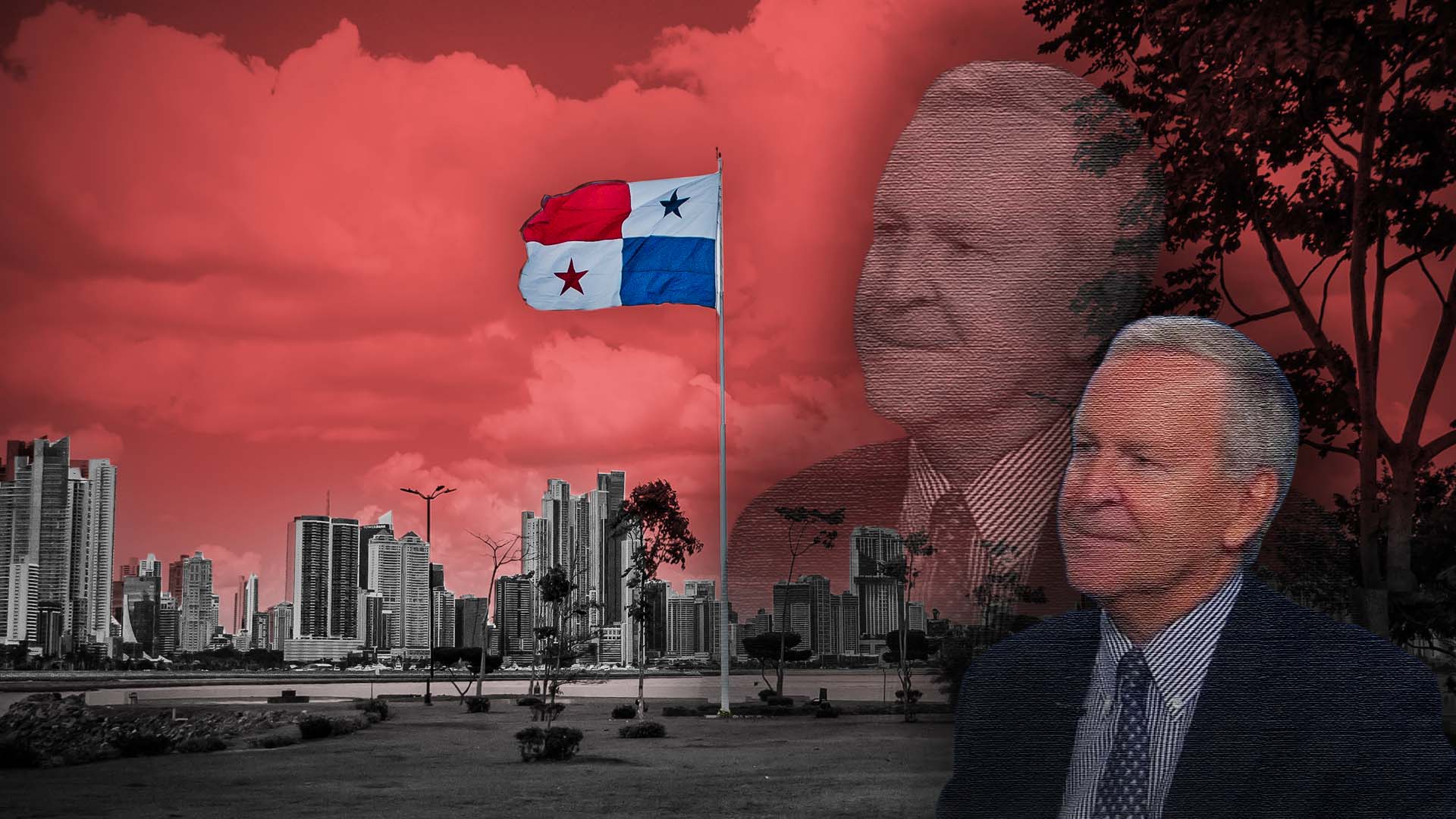
https://www.icij.org/investigations/pandora-papers/alcogal-panama-latin-america-politicians/
Recommended reading IMPACT Hundreds of millions more dollars recouped by governments after ICIJ investigations Apr 03, 2025 PANDORA PAPERS Records tie narco-trafficking son of former Australian political leader to offshore company and Cyprus bank account Dec 17, 2024 Latin America When Latin America’s elite wanted to hide their wealth, they turned to this Panama firm Oct 03, 2021
- GÉNÉRALISTES
- Le Canard Enchaîné
- La Croix
- Le Figaro
- France 24
- France-Culture
- FTVI
- HuffPost
- L'Humanité
- LCP / Senat
- Le Media
- La Tribune
- Time France
- EUROPE ‧ RUSSIE
- Courrier Europe Ctrale
- Desk-Russie
- Euractiv
- Euronews
- Toute l'Europe
- Afrique ‧ Asie ‧ Proche-Orient
- Haaretz
- Info Asie
- Inkyfada
- Jeune Afrique
- Kurdistan au féminin
- L'Orient - Le Jour
- Orient XXI
- Rojava I.C
- INTERNATIONAL
- Courrier International
- Equaltimes
- Global Voices
- Infomigrants
- I.R.I.S
- The New-York Times
- OSINT ‧ INVESTIGATION
- OFF Investigation
- OpenFacto°
- Bellingcat
- Disclose
- G.I.J
- I.C.I.J
- OPINION
- Au Poste
- Cause Commune
- CrimethInc.
- Hors-Serie
- L'Insoumission
- Là-bas si j'y suis
- Les Jours
- LVSL
- Politis
- Quartier Général
- Rapports de force
- Reflets
- Reseau Bastille
- StreetPress
- OBSERVATOIRES
- Armements
- Acrimed
- Conspirationnisme
- Culture
- Curation IA
- Extrême-droite
- Human Rights Watch
- Inégalités
- Justice fiscale
- Liberté de création
- Multinationales
- Situationnisme
- Sondages
- Street-Médics
- Routes de la Soie
- Wokisme