bellingcatRussian - English - Français - Espagnol - Deutsch
Bellingcat est un groupe international indépendant de chercheurs, d’enquêteurs et de journalistes citoyens utilisant à la fois enquêtes open source et réseaux sociaux ▷ BELLINGCAT FRANÇAIS
Sign up here to receive Bellingcat’s biggest investigations by email as soon as they are published. A sanctioned vessel that was previously reported to have transported weapons destined for Russian mercenaries has been traversing ports on the west coast of Africa since March, exhibiting what experts told Bellingcat was an unusual set of movements and behaviours. Patria (IMO: […]
Sign up here to receive Bellingcat’s biggest investigations by emailas soon as they are published.
A sanctioned vessel that was previously reported to have transported weapons destined for Russian mercenaries has been traversing ports on the west coast of Africa since March, exhibiting what experts told Bellingcat was an unusual set of movements and behaviours.
Patria (IMO: 9159921) has been sanctioned by the US, Ukraine and Canada.
Support Bellingcat
Your donations directly contribute to our ability to publish groundbreaking investigations and uncover wrongdoing around the world.
Radio France International (RFI) reported last year that it was one of two ships to deliver weapons to Conakry in Guinea that were intended for the Kremlin-controlled Africa Corps and their operations in Mali.
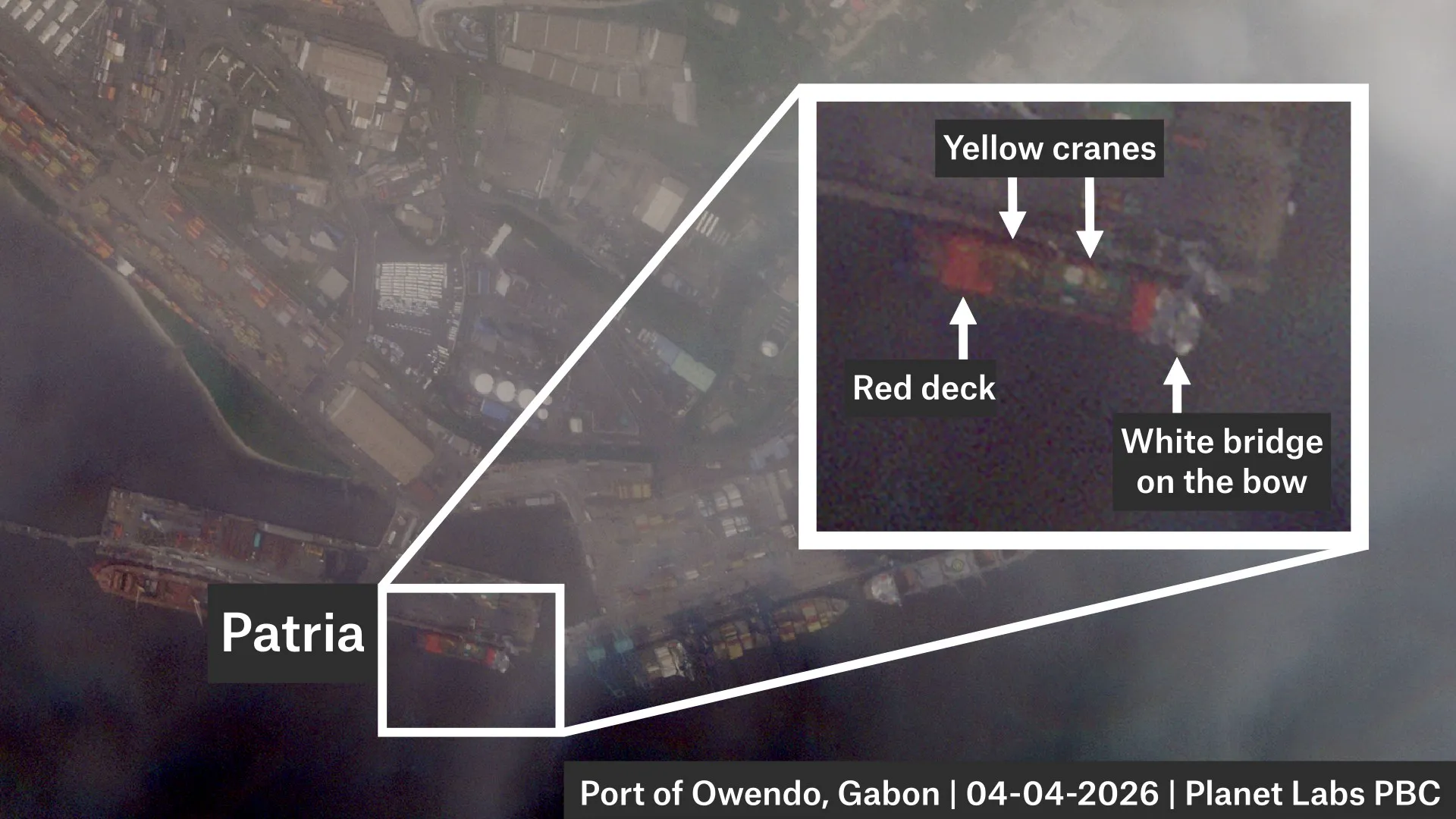
Satellite imagery and Automated Identification System (AIS) data from Lloyd’s List Intelligence shows Patria has shuttled between the Port of Douala in Cameroon and the Port of Owendo in Libreville, Gabon four times since March.
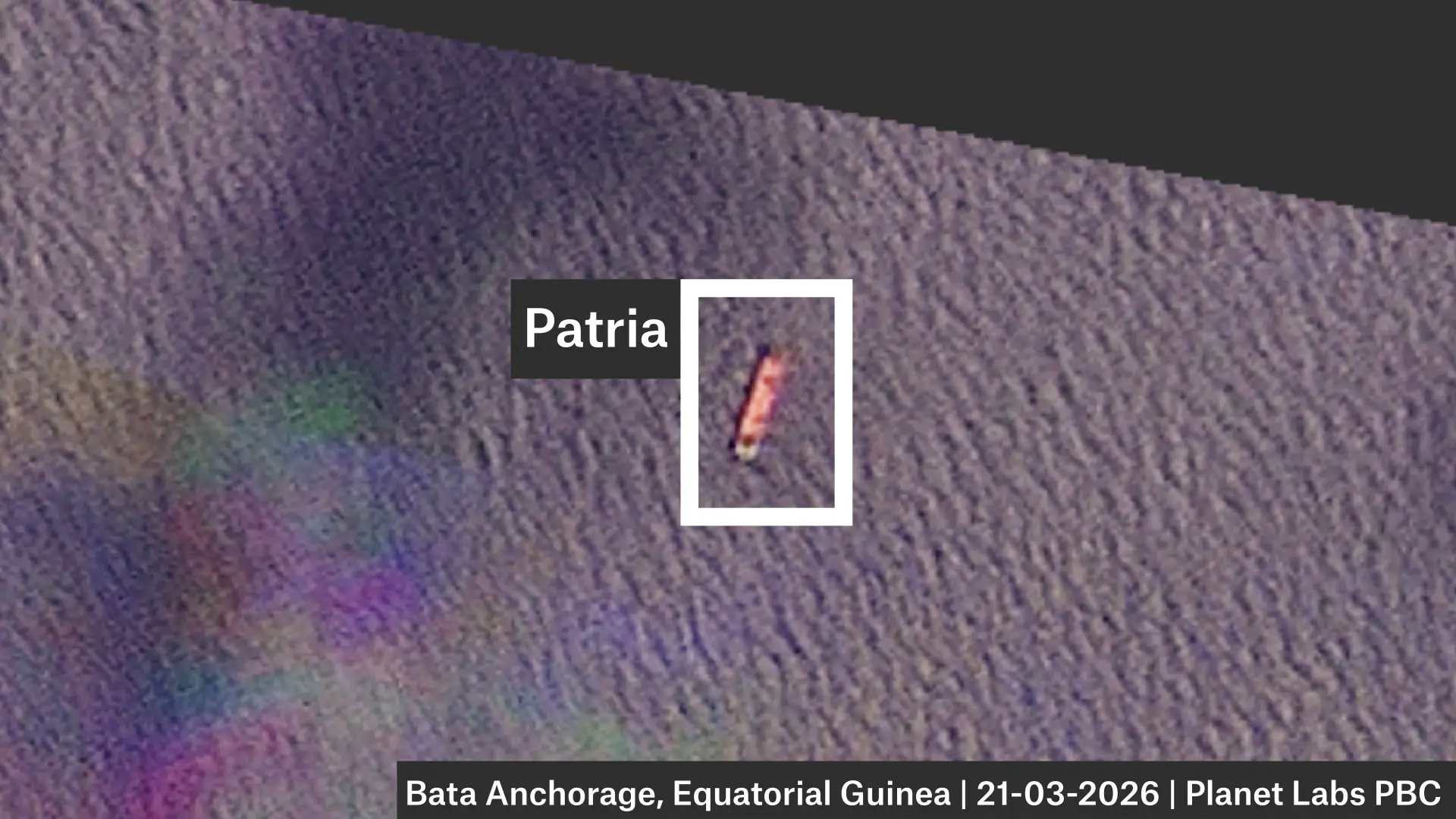
It has also twice stopped in anchorage off the coast of Lagos, Nigeria: first in March and then again at the time of publication. Analysis shows the vessel also spent time in anchorage off the coast of Equatorial Guinea.
The online news site, Modern Ghana, first reported Patria’s presence off the coast of Lagos in July after X-users @SONNAROW_OSINT and @RFNOSBlog picked up on Patria’s position.
It is not clear what Patria has delivered or picked up at these ports. Nor is it clear why it has spent so long going back and forth between them. But experts Bellingcat spoke to said the unusual patterns of behaviour raised numerous questions.
Charlie Brown, a former US Naval Officer and Senior Advisor at United Against Nuclear Iran said the combination of Patria’s repeated regional port calls, extended periods at anchor, and an apparent absence of a normal point-to-point trading cycle warranted scrutiny, especially as the ship is under sanction and is previously reported to have shipped arms.
Tracking the Patria
Patria is a cargo vessel that has a distinct shape and features. Its bridge is located on the bow and it has a bright red deck that contrasts with its blue hull and two yellow cranes.
At the end of the deck, the ship has a built-in ramp for vehicles (the Patria is a so-called roll on/roll off, or RoRo, vessel that is designed to transport wheeled vehicles). Its chimney is located next to the ramp.
Footage of the Patria, posted on Youtube on Jan 22, 2024. Credit: Hanro Shipping – Sakhalin Projects LLC / YouTube Channel @hanroship
This, in combination with the length of the ship (101 m), allowed Bellingcat to pick the vessel out in satellite imagery. AIS data helped us further track its long journey which began in the Sea of Japan, in Russia’s far-east, in January.
For the most part, we were able to match Patria’s AIS position with corresponding satellite imagery. We found no evidence of obvious spoofing incidents (where a ship intentionally broadcasts misleading AIS data) by the vessel during its months-long voyage, however, there were some instances where satellite images were not available and thus spoofing by the vessel cannot be completely ruled out.
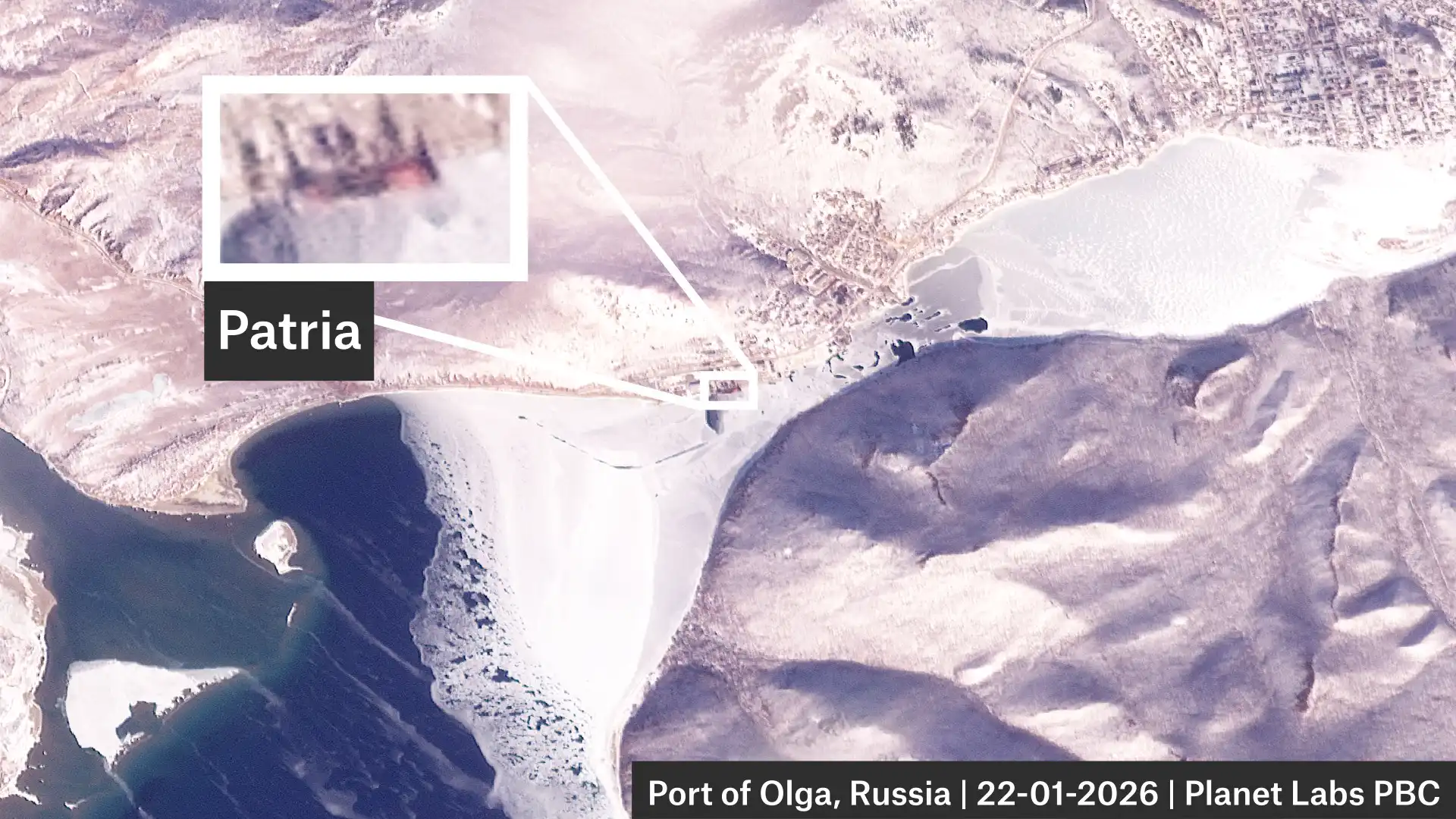
AIS data indicates that Patria loaded at the Port of Olga in the Sea of Japan between Jan. 21 and 23. Patria can also be seen on satellite imagery on these dates.
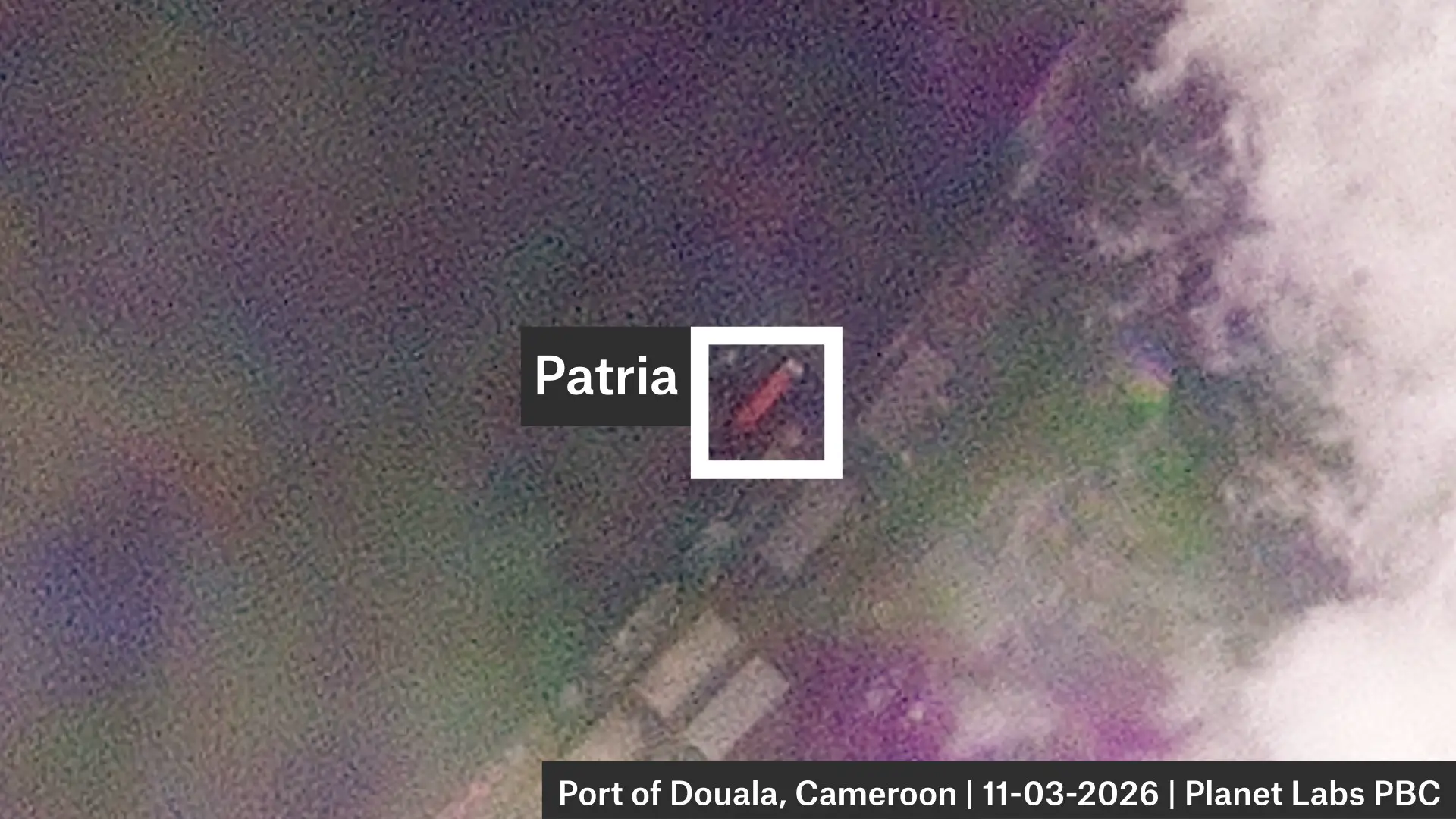
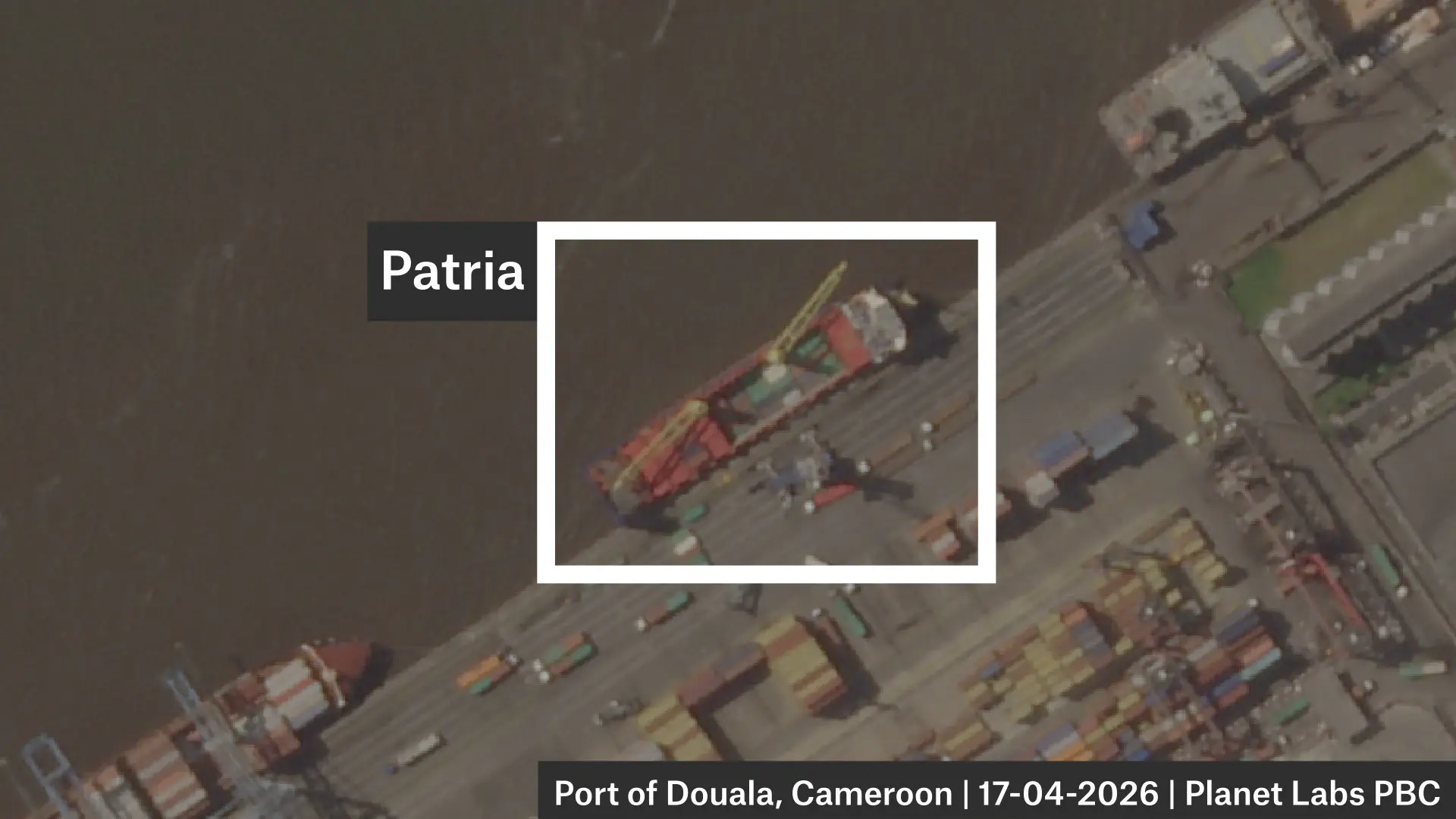
AIS data indicates that Patria unloaded some cargo in the Port of Douala between Mar. 11 and 12. Again, the ship can also be seen in satellite imagery on these dates.
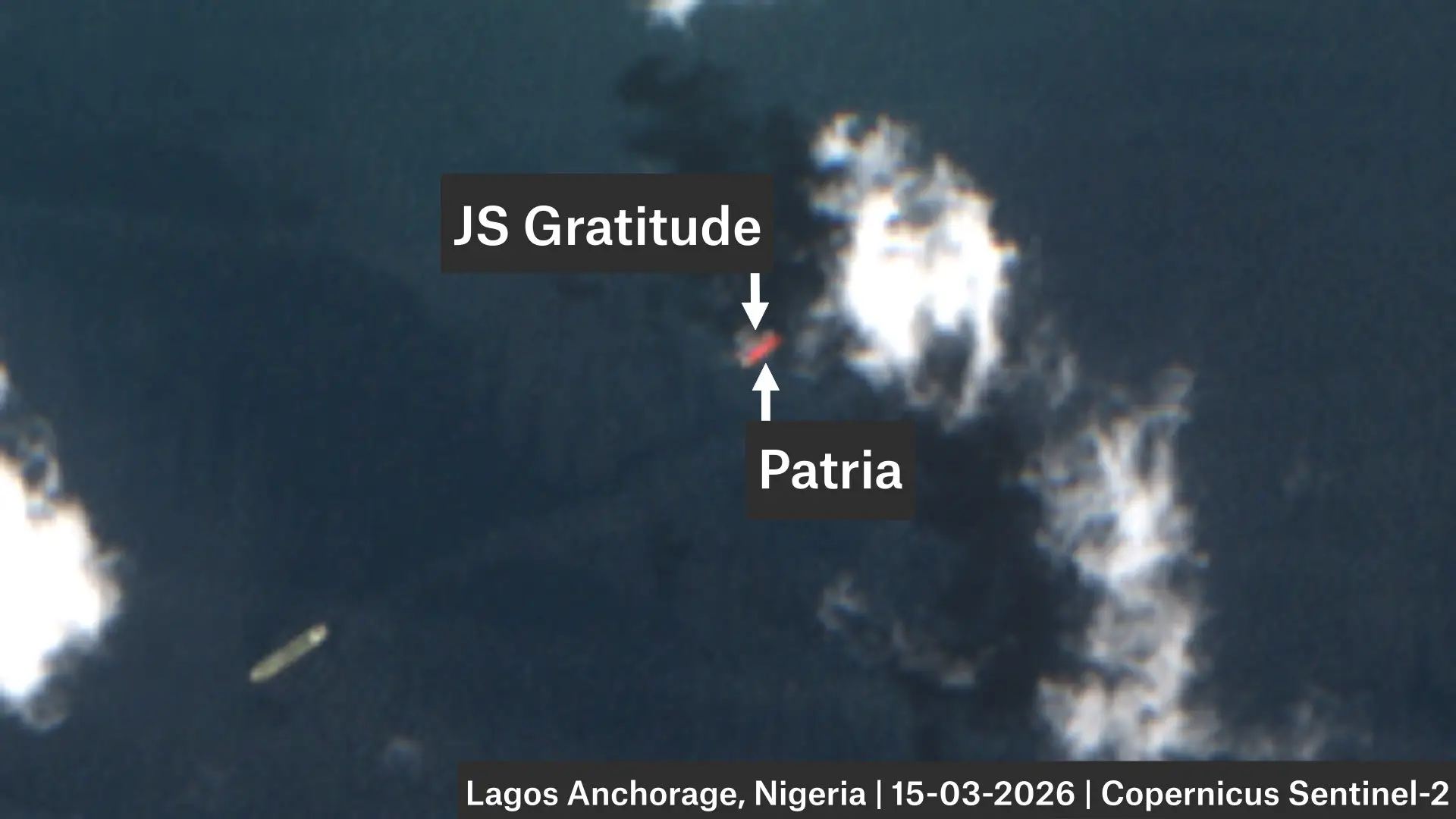
AIS data indicates Patria anchored off the coast of Lagos from Mar. 14 to 15.
A Sentinel-2 image from the 15th appears to show another ship next to Patria. AIS data indicates that this is JS Gratitude, a bunkering tanker. This close proximity suggests that Patria was refuelling.
AIS data and satellite imagery indicate Patria stayed at the Douala Anchorage from Apr. 6 to 14, before unloading at the Port of Douala between Apr. 14 and 18.
AIS data suggests Patria loaded in Libreville again between Apr. 22 and 26.
Port of Douala, Cameroon
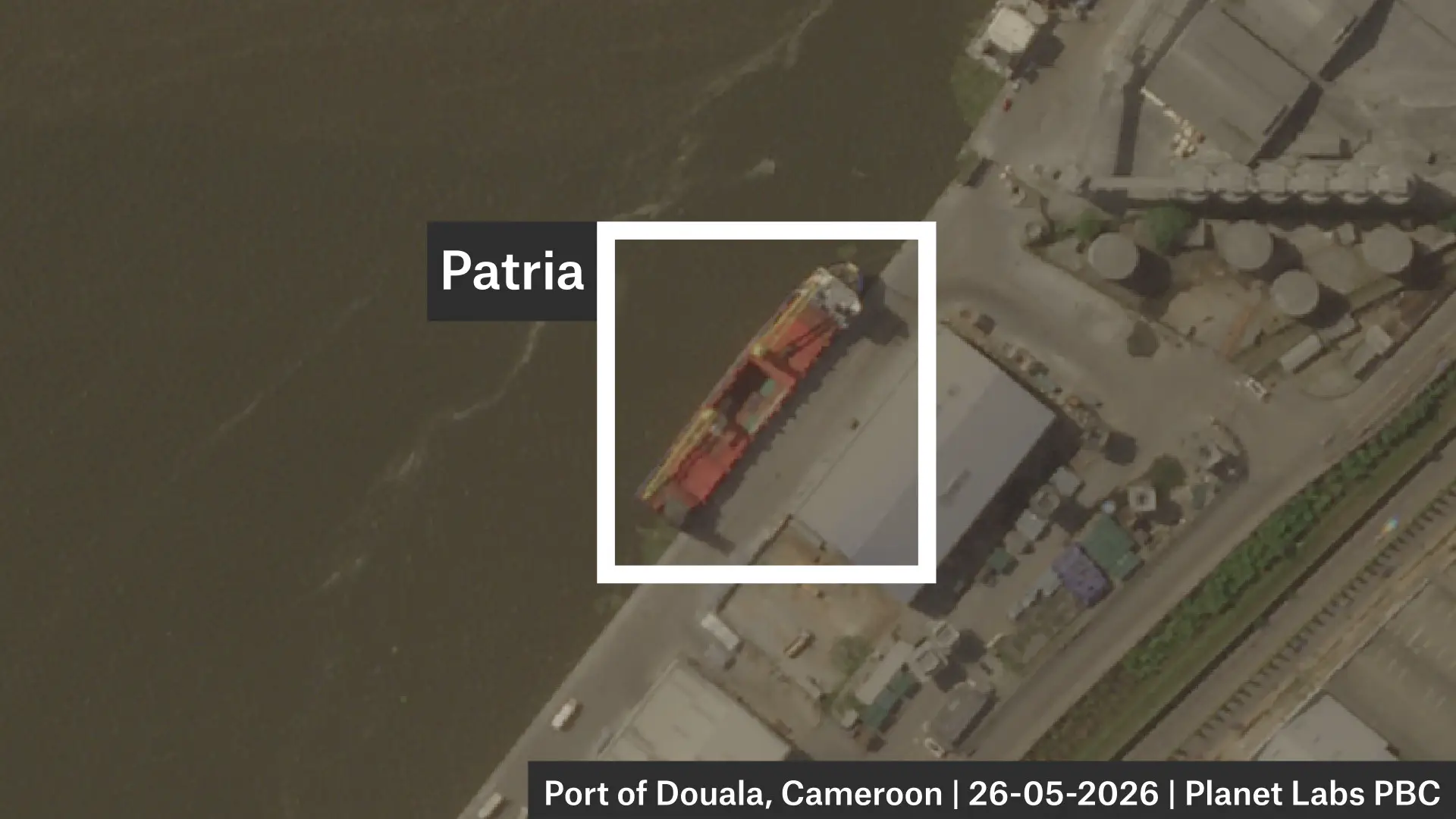
AIS data, supported by satellite imagery, indicates Patria stayed at the Douala Anchorage for nearly a month from Apr. 27 to May 21 before unloading in Douala from May 21 to 27.
A third trip between the Port of Owendo, Libreville to Douala, Cameroon
AIS data indicates, after nearly a month’s wait in Douala anchorage, Patria again loaded at Owendo before returning to Douala to unload.
A fourth trip between the Port of Owendo, Libreville to Douala, Cameroon
AIS data indicates Patria again loaded at Owendo before returning to Douala to unload.
Lagos Anchorage, Nigeria
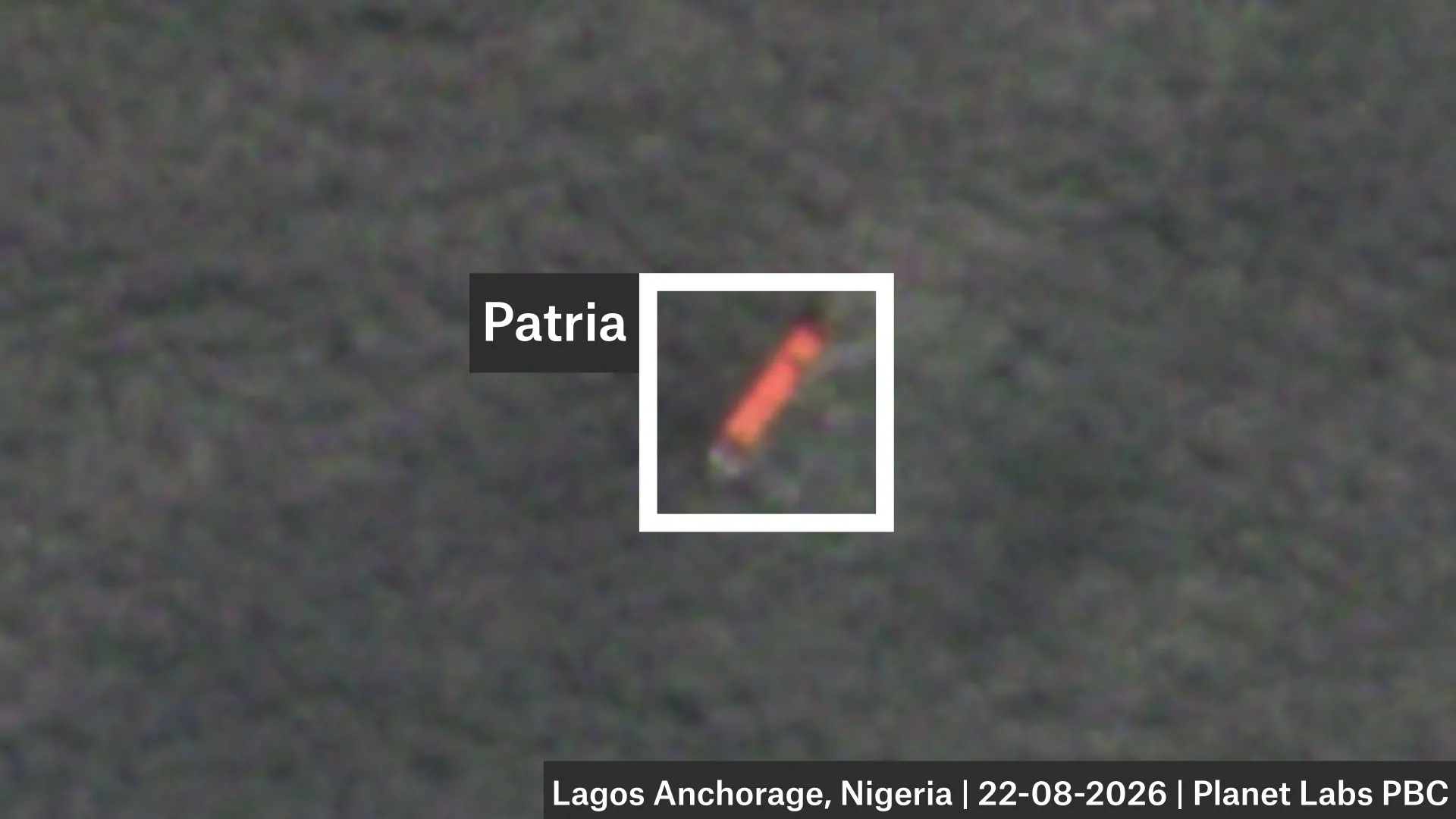
AIS data indicates, after a short visit to the Libreville anchorage, Patria anchored off the coast of Lagos where it remained at the time of publication.
We reviewed the draught of the ship at each port visit and found that the ship’s draught always dropped after a stay at the Port of Douala, suggesting it was unloading there.
A ship’s “draught” is the distance from the bottom of the hull (the keel) to the waterline. When loaded, a ship is heavier and sits lower in the water (e.g. a draught of six metres) than when it is unloaded (e.g. a draught of four metres).
Draught is the depth of a ship below the waterline.
In the period from March to July, the Patria made five port calls to Douala and each time the draught decreased. Conversely, it called four times at the Port of Owendo in Libreville, each time the draught increased, meaning the ship became heavier, suggesting it was loading.
The draught is self-reported by ships but usually when it arrives at ports this kind of data is checked – reporting accurate draught is also a safety issue for ships arriving and departing at ports.
Bellingcat asked the ship’s owners, managers and both ports if items were being transferred from Libreville to Douala but did not receive a response at time of publication.
Brown, the former US Naval Officer and now a Senior Advisor at United Against Nuclear Iran, said Patria’s movements were unusual.
“A sanctioned vessel linked to a prior military logistics shipment spending nearly six months operating between a small cluster of West African ports, Douala, and Owendo, without returning to a clear commercial trading pattern warrants scrutiny,” Brown told us.
“While innocent explanations such as mechanical issues, commercial disputes, lack of cargo, chartering delays, or prolonged maintenance are possible, the combination of repeated regional port calls, extended periods at anchor, and an apparent absence of a normal point-to-point trading cycle is atypical for a merchant vessel.”
He added that the current period of more than 30 days at the Lagos Anchorage, in particular, is noteworthy.
David Soud, Head of Research and Analysis at I.R Consilium also told Bellingcat that Patria’s prolonged Lagos Anchorage could have innocent explanations such as its need for ongoing repairs, or that its operators were out of money, but added that there could also be more calculated reasons and it was laying low for a while.
Bellingcat analysed AIS data from Lagos Anchorage and found that while there has been high congestion, no other RoRo or container vessel waited longer than 10 days to enter the port in the period that Patria has been at Lagos Anchorage. At time of writing, Patria has been in anchorage for more than 30 days.
Regarding the Patria’s apparent deliveries of cargo between Libreville in Gabon, and Douala in Cameroon, Soud told Bellingcat:
“Given the vessel’s history of transporting military equipment to African seaports for overland delivery to Russian and allied forces in the Sahel, it’s not out of the question that some form of supplies for Russian or other forces could be picked up in Gabon, whose government has developed a closer relationship with Moscow, to be discharged in Douala, which is the main entry point for goods going to Central African Republic.”
Bellingcat asked the Nigerian Ports Authority why Patria had been in anchorage for so long, whether it had applied to dock and whether the port was aware of its sanctioned status but did not receive a response at time of publication.
The ports of Douala in Cameroon and Owendo in Libreville, Gabon did not respond to Bellingcat’s requests for comment about the Patria’s visits and the cargo it was carrying.
Bellingcat also contacted the two companies connected to the vessel – Hanro Shipping and Sakhalin Shipping Company which are listed as the vessel’s owner and manager respectively in sanctions documents. We also contacted the company connected to JS Gratitude. We did not receive a response at time of publication.
Youri van der Weide, Galen Reich, Yörük Işık contributed to this report.
Cover image: Planet Lab image shows the Patria at the Port of Douala, Cameroon, on April 17, 2026. Credit: Planet Labs PBC.
Bellingcat is a non-profit and the ability to carry out our work is dependent on the kind support of individual donors. If you would like to support our work, you can do so here. Subscribe to our Newsletter and follow us on Bluesky here, Instagram here, Reddit here and YouTube here.
Sign up here to receive Bellingcat’s biggest investigations by email as soon as they are published. Satellite images obtained and analysed by Bellingcat show over five miles of new road constructed in Big Bend National Park in southwestern Texas, part of a US Customs and Border Protection (CBP) “Smart Wall” installation, which includes roads, barriers, […]
Sign up here to receive Bellingcat’s biggest investigations by emailas soon as they are published.
Satellite images obtained and analysed by Bellingcat show over five miles of new road constructed in Big Bend National Park in southwestern Texas, part of a US Customs and Border Protection (CBP) “Smart Wall” installation, which includes roads, barriers, lighting and cameras.
The project was paused earlier this week after pushback from local residents, politicians and environmental groups.
The roads have been built adjacent to the Rio Grande, through the river’s floodplain and riparian forest, and include construction adjacent to Cottonwood Campground, Santa Elena Canyon, and Mariscal Canyon in the National Park.
Planet Labs satellite imagery captured on August 15 and August 19 shows new roads cleared through the riparian forest around the Rio Grande in Big Bend National Park.
The map above traces the new road construction in yellow. An unannotated version of the satellite image showing the new road can be found here while a before image of the same area where no road is visible can be seen here.
The new road extends to Cottonwood Campground, one of four campgrounds in Big Bend National Park.
The road can be seen crossing the riparian forest and smaller drainages before joining the campground access road. Imagery also appears to show bright yellow construction equipment staging in the campground area, where bulldozers were previously seen.
Planet Labs satellite imagery captured on August 19 shows a new road near Cottonwood Campground in Big Bend National Park. Hover to compare to Planet satellite imagery from September 2022. Note that the removal of cottonwood trees in the campground is unrelated to CBP construction activity.
In the southernmost part of Big Bend National Park, additional new road construction is also visible near Mariscal Canyon and connecting to Talley Road.
CBP planning documents indicate that this section of the border will receive a four-to-six foot tall vehicle barrier in addition to the “smart wall” lighting and camera systems. Talley Road currently provides access to riverside backcountry campsites and hiking and boating access to Mariscal Canyon on the Rio Grande.
Planet Labs satellite imagery captured on August 18 shows a new road near Mariscal Canyon in the southernmost part of Big Bend National Park.
The map above traces the new road construction in yellow. An unannotated version of the satellite image showing the new road can be found here. A before image of the same area where no road is visible can be seen here.
Support Bellingcat
Your donations directly contribute to our ability to publish groundbreaking investigations and uncover wrongdoing around the world.
CBP Commissioner Rodney Scott described the construction activities as “survey and design work” in an August 13 statement. He also stated that CBP is “building one new access road, improving existing roads, installing detection technology, and placing vehicle barriers in limited, strategic locations.”
The Big Bend Border Patrol Sector sees the fewest migrant apprehensions of any part of the US southern border, according to CBP’s own data.
Bellingcat is a non-profit and the ability to carry out our work is dependent on the kind support of individual donors. If you would like to support our work, you can do so here. Subscribe to our Newsletter and follow us on Bluesky here, Instagram here, Reddit here and YouTube here.
This article is the result of a collaboration with The Sunday Times. You can find their corresponding piece here. A key leader of the Kinahan cartel who is wanted by authorities around the world and has been living in hiding in Dubai for a decade has just had his Emirates residence permit renewed. A Bellingcat […]
This article is the result of a collaboration with The Sunday Times. You can find their corresponding piece here.
The Kinahan cartel, led by Christy Kinahan (centre) and his sons Christopher Jr (left) and Daniel (right), controls one of the most powerful transnational crime groups in the world from the Emirates. Source: Supplied
A key leader of the Kinahan cartel who is wanted by authorities around the world and has been living in hiding in Dubai for a decade has just had his Emirates residence permit renewed.
Support Bellingcat
Your donations directly contribute to our ability to publish groundbreaking investigations and uncover wrongdoing around the world.
A Bellingcat and The Sunday Times review of public immigration records from the United Arab Emirates (UAE) has revealed that Christopher Kinahan Jr, the son of cartel founder Christy Kinahan, was issued with a new visa less than two weeks ago.
This is despite his status as a sanctioned individual who is the subject of a $5 million reward from the US government for information leading to his arrest.
Our analysis has also exposed the residence statuses of the crime gang’s other sanctioned leaders who remain at large in Dubai. The records include previously unknown companies where the cartel members are purportedly employed.
The US government has offered a $5 million reward for information leading to the arrest or conviction of Christopher Kinahan Jr for participating in transnational organised crime, namely narcotics trafficking and money laundering.
It comes after Christopher Jr’s older brother Daniel Kinahan lost his final appeal in Dubai last week to prevent being extradited back to Ireland. He is the second key figure of the crime group to be apprehended in the Emirates following his high-profile arrest in April.
The Kinahan Organised Crime Group is a $1.5 billion transnational network involved in drug trafficking, money laundering and arms smuggling. Investigators have connected it to Iran’s intelligence services and the Lebanon-based militant group Hezbollah.
The cartel’s senior leadership – Christy Kinahan, 69, and his sons Daniel, 49, and Christopher Jr, 45, their cousin Ian Dixon, 36, along with associates Sean McGovern, 40, Bernard Clancy, 48, and Johnny Morrissey, 66 – was sanctioned by the US government in 2022.
Christopher Kinahan Jr and his father Christy Kinahan, seen in the background of a photo posted to a Dubai restaurant’s social media in 2023.
The UAE reportedly banned the Kinahans from doing business in the wake of the sanctions and the Emiratis also claim to have frozen €200 million in Kinahan assets. However, our findings suggest the cartel is still doing business in the Emirates and its leadership has repeatedly engaged with immigration authorities in the years following the sanctions.
The visa records were accessed through publicly available UAE government websites. We entered data contained in the US government’s sanctions notice, including the gang members’ ID or passport number, birth date and nationality, to view their immigration files.
Action
in Dubai
Six of the seven key cartel figures who were sanctioned by
the US in 2022 lived in Dubai. Cartel lieutenant Sean McGovern was extradited
to Ireland in 2025 and jailed in June.
Daniel Kinahan awaits
extradition from Dubai.
Online
Immigration Records
Our open source review of immigration records shows two members
have active residence
permits. The other two have expired permits.
Chris Kinahan Jr
Active
Permit
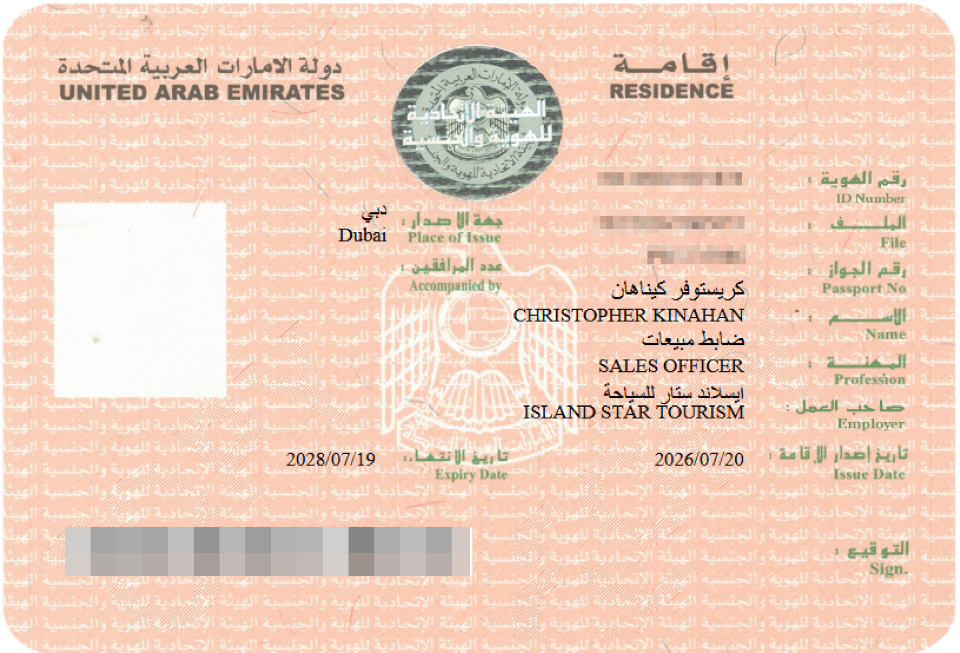
Christopher Kinahan Jr’s residence permit was renewed on July 20
for a two-year period. His previous visa had expired in December
2024. The new residence card lists his employment as “sales
officer” at a company named Island Star Tourism.
Bernard Clancy
Active
Permit
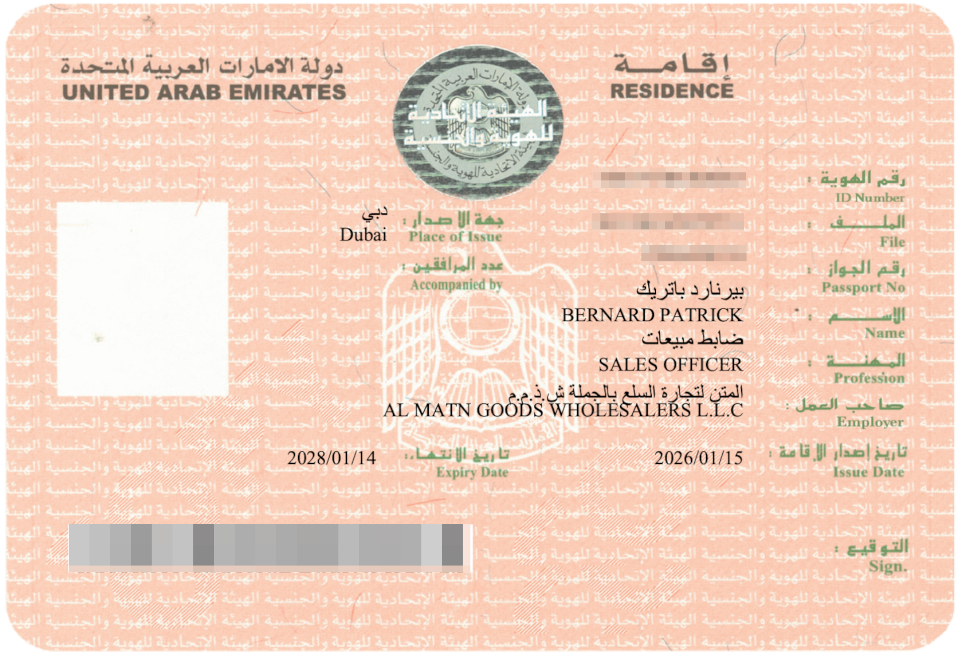
Bernard Clancy’s most recent two-year residence permit was
renewed in January. Like Christopher Jr, Clancy’s stated
profession is “sales officer”, but for a company named Al Matn
Goods Wholesalers LLC.
Christy Kinahan
Expired
Permit
Ian
Dixon
Expired
Permit
Records for Christy Kinahan and Ian Dixon show the residence
permits associated with their available passport numbers have
expired.
Christy Kinahan
Expired
Permit
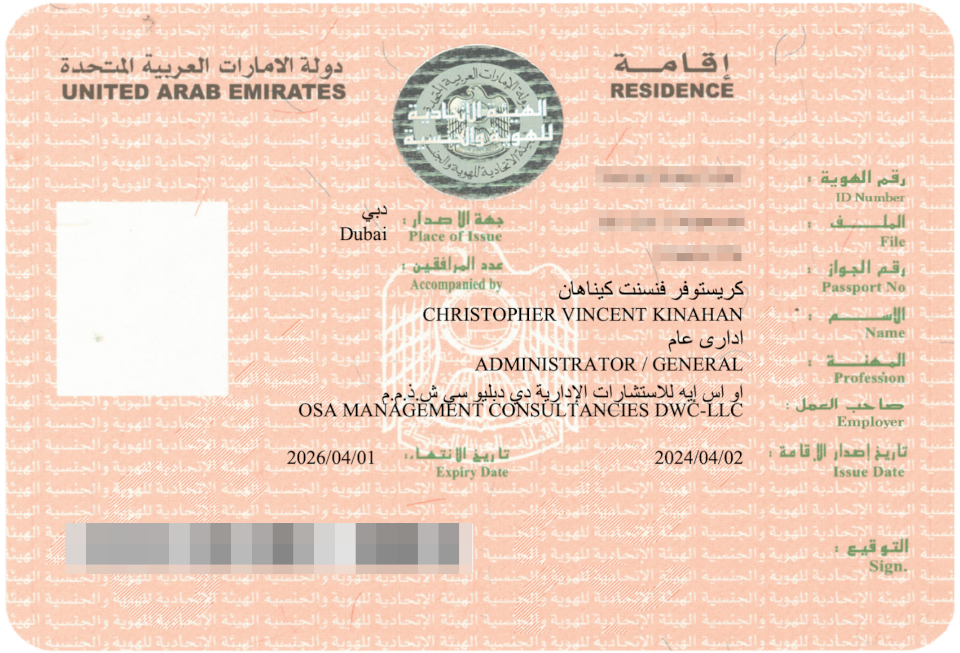
On his most recent visa, which expired on April 1, Christy
Kinahan’s listed employer is OSA Management Consultancies DWC
LLC. This firm is based at the same Dubai
address as CV Aviation Consulting Services DWC LLC,
another company reportedly
linked to the cartel.
Ian Dixon
Expired
Permit
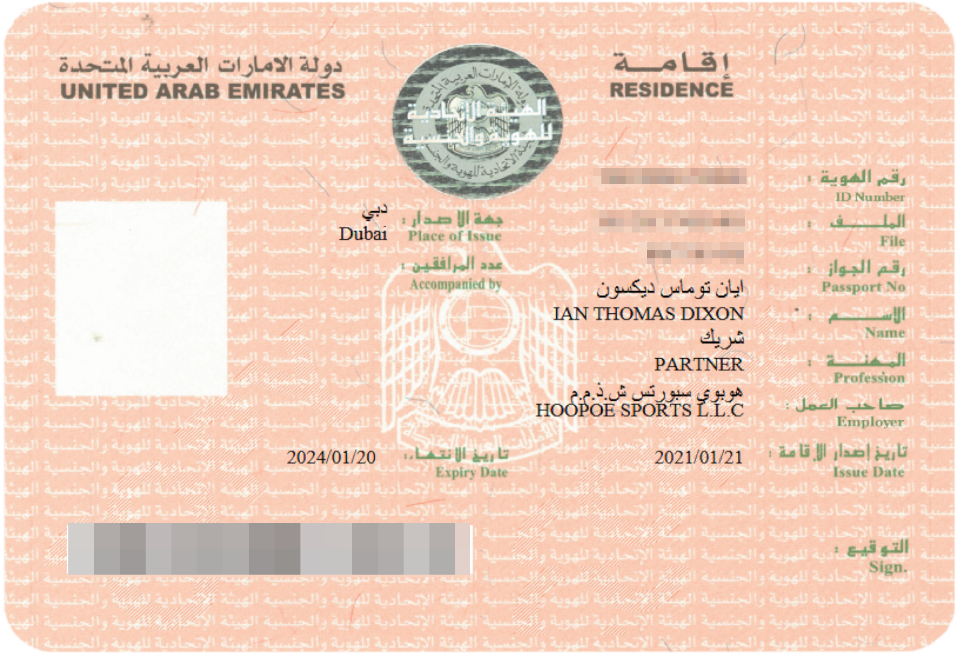
Dixon’s employer listed on his most recent visa was Hoopoe
Sports LLC, one of the firms sanctioned by the US for being
“owned or controlled” by Dixon.
Christy
Kinahan
The UAE imposes a
fine for each day a person stays in the country after
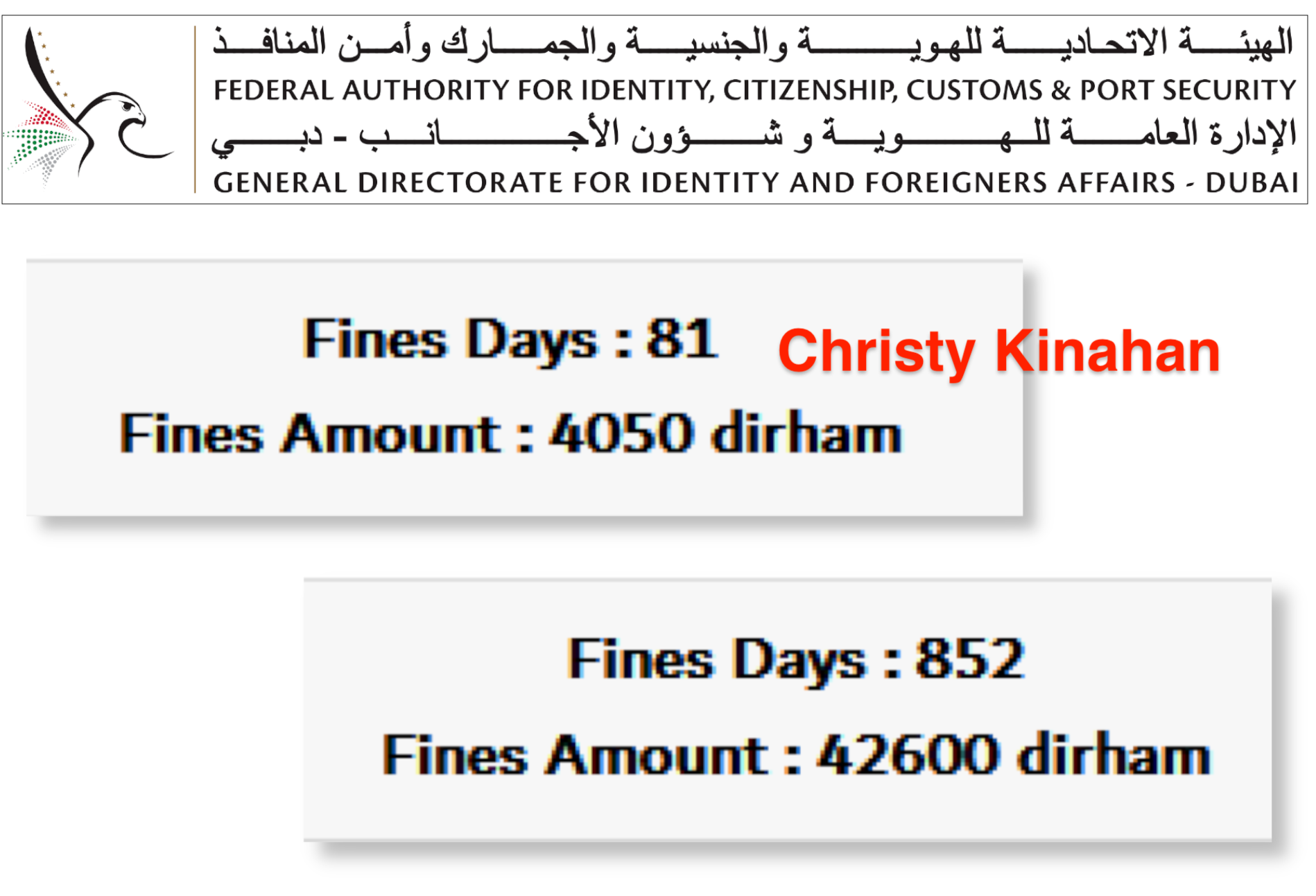
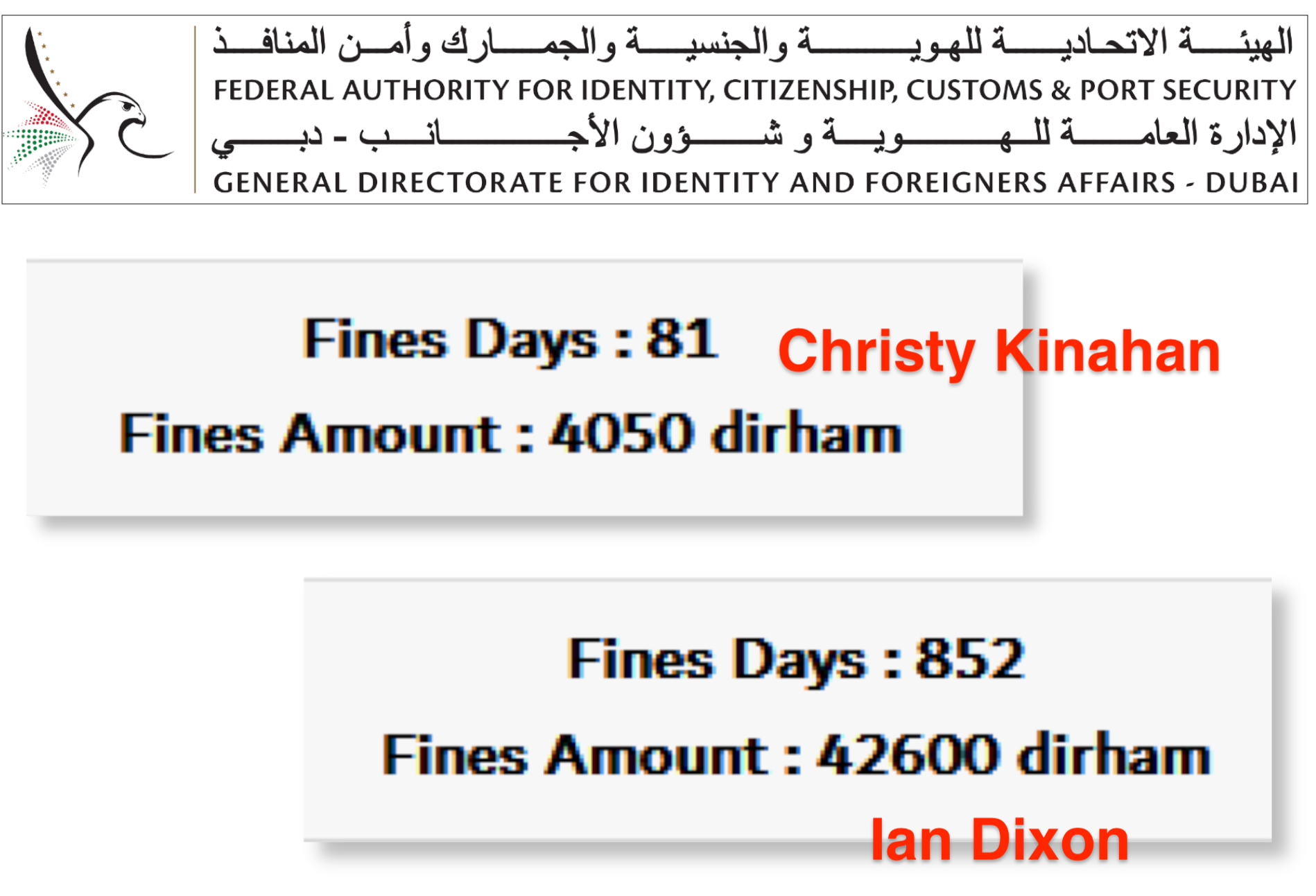
their visa expires. A Dubai government portal shows Christy
Kinahan owes the equivalent of more than USD $1,000 for an 81
day overstay.
Ian Dixon
Dixon, whose residency expired in 2024, owes more than USD
$11,000 for an 852-day overstay.
Sanctioned
Christy
Kinahan
Dubai
Expired Permit
81 days overstay
Fine: ~$1,000
Chris
Kinahan Jr
Dubai
Active Permit
Renewed: Jul 2026
Island Star Tourism
Bernard
Clancy
Dubai
Active Permit
Renewed: Jan 2026
Al Matn Goods Wholesalers LLC
Ian Dixon
Dubai
Expired Permit
852 days overstay
Fine: ~$11,000
Daniel
Kinahan
Dubai
Sean
McGovern
Dubai > IRE
Johnny
Morrissey
Spain
Chris Kinahan Jr
Dubai
Active Permit
Residence permit for Christopher Kinahan Jr. Source: GDRFA Dubai
Bernard Clancy
Dubai
Active Permit
Residence permit for Bernard Patrick Clancy under the name
“Bernard Patrick”. Source: GDRFA Dubai
Christy Kinahan
Dubai
Expired Permit
Ian Dixon
Dubai
Expired Permit
Expired residence permits for Christy Kinahan and Ian Dixon.
Source: GDRFA Dubai
Christy Kinahan
Dubai
Expired Permit
Expired residence permit for Christy Kinahan. Source: GDRFA
Dubai
Ian Dixon
Dubai
Expired Permit
Expired residence permit for Ian Dixon. Source: GDRFA Dubai
Screenshots of fine records for Christy Kinahan and Ian Dixon.
Source: GDRFA Dubai
Screenshots of fine records for Christy Kinahan and Ian Dixon.
Source: GDRFA Dubai
*Bellingcat searched the Dubai government’s identity and foreign affairs portal by inputting data about the
cartel’s leadership that was contained in the US government’s sanctions notice. Searching the gang
members’ ID or passport number, birth date and nationality returned a
“Unified Number”, a unique identifier assigned to every UAE visa holder.
This number, when entered with the other identity information on a UAE federal government portal, returned
the visa holder’s current status, history and file number.
Roy McComb, a former deputy director of the UK’s National Crime Agency, told The Sunday Times it was preposterous to suggest that the UAE did not know the visa status of the cartel members in Dubai.
“How is Christy Kinahan in the UAE unlawfully and the authorities there are unwilling to take appropriate action? The Kinahans are not an unknown entity, they are at the very apex of organised crime,” he said. “For the UAE not to know their residency status beggars belief.”
David Haigh, a British solicitor who was imprisoned on fraud charges in Dubai and now assists victims of abuse in the region, said it was clear the cartel must be paying off officials. “If someone is living openly there for a long period of time with that level of heat, that to me shows there’s been corruption involved,” he said. “If they were using false passports to enter Dubai, that’s a serious federal offence.”
Daniel and Christy Kinahan – nicknamed “The Dapper Don” – at a Dubai sports arena last June. Source: WeCaptureYou, TrillerTV
The passport details publicly listed in the US sanctions provide an unprecedented glimpse into the timeline of the cartel leadership’s visa history, giving an overview of their initial entry and exit to the Emirates.
The records show that four of the six key gang members had entered the UAE long before the 2016 attempt on Daniel Kinahan’s life in Dublin and the ensuing deadly feud that led to the cartel’s full relocation to the UAE.
A passport number for Christopher Kinahan Jr is linked to short-term UAE visas issued as early as September 2013. A passport number listed for Daniel Kinahan, searched in combination with an alternative sanctions-listed date of birth that is not his real one, returned seven short-term UAE visas between 2013 and 2015. It is not known what name this passport was under, but Daniel Kinahan has reportedly held illegitimate passports in the past.
A short-term visa for details associated with Ian Dixon first appeared in 2015. Authorities allege that Dixon acted as a trusted lieutenant to Daniel Kinahan by helping move bulk cash across Europe, arranging payments and keeping tabs on money owed by a narco-trafficker. In June, we revealed that Dixon was the poster boy for a padel club in Dubai, where he has been captured playing the racquet sport on webcams.
Left: Ian Dixon has been sanctioned by the US Treasury as part of its action against the Kinahan cartel. Right: Dixon at a racquet sports event post-sanctions. Source: US Treasury, sanddune_padel_dxb / Instagram
The earliest visas found for details associated with Sean McGovern and Bernard Clancy were from March and April 2016 respectively, the months after the 2016 attack in Dublin.
All key members of the group, with the exception of crime boss Christy Kinahan, gained residency in the UAE using Irish passports. The cartel founder’s British passport number is linked to his immigration file; both to his latest residence permit and four previous temporary visas. Records show the first visa associated with this passport was issued in February 2007 – the earliest known instance of Christy Kinahan entering the UAE. Another was issued in November 2009, and then two more in 2017.
However, details for an Irish passport under one of Christy Kinahan’s aliases (“Christopher O’Brien”) return 31 separate records on the UAE’s visa inquiry portal between 2014 and 2017. Bellingcat confirmed this passport number was associated with the name Christopher O’Brien after discovering both in corporate documents for a now-defunct Hong Kong firm that was incorporated in February 2014. This suggests Kinahan may have been using a false passport to travel to and from the UAE in addition to traveling under his authentic document. A man was jailed in 2023 after admitting he supplied “fraudulently obtained genuine passports” to criminals, including Kinahan.
Details from sanctions against Christy Kinahan were found on publicly available corporate documents of a defunct Hong Kong firm (passport number blurred by Bellingcat). Source: US Treasury, Hong Kong Companies Registry
One short-term UAE visa issued for “Christopher O’Brien” ended on August 19, 2015. Posts on LinkedIn three days later showed Christy Kinahan – wearing black-framed glasses and named in the posts as “Christopher O’Brien” – surrounded by Iranian and Turkish businessmen in a high-rise company office in Ankara. These images, discovered by Bellingcat in posts under the name of the managing director of a now-defunct Turkish investment company, have since been deleted.
LinkedIn posts from August 2015 showing “Christopher O’Brien”, a.k.a Christy Kinahan, in an office in Turkey.
According to the Dubai government, employment-based residence visas are valid for two years and must be obtained by a company on its employee’s behalf. The employer is required to apply for a work permit through the UAE’s Ministry of Human Resources and Emiratization. The employee must pass a fitness test before their employer can apply for the residence permit.
The company names on Clancy and Kinahan Jr’s residence permits, Al Matn Goods Wholesalers and Island Star Tourism respectively, match existing firms in Dubai. However, Bellingcat was unable to confirm whether these entities are the same as the ones listed on the residence permits. It is also not known why Clancy’s residence permit only includes his first and middle names (“Bernard Patrick”) while the other cartel members’ visas used their full names.
Wanted posters for Irish drugs smugglers Daniel, Christy and Christopher Kinahan Jr, released after the cartel leaders were sanctioned in 2022. Source: US Department of the Treasury
The firm named on Christy Kinahan’s permit, OSA Management Consultancies, is listed as an aviation consultancy on a Dubai government registry. In addition to sharing an address with cartel-linked firm CV Aviation Consulting Services, UAE company data accessed on Horizons, a platform created by Washington DC-based nonprofit C4ADS that aggregates public records, shows that both firms also have the same business licence number and date of incorporation, suggesting OSA may be a newer name for the same entity.
The managing director of Island Star Tourism told Bellingcat on the phone that Christopher Kinahan Jr was working as “commission-based staff, not in-office staff”. He confirmed he recognised Christopher Kinahan Jr’s name but said he had never met him. Asked how the company name appeared on his visa, he said “I don’t know”. He said if the UAE had any problem with Christopher Kinahan Jr, it would “not give permission”.
Al Matn Goods Wholesalers and OSA Management Consultancies did not respond to questions from Bellingcat.
The UAE foreign ministry has been approached for comment.
Connor Plunkett, Peter Barth, Beau Donelly and John Mooney contributed to this article. Scroll-driven interactive by Connor Plunkett and Miguel Ramalho.
Bellingcat is a non-profit and the ability to carry out our work is dependent on the kind support of individual donors. If you would like to support our work, you can do so here. You can also subscribe to our Patreon channel here. Subscribe to our Newsletter and follow us on Bluesky here, Instagram here, Reddit here and YouTube here.